

The mop fly pattern is a fly used in western rivers to imitate grubs or insect larvae. It is widely considered a “junk fly” along with certain types of worms, eggs, and other squirmies. It is one of the best flies to have when other methods aren’t working, and due to its simplicity, it is one of the best flies to tie for beginners.
The mop fly is not crafted from exotic materials but instead from household materials such as old mops and rugs. We like to use the mop fly during high-water situations as well as a heavy attractor pattern on a double nymph rig.
In this article, we will discuss the anatomy of the mop fly, including how and where to fly fish with it. We will also discuss junk flies as a whole and how to tie the mop fly.
Let’s dig right in.
What Is the Mop Fly
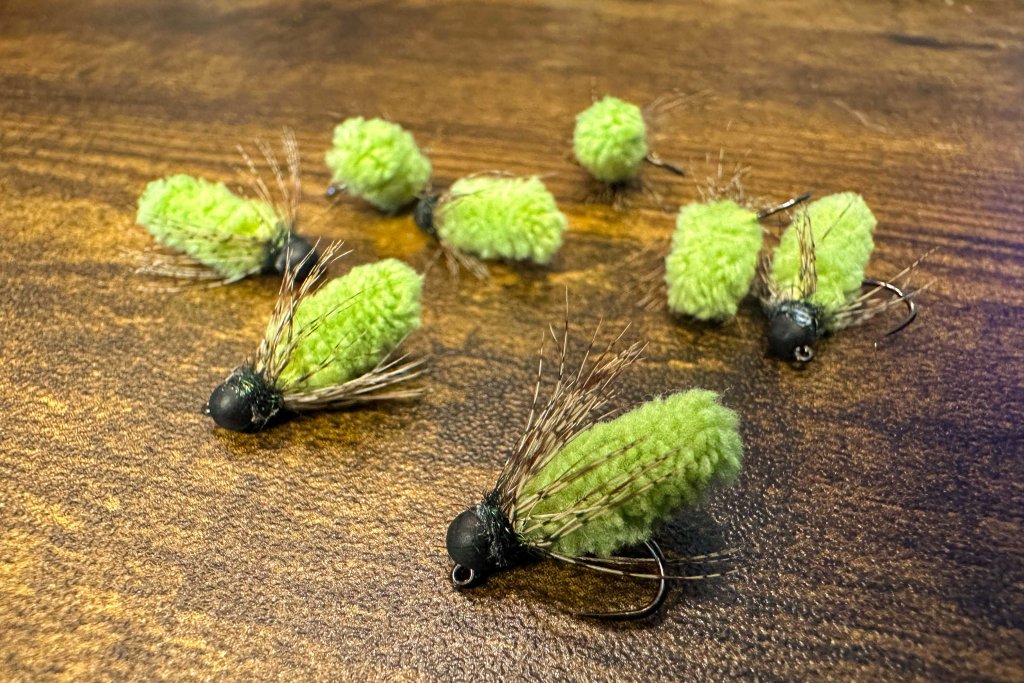
A mop fly typically measures about an inch long, aptly mimicking the natural size of the creatures it represents.
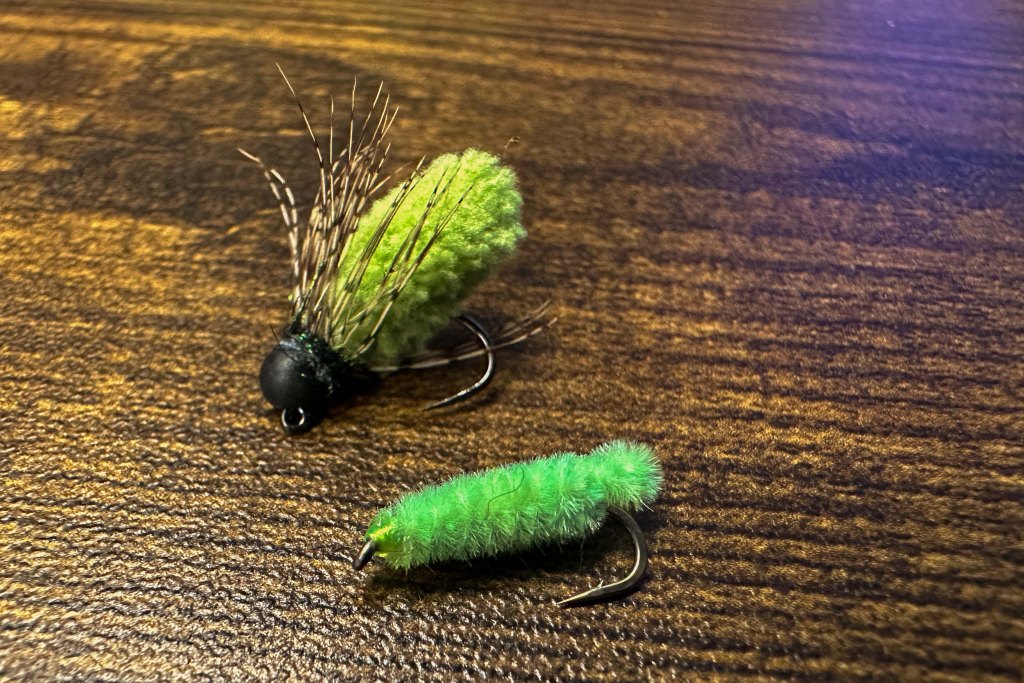
While you might find variations in sizes and colors, the bright green or chartreuse variant stands out for its striking resemblance to a caddisfly larvae, inchworm, or caterpillar.
The fly is tied on a barbless jig hook and accompanied by a large tungsten bead.
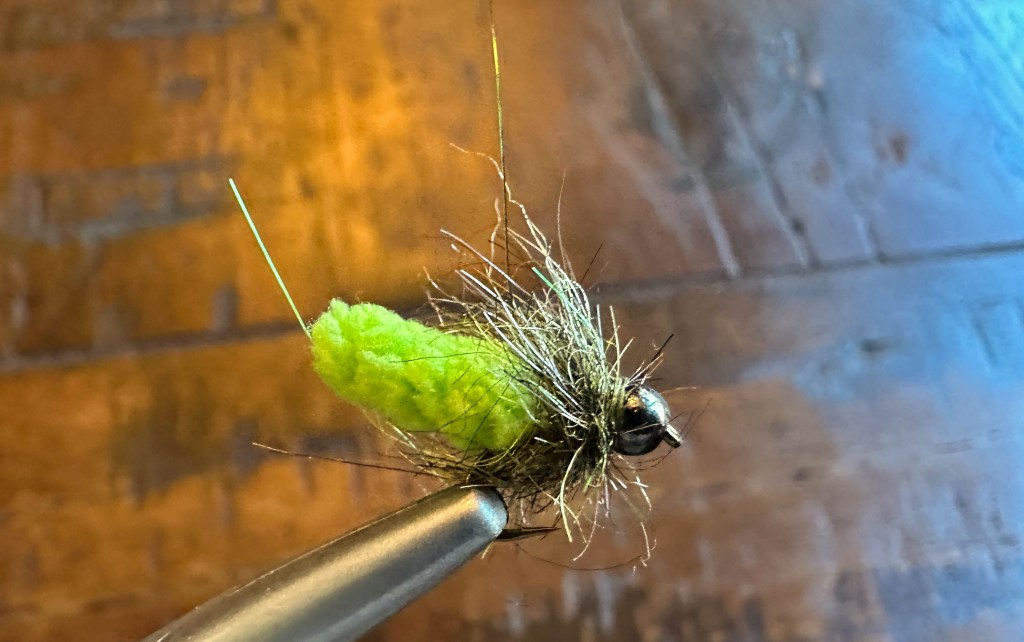
The fly is similar to the green weenie but a touch smaller, generally in the size 10-14 range.
The mop fly belongs in the category of “junk flies,” with worms, egg patterns, and green weenies. You may be wondering why we call such great fly patterns “junk” if they work so well.
What Are Junk Flies?
Junk flies sometimes get a bad rap, mostly because they’re not that pretty and kind of look silly. Nevertheless, the real food that junk flies imitate below the surface (i.e. trout eggs, worms, and caddis larvae), are an important part of a trout’s diet.
While they aren’t as “pretty” as, say, a hand-tied mayfly nymph pattern, junk flies are an effective way to catch trout. And every angler should have some in their fly box.
Some anglers will claim a junk fly is cheating or not real fly fishing. In our opinion, whatever catches fish is what you should use — and we’re in the business of catching fish!
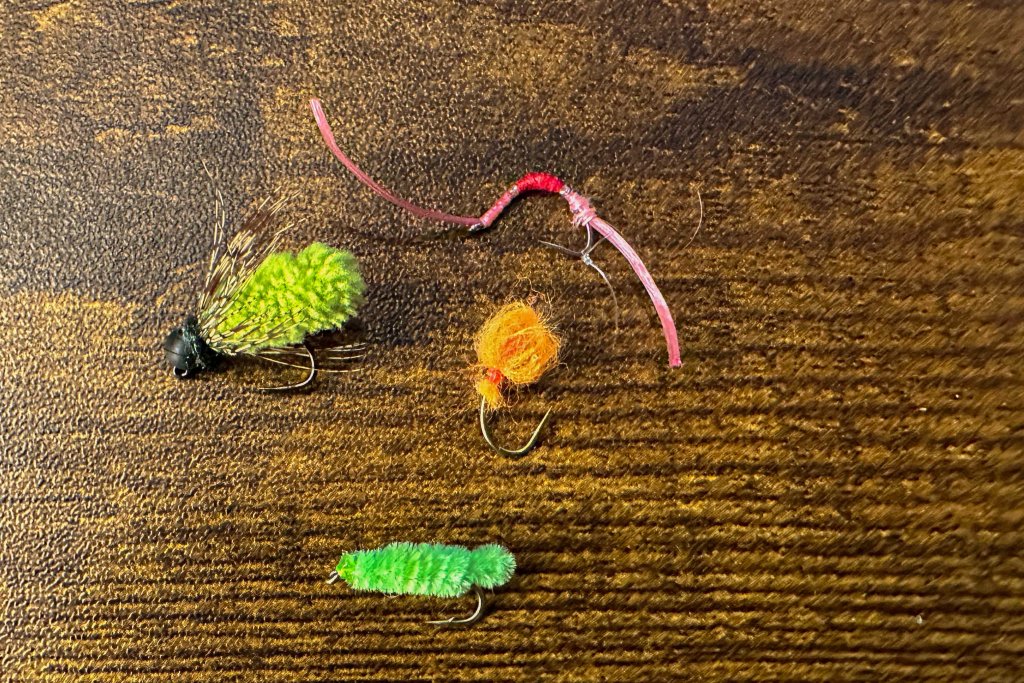
As such, we bring junk flies with us every time there’s an opportunity to go fly fishing.
Here is a list of our top junk flies that catch trout:
- Mop Fly
- Egg Pattern
- Squirmy Wormy
- Flossy Worm
- Green Weenie
Junk flies are excellent flies for beginners to tie due to their simplicity of materials and the short amount of time they take. Read more on how to tie the mop fly below.

What Makes It One Of The Best Junk Flies?
Junk flies are an important part of any successful angler’s fly box, and the mop fly is one pattern you shouldn’t be without.
This popular junk fly is extremely effective for a few reasons.
Attractive Nature
Its size and unique texture give it an alluring presence, catching trout’s attention in turbulent water.
Like a size-12 Psycho Prince nymph, this is one of our favorite attractor patterns for early-season fly fishing. A chartreuse mop’s large size and aggressive color is enough to turn a fish’s head and initiate a strike, even if the fly doesn’t appear realistic to the trout.
High Water Superiority
The fly produces strikes during peak runoff or when a river has been blown out from a storm. Its distinct profile, weight, and natural movement make it a choice fly when fish can’t find the smaller, more realistic bugs.
The sheer mass of the mop fly, with its bead head and saturated body, makes it easier to target the river bed, where trout feed most frequently.
The weight of the mop fly often negates the use of split shot or drop shot, making our rig more simply assembled.
Versatility For Fish Species
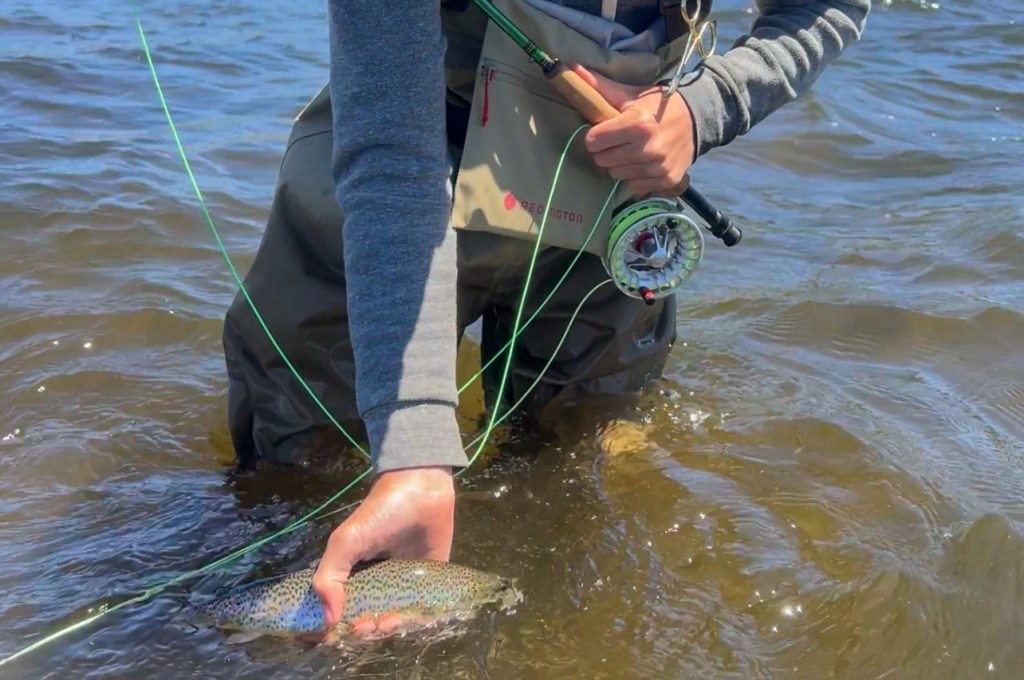
The mop fly can be used when fishing for trout, panfish, carp, and bass. Its size, often tied on a size 10-14 hook, makes it easier for trout with smaller mouths to eat.
Great Fly For Kids
This fly is awesome to tie to a kid’s fly fishing setup because it often doesn’t require pristine drifts.
The mop fly naturally doesn’t drift very well due to its weight and mass, making it more approachable for small children who have yet to develop the skills for a seamless dead drift.
Ease of Dislodging
Big flies with a barbless hook are easy to unhook from a trout’s mouth. The mop fly’s construction ensures that it can be easily removed from a trout’s mouth. In catch-and-release fishing, it’s important to cause the fish as little harm as possible.
Easy to Tie
The mop is one of the easiest flies to tie because it goes together quickly, and its materials are simple for beginners to learn with. In our step-by-step instructions, you’ll find that it is one of the best flies for beginners to tie.
How To Fish With The Mop Fly
Here are the step-by-step instructions on how to tie a mop fly pattern:
To maximize the mop fly’s potential, setting it up on your fly rod correctly is essential. There are two main ways that you can fly fish with the mop fly.
(1) Below an Indicator
Begin by tying the fly to the end of your tippet. Then, attach an indicator to the leader, ensuring it’s a suitable distance above the fly.
This distance can vary based on water depth, but typically, it’s set to 1.5x to 2x the depth of the water you’re fishing. In high-water situations, lean towards setting it up at 1.8x-2x the water’s depth.
If fishing with two nymphs, we recommend using the mop fly as the point fly (the fly at the terminal end of your rig).
(2) Contact/Euro-Nymphing:
Use the mop fly as your point fly, generally 12-16 inches below a lighter, more realistic jig pattern.
Because the mop fly is tied on a jig hook, it ticks along the river bed better than a non-jig pattern.
Use With A Dry Dropper Setup
In most cases, we recommend avoiding using the mop fly with a dry dropper rig due to its significant weight. However, if you are committed to using a Bobber Dry Dropper setup with an overly buoyant dry fly (i.e., size 8-10 Chubby Chernobyl), this fly can work.
It’s important to note that it may drag your dry fly down if you’re using a small to medium-sized dry fly.
Best Time of Year for the Mop Fly?
Our favorite time of year for angling with the mop fly is during the peak of a Colorado runoff when rivers are high and murky. The reasons we enjoy this most include:
- The fly is large, colorful, and easy for trout to find when the water isn’t clear.
- The mop fly gets deep quickly due to the mop absorbing water and the bead pulling it deep.
- It’s easy for an angler to spot the fly in off-color water, enhancing our ability to see a take visually. This is due to the vibrancy of its lime green/chartreuse color we most often choose.
Ideal Hook Size
For many western United States trout fishing applications, we like to use a mop fly in the size 10-16 hook size. It’s acceptable to size down on the hook because the fly’s body is quite large, even when using a size 14 hook.
The most common hook size we use with a Mop fly is a 12 or a size 14. Specifically, we recommend using a curved shank, barbless hook.
If you are new to fly fishing or want to learn more about fly fishing hooks, we encourage you to read about the best hook size for trout.
How To Tie The Mop Fly Pattern
The mop fly is one of the best flies to tie for beginners. It is tied on a large hook, has easy-to-work-with materials, and only takes a few minutes per fly.
Materials Needed:
- Hook: Size 10-14 Caddis/curved shank barbless hook. The most common hook is a size 12.
- Bead: 1/8 bead. You can choose any color of bead you like.
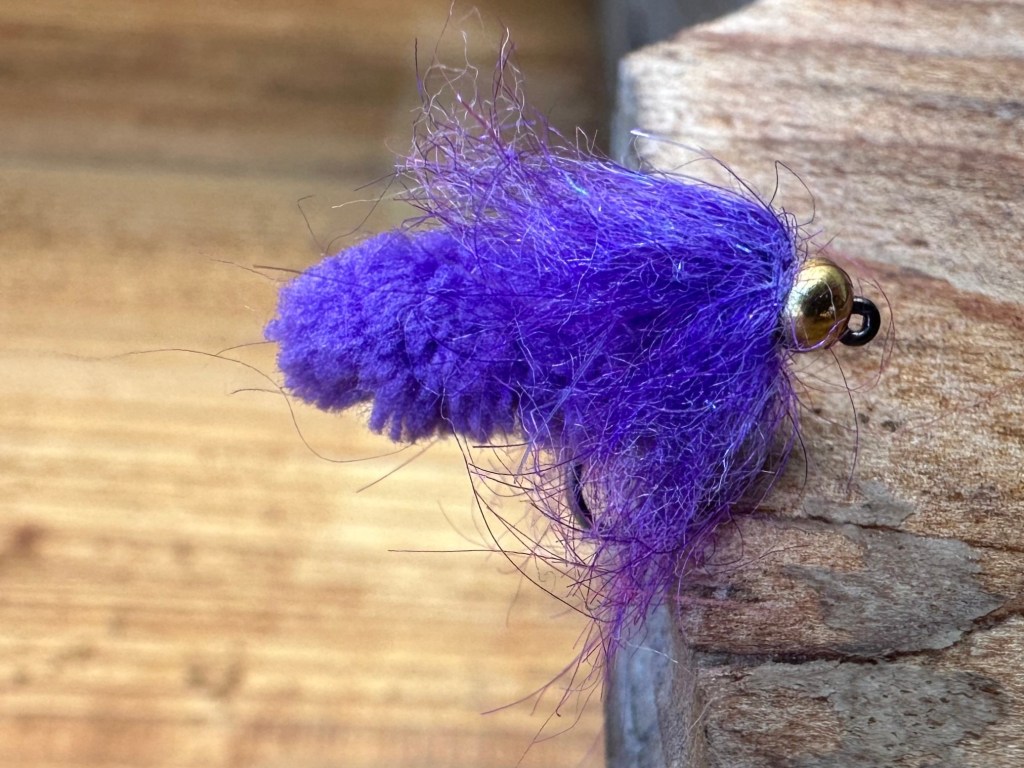
- Body: One piece of microfiber mop material, 1.5 to 2 inches long.
- Collar: Dubbing of choice. You can use flashy or non-flashy dubbing. Ice dubbing seems to work well.
Here are the step-by-step instructions on how to tie the mop fly:
Step 1: Start by sliding the bead onto the hook. Secure the bead with thread to the hook shank, covering about a 20% of the shank’s length, starting just below the eye. This thread will create a solid base that keeps the materials in place without needing to cover the entire shank.
Step 2: Take a length of mop chenille, about one inch long, and position it on top of the shank. Secure the material with a pinch wrap followed by several more tight wraps. If the material appears loose, feel free to dab some head cement to help secure it to the shank.
Step 3: Trim any excess material from the mop to ensure a neat appearance and proper function. Carefully melt down the tips of the chenille with a lighter to prevent fraying. Do not burn the material!
Step 4: Dub the thread with ice dubbing, focusing on the area just behind the bead. Wrap the dubbed thread around the shank to form a loose buggy collar, enhancing the fly’s texture.
Step 5: Complete the fly with several securing wraps and a whip finish below the bead.
Final Touch: Inspect the fly for any loose ends or unevenness, and perform touch-ups as needed.
Here is a video from Trident Fly Fishing detailing how to tie the mop fly pattern. In the video, you’ll notice the simplicity of this fly, making it one of the better flies for beginners to tie.
Conclusion
The mop fly is an amazing fly that all Colorado anglers should have in their fly box. It can sometimes not feel very realistic-looking nor fancy—it’s a junk fly—but it’s extremely fun to fish with and attracts plenty of trout to bite.
We like to fish the mop fly during high-water situations or with kids. Further, the mop fly is one of the best flies for beginners to tie due to its simplicity.
Thanks for reading