
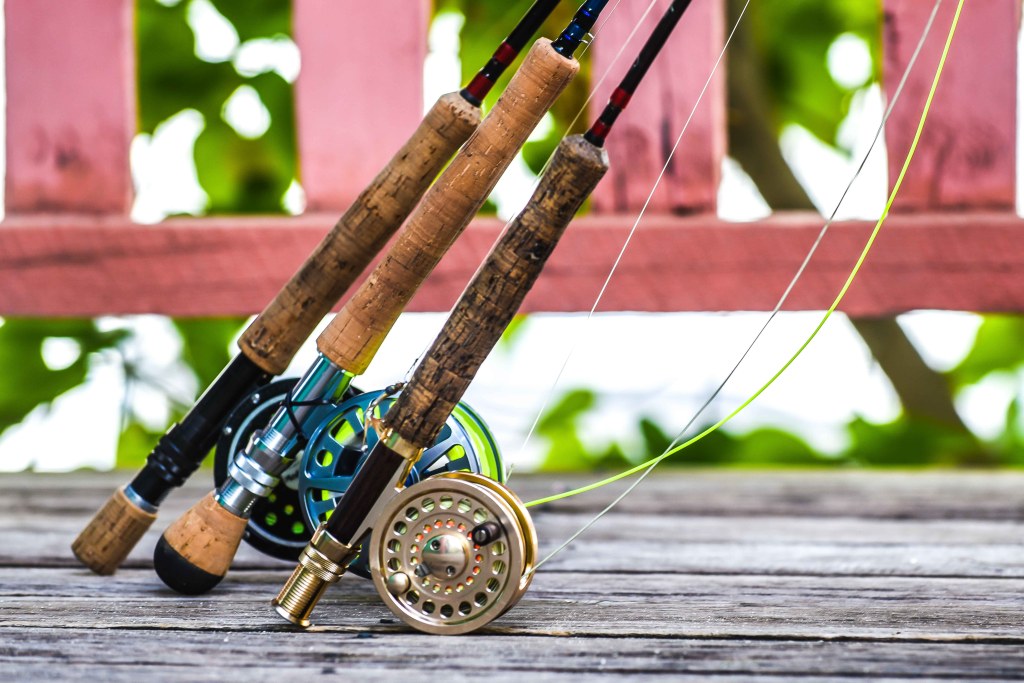
When it comes to fly fishing, selecting the right fly rod weight is crucial for success. A fly rod’s weight affects your casting and determines your ability to handle different types of fish. In this article, we’ll delve into the intricacies of fly rod weights and provide a detailed fly rod weight chart to help you make an informed decision.
Fly Rod Weight Chart
| Rod Weight | Ideal For | Fish Species | Recommended Flies |
| 0-1 | Exclusive dry fly fishing on very small trout streams | Small trout | Small dry flies |
| 2-3 | Small Streams, delicate casting, dry fly fishing, Euro-nymphing | Small to medium sized trout, panfish | Small and medium-sized dry flies, Light nymphs, Euro-nymphing flies |
| 4-6 | General trout fly fishing | Trout, small bass, small salmon | All sizes of dry flies, nymphs, small to medium-sized streamers |
| 7-8 | Large Rivers, Light Saltwater | Steelhead, salmon, bonefish, very large trout | Big streamers, Heavy nymph rigs, Saltwater flies |
| 9-10 | Heavy freshwater, Saltwater | Large salmon, striped bass, redfish | Big streamers, saltwater flies |
| 11-14 | Big game fishing | Tarpon, tuna, marlin | Large saltwater flies |
This post may contain affiliate links, meaning Slackwater earns a commission for the referral if you decide to make a purchase through the links, but your price stays the same. Even if you click through to buy a fly rod and you end up buying a fly box, we earn a commission. We thank you for supporting Slackwater!
What Are Fly Rod Weights?
Fly rod weights are numerical values assigned to fly rods that indicate their power and flexibility.
These numbers typically range from 0 to 14, with lower numbers representing lighter rods and higher numbers indicating heavier rods. The weight of the rod affects its casting ability, the type of flies and rigs you can use, and the size of fish it can handle.
Most beginner anglers choose a 5-weight fly rod for their first rod due to its versatility and ease of learning.
Why Fly Rod Weights Matter
Choosing the right rod weight is essential for several reasons, including casting ability, the type of fish you’re targeting, and the style of fly fishing you’re doing.
Casting Ability
Lighter rods are perfect for delicate casting and small flies, while heavier rods are designed for casting larger flies and heavier rigs over longer distances. While experienced anglers can make lighter-weight rods cast well at short and longer distances, middle and heavy-weight rods will make casting more approachable for beginners.
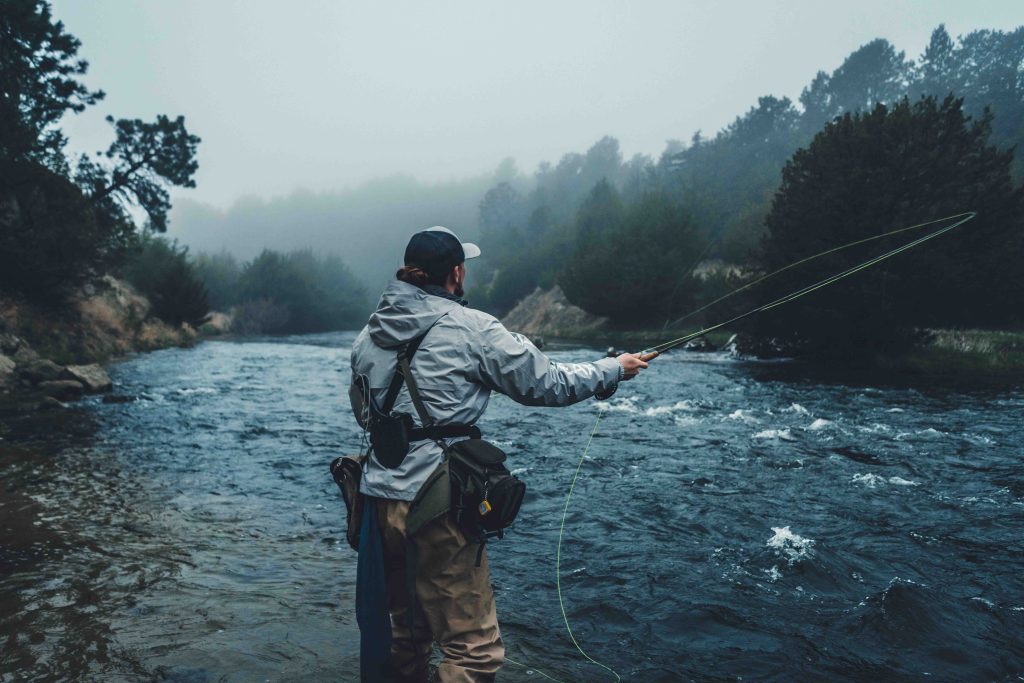
Heavier rods will also perform better in windy conditions because they are stiffer and more powerful to punch casts through the air.
A fly rod’s casting ability also comes from its action. A fly rod’s action is defined by how much the rod bends (and how easily it bends) when pressure is applied to its tip. In other words, the action of a fly rod defines how flexible it is, in addition to the type of casting stroke required by the angler to make it work properly.
Type of Fish Your Targeting
The rod weight determines how well you can manage different sizes of fish. A lighter rod may struggle with larger fish, while a heavier rod may overpower smaller fish.
As you can see the fly rod weight chart above, its imperative to match the size of the fly rod with the size and strength of fish your going after.

For trout fishing applications, we recommend starting with a 5-weight because it can handle most sizes of trout. See our fly rod weight chart for more information on the best weight rod for varying fish species.
Fly Fishing Style & Technique
The type of fishing you plan to do will influence your choice of rod weight. For instance, small stream dry fly fishing is best done with a lighter-weight rod than. High-sticking heavy nymph rigs or streamer fishing in large rivers requires a heavier-weight rod.
Lighter rods allow anglers to present flies more delicately, which is a requirement for success when dry fly fishing. Lighter-weight rods are also beneficial from a sensitivity standpoint when euro-nymphing or contact nymphing.
Heavier rods are best used when delicate presentations are less important than the ability to deliver flies at longer distances.
For the all-around fly fishing experience, we recommend a 5-weight fly rod. This size of rod will excel at almost any style of fishing, including dry fly, nymph, dry dropper, or streamer fishing.
How to Choose the Right Fly Rod Weight
To select the appropriate fly rod weight, consider the following factors:
Fish Species
The size and type of fish you’re targeting will heavily influence your choice. Smaller fish require lighter rods, while larger fish necessitate heavier rods.
For trout fly fishing in freshwater rivers and lakes, we recommend beginner fly fishers start with a 9-foot, 5-weight fly rod. This length and weight of a rod generally hit the sweet spot for performing well in most applications.
Fishing Environment
The conditions of your fishing environment play a role. Small, clear streams with spooky fish are best approached with lighter rods, while big, windy rivers or saltwater flats call for heavier rods.
Fly Size and Type
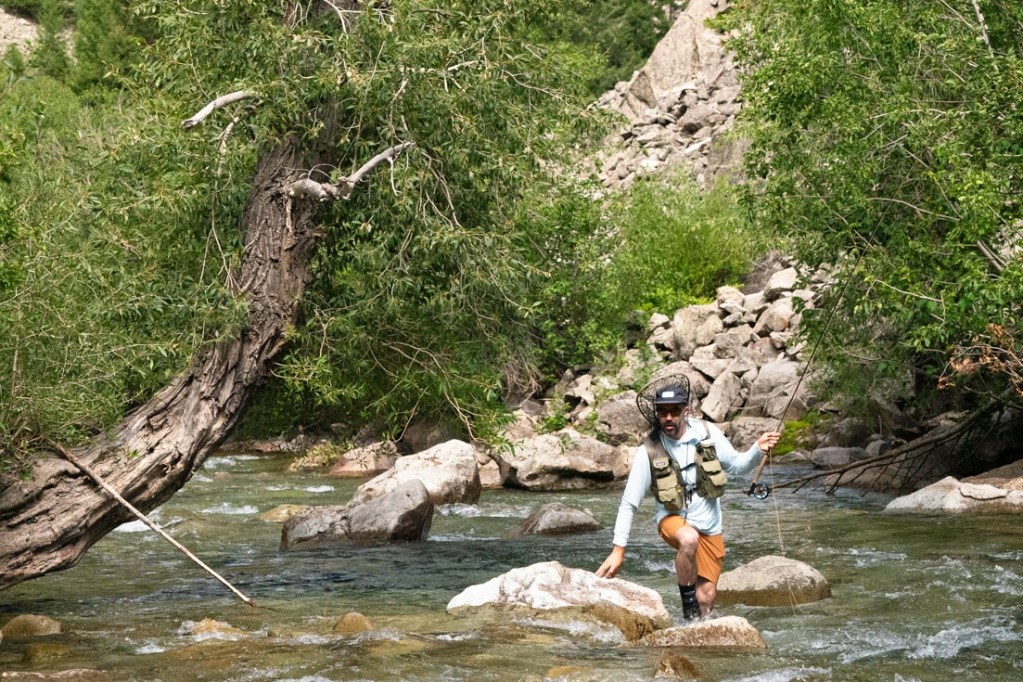
The flies you plan to use also impact your rod choice. Tiny dry flies need a delicate touch that lighter rods provide, whereas large streamers or weighted nymphs are better handled with heavier rods.
If you primarily fly fish for trout on small or medium-sized trout streams with single dry flies, consider a 3-weight or 4-weight fly rod. Lighter-weight rods will make catching smaller fish more fun (because the rods will bend more) and will help protect small diameter tippet.
However, if your local trout waters require long casts with heavy nymph rigs (possibly with added weight), you will want to consider a 5-weight or 6-weight rod.
Other Considerations
Versatility
For a versatile rod that can handle a variety of fishing scenarios, consider a 5-weight rod. It’s ideal for trout and can be used in different conditions.
Specialization
If you’re focusing on a specific type of fishing, such as saltwater or big game, invest in a rod tailored to that purpose. A 9-weight rod is excellent for bonefish, while a 12-weight is necessary for tarpon. If you wish to focus on only small stream fishing, you’ll want a lighter-weight rod.
Euro-nymphing/Contact nymphing
Many anglers believe they can begin Euro-nymphing with a moderately lightweight rod such as a 4-weight. Unfortunately, a 4-weight is not sensitive enough to get the job done well. Euro-nymphing requires a 2-weight or 3-weight to fish effectively with this technique.
Match with Reel and Line Weight
Always match your reel and fly line weight to your rod weight. A balanced setup ensures better casting performance and fish handling. Fly fishing reels come in various sizes and weights, as do fly lines.
Recommended First Fly Rod
We are huge believers that your first fly rod should be a quality piece of gear that won’t break the bank. It should be a rod that is easy to learn with, is fun to fish with, and is made of such high quality that you will own and cherish it for years.
Through extensive beginner fly rod testing, we’ve concluded that the best beginner fly rod is the Orvis Clearwater.
We love this fly rod for several reasons, but it stands out because it is a beginner rod that often performs like several other intermediate and high-end rods. It is lightweight, accurate, affordable, and a joy to fish with as a beginner or advanced angler.
Learn more with Slackwater’s full review of the Orvis Clearwater, including details on different weights tested.

Fly Rod Weights for Beginners vs Experts
There’s no disputing that a 9-foot, 5-weight fly rod is the best all-around size of fly rod for general-use freshwater fly fishing.
But is this weight only best for beginners? Not in the slightest.
We like the 5-weight fly rod because it is an excellent choice for anglers who want one rod to do it all. As professional fly fishers who demand versatility throughout the day, we generally reach for our 9-foot, 5-weight. And as a beginner anglers who are just learning the sport, we recommend you reach for your 5-weight as well.

However, when more specialized conditions exist, we frequently reach for rods of different weights that perform in a specialized manner, as discussed above.
Further, more advanced anglers will sometimes size down the weight of their fly rod because it offers an additional challenge to the fly fisher when targeting larger fish. Lighter-weight fly rods bend more and require a certain level of finesse to catch big fish successfully. In Colorado fly fishing scenarios, a 9-foot, 5-weight fly rod is the all-around best choice for beginner and advanced anglers when versatility is required.
However, when the conditions present themselves to catch larger fish on lighter-weight rods, advanced anglers may jump at the opportunity to use a 4-weight or even a 3-weight rod.
Your Second Fly Rod; Building a Quiver
These days, there are very few serious anglers who only own one fly rod. As you progress as a fly angler, you too will want a second rod. And then a third and a fourth.
Here are four tips to consider when purchasing your second fly rod:
(1) Your next fly rod should perform noticeably differently than your first fly rod. For example, if your first fly rod is a 9-foot, 5-weight fast-action rod, consider the next rod a shorter, lighter-weight, medium-action rod such as an 8.5-foot, 3-weight.
(2) A standard fly rod quiver skip sizes by two. As such, an excellent beginner trout fishing fly rod quiver may look like this:
(3) Once you fill the quiver with a few rods that perform well in various situations, consider a lighter-weight rod, such as a 10-foot, 4-weight. Longer rods are equipped with more sensitive tips and allow for extra reach when high-sticking.
(4) Your fly rod quiver should represent the type of water and style of fishing you mostly do. Buying rods that don’t match the type of water you’re fishing or species you’re targeting is a waste of money.
(5) Consult the fly rod weight chart at the top of this article for more information how what each type of size of rod is used for.
Conclusion
Selecting the right weight is a crucial decision that can significantly impact your fly fishing experience. By understanding the nuances of fly rod weights, you can make an informed choice that suits your fishing style, target species, and environment.
Whether casting delicate dry flies to trout in a serene stream or battling mighty tarpon in the saltwater flats, the right rod weight will enhance your efficiency and enjoyment on the water.
For more detailed information and personalized recommendations, please get in touch with us at info@slackwaterco.com. We’d be happy to guide you through the process of buying your first (or fifth) fly fishing rod.
Thanks for reading.