

Safety in whitewater rafting and kayaking hinges on reliable equipment, notably the personal flotation device (PFD). Over time, even top-tier PFDs will wear out, affecting their performance and safety. As such, river enthusiasts should understand what causes a PFD to wear out, how to care for a PFD, and recognize when you should discard a PFD.
In this article, we will discuss the causes of wear on your PFD, what to do if your PFD’s outer fabric is torn, how to care for your PFD, and more!
What is a PFD?
A personal floatation device, also known as a PFD, is worn to help you become more buoyant and float in water. There are five different types of PFDs that are rated by the U.S. Coast Guard and each are intended for different uses.
For whitewater rafting, kayaking, and SUPing, you must wear either a Type III or Type V PFD.
A Type III PFD is an approved device with more than 15.5 lbs or buoyancy. A Type V PFD is a special-use life jacket with buoyancy of at least 15.5 to 22 lbs for an adult.
The terms PFD, life jacket, life vest, and life preserver are often interchangeably used for the same piece of gear.
In whitewater scenarios, we universally call them PFDs.
What Causes a PFD to wear out over time?
A PFD will wear out over time from UV rays that break down the synthetic material. Other causes of PFD wear include prolonged exposure to moisture and humidity, saltwater, high temperatures, harsh chemicals, and physical wear from normal use.
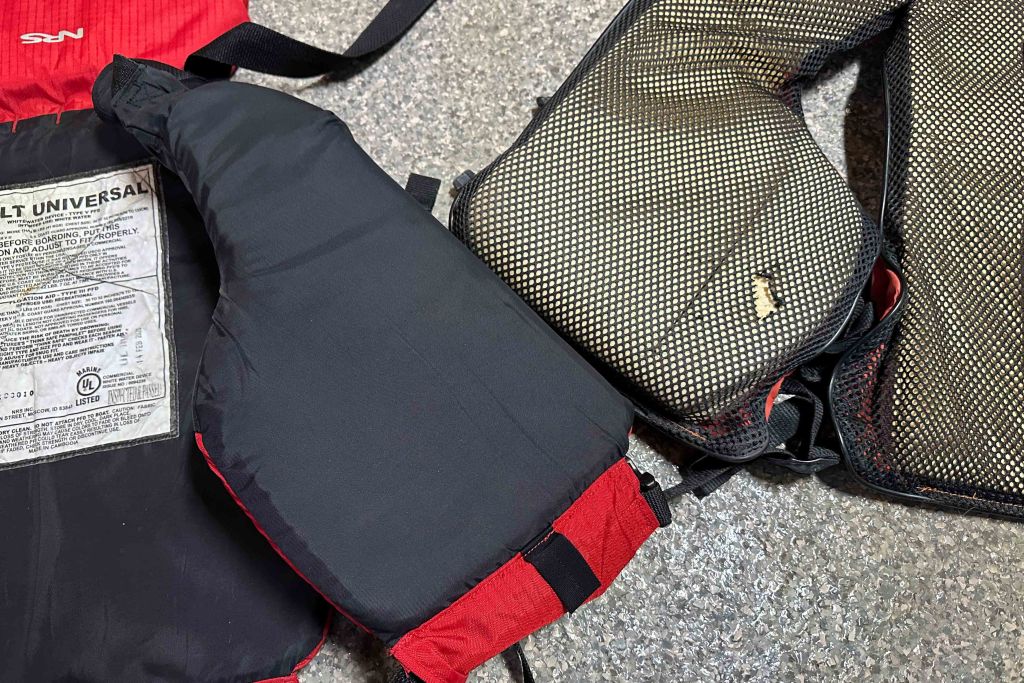
It’s important to remember that your PFD is a water safety tool that will deteriorate over time. No matter how well you maintain your PFD, it will degrade due to normal use and, eventually, it will need to be discarded.
Regardless, there are ways to lengthen its lifespan by avoiding improper handling and storage.
Let’s dig into the specifics of why a PFD will wear out and what you can do to extend its useful life.
Reasons a PFD Will Wear Out
Sun Exposure

The sun might give us that lovely tan, but your PFD isn’t a fan. Continuous exposure to the sun’s harmful UV rays can weaken the material, causing it to fade and degrade.
Now, you may be asking, how can you avoided excessive sun exposure when we use a PFD exclusively outside? Well, you can’t. Hence PFDs will inherently wear down with normal use.
Some methods to help avoid excessive sun damage to your PFD include storing it indoors and periodically applying a UV protectant coating.
One of the best UV protectants for your PFD is called 303 Protectant. A small amount applied to your PFD once or twice a year will help deflect UV rays that will fade and weaken the material.
303 Protectant is the same solution we use for cleaning and protecting our raft.

Moisture, Humidity, Mold, and Mildew
Storing your PFD where it can dry out will increase its lifespan. If it is stored wet, mold and mildew can grow, giving it a funky smell. Further, this organic growth will deteriorate its structure and weaken the fabric.
Best practices for avoiding mold and mildew on your PFD include rinsing it with fresh water after each use and hanging it up to dry in a cool, shaded area.
If you’re only using the PFD in fresh water lakes, whitewater rivers, rinsing it likely is unnecessary.
Saltwater Exposure
Prolonged exposure to saltwater can leave residues on your PFD, leading to material degradation. Further, salt water has corrosive properties that can prematurely reduce the strength of buckles and fabrics.
To lessen the impact of saltwater on your PFD, rinse your PFD with fresh water after every use in a saltwater application. Those primarily running freshwater rivers don’t have to worry about saltwater affecting our PFD.
High Temperatures
Another reason PFDs wear out is exposure to high temperatures. PFDs are made of synthetic materials that are buoyant and durable. However, overly hot temperatures can damage these materials quickly.
Hot surfaces, heating elements, or scorching temperatures in your car can lead to a PFD deteriorating swiftly.
When not in use, store your PFD in a cool, shaded area—not on your car’s dashboard!
Harsh Chemical Exposure
A lesser known cause a PFD wears out is exposure to harsh chemicals. Your PFD isn’t trying to join a science experiment, so keep those harsh chemicals away! This includes sunscreen and bug spray.
Chemicals can break down the materials, making them less effective and trustworthy over time. We recommend taking your PFD off before applying sunscreen or bug spray.
We believe you should rarely clean your PFD with soap or other chemicals. Retain those dirt and blood stains on it as badges of honor!
However, if you must clean it, use a mild soap solution like Dr. Bronner’s and rinse all soap residues away when you’re done. Avoid contact with all other chemicals to help prolong its useful life.
Physical Wear and Tear
The more adventures you embark on, the more wear and tear your PFD will endure. Scratches, tears, and punctures from sharp objects or rough surfaces can take a toll.
Before every use, you should physically inspect the integrity of your PFD. Examine if there is any damage that is new since last time. Further, after taking a swim out of a raft, people will often scrape up against rocks or other river debris causing unwanted damage.
If the buckles, webbing, zippers, or cinching mechanisms appear damaged or weakened, consider replacing the PFD immediately.
When whitewater rafting in Colorado, where physical damage to your PFD is not uncommon, we like to have a backup PFD with us. Or, at the very least, we bring a backup PFD in the car.
The NRS Ninja is a great budget-friendly PFD. We like to keep this PFD as a backup because it has a low profile, a Type III safety rating (acceptable for whitewater), and is less expensive than other high-end PFDs.
The NRS Ninja also comes in a variety of cool colors for a more personalized look!
Areas You Should Inspect Your PFD For Damage:
- Buckles
- Zippers
- Shoulder Straps
- All webbing
- Adjustment & Cinch Mechanisms
- Outer Fabric
If you notice that any areas on your PFD are broken or worn thin, it’s time to retire the PFD and/or contact the manufacturer for a repair.
What is the lifespan of a PFD?
There’s no specific expiration date on most PFDs. However, the more a PFD is used, the quicker it’ll require replacement.
In general, you should expect your PFD to keep you safe for several years if taken care of.
If you use a PFD 100 days a year, it will only last a few years before it becomes unsafe. If you are a 10-day-a-year recreational user, your PFD will last much longer.
In any case, it is inevitable that you will have to discard your PFD some day, even if you only use it casually.
How to Care For A PFD
Here’s a list of tips to care for your PFD that can help you extend its useful life.
Rinse After Use
If you’ve been in saltwater, give your PFD a good rinse with fresh water. Or if your PFD got excessively muddy or dirty, give it a shower with a garden hose.
Excessive amounts of sand, dirt, and grime can slowly wear down the webbing and other material on your PFD that keep it functioning well. Some western rivers can get mucky at times, especially during periods of high streamflows. If the river you’re float is not crystal clear, it’s best to rinse your PFD with fresh water when you get home.
Dry Properly
Ensure it’s completely dry before storing it to avoid mold and mildew. Hang it in a well-ventilated, cool area for best practices.
If you must hang them outside, do it in an area with ample shade.
Avoid Storing it in Direct Sunlight
Harmful UV rays are a top cause for a PFD to wear out. Store your PFD out of direct sunlight to protect it from those pesky UV rays. If you must let it dry in the sun, do it only briefly.
Storing a PFD outside in the sun is not recommended.
Stay Away from Chemicals
If you need to clean it, use mild soap and water. Avoid harsh chemicals or solvents. Do not use bleach or other heavy solvents to clean your PFD.
And remember to take your PFD off before applying bug spray or spray on sunscreen.
Store Flat or Hung
The best way to store a life jacket or PFD is to lay it flat in a dry, cool environment. You should avoid folding or compressing it, which can damage its buoyancy materials. Never jam it into a container or bin too small.
You can also hang it with a clothes hanger in a closet or somewhere in your garage.
What is the Proper Way to Wash a PFD?
One of the first steps in caring for your PFD is ensuring it is clean and free from excessive dirt and salt water.
After every use in saltwater applications, rinse your PFD with plenty of fresh water from the garden hose.
If your PFD is dirty, gently wipe away dirt and grime with a soft sponge and mild soap. We recommend using Dr. Bronners as an environmentally friendly, mild soap.
If your PFD accumulates mold, wash it away immediately with the same mild soapy solution.
Some people recommend treating your PFD with mold and mildew prevention products, however we believe that simply hanging them to dry in a cool, shaded location is appropriate.
Once a year, you can apply a small amount of 303 Protectant to help repel harmful UV rays from the sun.
When Should You Discard A PFD?
While most PFDs don’t have an expiration date, you should never use an outdated or worn-out PFD.
Nevertheless, it’s understandable for some people to want to keep their PFD for a long time. Some of us become attached to it — like your favorite shirt!
But in reality, PFDs should be replaced from time to time. So how do you know when your PFD needs to be discarded?
Methods of Determining Its Time to Discard Your PFD
TEST THE BUOYANCY:
Before each boating season, jump into some still water with your PFD on to test how it helps you float and how it makes you feel. A worn-out PFD will feel saggy, heavy, and saturated.
Once on land, a worn-out PFD may retain water and remain saturated for a long time.
A PFD in good shape will help you float effortlessly and drain quickly.
ASSESS HOW IT’S BEEN STORED:
PFDs that have been properly stored inside will have a longer life than those stored outside.
You should only use a PFD that’s been stored correctly.
Improper PFD storage includes:
- Storing it wet
- Storing it outside
- A PFD that hasn’t been rinse of saltwater
- A PFD exposed to harsh chemicals
INSPECT FOR RIPS AND TEARS:
Through rigorous use, it’s inevitable that a PFD will encounter sharp objects such as rocks, tree limbs, knives, and other debris over time.
As such, if you notice any excessive damage to a PFD caused by a sharp object, it may be time for a replacement.
What should you do if a pfd has a tear in the outer fabric?
If a PFD has a tear, it’s likely time to discard and replace it. However, the answer may be more complicated if your PFD incurs damage while on the water.
If you tear your PFD, you should be prepared to answer the following questions:
- Is the tear cosmetic, or is it part of an integral safety element?
- Do I have access to a spare or backup PFD? If so, put it on!
- Can I safely continue down the river with a torn PFD? If you can’t, it’s time for Plan B.
- Can the PFD be patched or repaired until you reach the end of your trip?
On longer, multi-day overnight rafting trips, you should always carry one extra PFD per raft. If you are day trip rafting or on a commercially guided trip, consult with your guide or boat captain for the best solution to remain safe.
Some of the best ways to perform a make-shift repair of the PFD on the river include:
- Using a fabric patch –> But did you remember to bring this? Probably not.
- Taping it with duct tape –> Every boater should have some duct tape in their river purse or repair kit.
Luckily, most PFDs are constructed with tear-resistant materials such as a ripstop nylon and polyester, and rips are relatively unlikely.
The webbing of a PFD is part of its safety parts and is much more challenging to repair in the field. If your PFD webbing tears, it’s time to retire your PFD immediately.
Should You REpair or Discard Your Old PFD?
The topic of repairing a PFD is typically avoided, because a damaged PFD should most often be discarded and replaced. However, we always recommend contacting the manufacturer if you believe they could be a solution.
In the event of a broken buckle, its possible the manufacturer would sew a new one on for you. We never recommend replacing buckles on your own.
If a non-safety feature of the PFD fails (i.e. a pocket zipper), first contact the manufacturer to get their guidance on how to proceed. If an essential safety feature of the PFD fails (buckles, cinch straps, exterior synthetic material), you should discard replace the PFD immediately.
The Bottom Line
In order to care for our gear, it’s important we understand what causes a PFD will wear out. Some of the leading culprits of PFD damage include UV rays, improper storage, and physical wear and tear.
Should you incur a tear in your PFD’s fabric, you may have to make some quick assessments on the water, including if you can repair it or if it’s time for Plan B (discarding your old PFD and getting a new one).
While our beloved PFDs might face some natural wear and tear, with some care and attention, we can ensure they serve us well for many future river adventures.
Take care of your PFD, and your PFD will take care of you.
Happy boating!
Team Slackwater.