
Using side pressure in fly fishing is a technique that can make a huge difference when you’re attempting to land a big fish.
Most seasoned anglers and some beginners know what it’s like to hook into a big fish. Conversely, most of us know what it’s like to lose one. That’s why we practice using upstream side pressure as one of the best ways to land large trout when fly fishing.
For those unfamiliar, applying side pressure is when you use your rod horizontally (to the side) rather than just keeping it high and vertical. It’s a tactic that can make all the difference when trying to steer a feisty fish away from snags, undercuts, or other obstacles.
Applying side pressure is generally the best way of guiding a hooked fish out of its lane and into a zone where you can net it. Furthermore, keeping your rod tip low to the water when applying side pressure will help keep the fish under control beneath the water’s surface.
When a fish fights under the water, it helps prevent it from jumping, which is a crucial moment when many fish are lost.
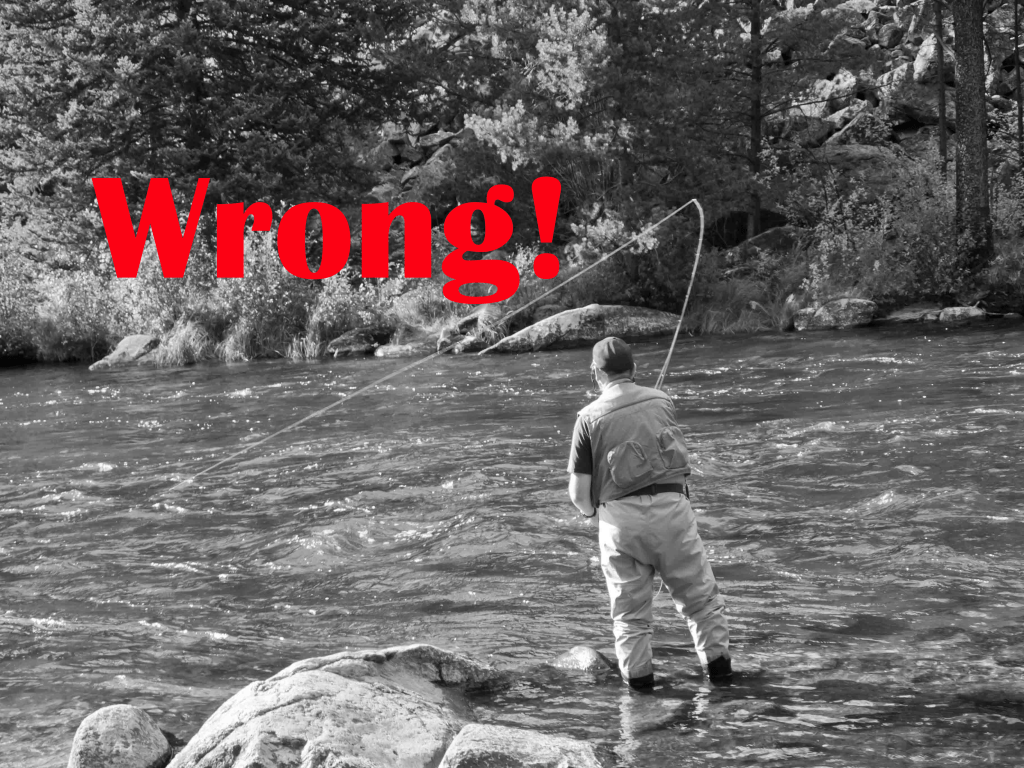
In the title photo, the gentleman is applying upstream pressure with his rod tip relatively high in the air. In many instances, this will put the hook right out of the fish’s mouth. A better technique would be to rotate his rod downstream (to the left) and apply side pressure that way. Then, he should move downstream with the fish to get back into a position of power, which is below the fish. Learn more about fighting fish downstream of you here.
Many guides will tell you that when a fish bites, swiftly raise your rod straight up in the air and keep it there.
Well, we’re sorry to say that their instructions aren’t the best way to land big fish.
Our instinct is often to raise the rod high. We’ve seen this in photos and what we did as kids when we were spinner fishing.
While this works to protect light tippets and gives some control, it doesn’t always provide the maximum leverage to guide or turn the fish, particularly if it’s a sizable one. This is where side pressure comes into play.
By moving your rod to one side and applying pressure, you’re effectively using its leverage to guide the fish in the direction you’d like it to go. Your rod will bend deep, and by keeping the rod tip close to the water surface, you improve your chances of keeping the fish under water rather than allowing it to jump and unhook itself.
So when should you use side pressure? The short answer is ALWAYS. But there are times when side pressure isn’t the best.
Keeping that side pressure may be more difficult and less natural when fishing from a raft or a drift boat since you’re floating downstream with the fish. When drift boat fishing, the best thing you can do is keep pressure on the fish and get it to the net as quickly as possible
Here are two primary times when side pressure should be applied:
- Avoiding Obstacles: When a fish is headed towards underwater hazards like rocks, trees, or roots, applying side pressure can change its direction and prevent it from reaching these snags. You can switch the angle of the side pressure from left to right, but if possible, try to keep the pressure on the upstream side of you. Upstream side pressure is best for not inadvertently guiding the fish into a downstream position.
- Guiding Fish to The Bank: Use side pressure to guide the fish towards you, where you have a better chance of netting it. Use the drag system on your reel to not put too much pressure on the fish.
Guidelines for How To Use Side-Pressure:
There’s never one way that you can hook a fish or land a fish. However, the list below discusses several common scenarios where a specific type of movement and direction of side pressure can help you land a big fish.
The Scenario: You are wade fishing, and the river flows from your right to left.
- The hooked fish is upstream of you: Point your rod tip to your right (upstream) and keep it close to the water. Apply side pressure to bring the fish towards you.
- The fish is directly across the river from you: Methodically move downstream of the fish and continue putting upstream side pressure on the fish to your right. Continue moving downstream until you’re in a comfortable position downstream.
- The fish was hooked downstream of you or has run downstream: Apply side pressure on your left side while making moves to get downstream of the fish. Keep pressure on the fish as you move. Once downstream of the fish, rotate the rod to your right side and apply upstream-side pressure.
The next time you’ve hooked a big fish, remember to use side pressure as a best-practice technique to bring the fish to your net. Apply the pressure upstream whenever possible to have the best chances.
Read more here on how to fight fish downstream of you.
Thanks for reading, and have a great day on the water.
Team Slackwater.