
At the end of a guided fishing charter, it’s time to take care of the people who took care of you with a tip. However, you may wonder what is the appropriate amount to tip your fishing guide and what is the best way to do it.
We recommend the tip for a guided fishing trip should start at 20% with your descretion to adjust it up or down depending on your satisfaction. If you had a great time, tipping more than 20% is appreciated. But if your trip was less than satisfactory, it can be appropriate to tip less than 20%.
Tipping less than 20% is okay so long as you also discuss with your guide how your expectations were not met. It is never appropriate to leave no tip, as guides rely on gratuities as a significant portion of their earnings.
In this article, you will learn about how much to tip a fishing guide, what is the best way to tip, gratuity recommendations for multi-day fishing trips, and tipping guidelines for a 4 hour fishing charter.
How Much To Tip a Fishing Guide Or Charter
Many anglers’ problem isn’t that they don’t want to tip but that they simply don’t know how much to tip their fishing guide. Further, many people don’t know what is expected or the proper tipping etiquette when tipping their guide.
Tipping is a customary way to acknowledge your guide’s effort and expertise. While there’s no one-size-fits-all answer, a 20% tip is customary for a guide that does a good job.
And at the end of the day, however, you are in the driver’s seat and it is up to you to determine how much to tip.
Recommended Tipping Amounts for a Fishing Guide:
If you had a great time on your guided fishing trip, these are the recommended amounts you should tip your guide.
- $400 trip cost > $80 Tip
- $500 trip cost > $100 Tip
- $600 trip cost > $120 Tip
- $700 trip cost > $140 Tip
Think of it similarly to dining in a restaurant. If your server makes great menu recommendations, entertains you, ensures your wine glass stays full, and makes you feel at home, you should reward them for their efforts!

If you communicated your expectations to your guide and believe they did their best to meet them, a 20% tip is appropriate and customary.
Otherwise, we recommend tipping them however much fun you had. Did they knock your socks off and show you and your family the best time ever?
Then, perhaps a larger than 20% tip is appropriate.
Now, we understand that not every guide is made equal, and not every guide is there to meet or exceed your expectations. Some guides believe their only job is to help you catch a gazillion fish, and they couldn’t care less about your other goals to have fun.
If that’s the case, we recommend explaining to your guide how your expectations were not met and tip them however much you feel is appropriate.
Read more below on the characteristics of the best fishing guides and a list of the things a guide won’t do.
What Is The Best Way to Tip Your Guide?
However much you decide to tip, it is best to do it in cash immediately after your trip.
Cash in hand not only feels good to receive but also to give.
Tipping someone with cash is an immediate, physical way of saying “thank you for taking care of me.” Additionally, a cash tip ensures that your guide receives the full amount promptly, without any potential issues associated with checks, credit card fees, or Venmo transfers.

As such, cash is king, and it is the most appropriate tip for your fishing guide.
Regarding timing for when you give them a tip, it’s best to do it immediately at the end of the trip. It’s never appropriate to “Venmo” them later. Instead, be prepared with cash and do it right.
Since most tips for a fishing charter will be around $100 (give or take), we recommend carrying $20 bills so that you can easily adjust your tip up or down based on your experience.
Tipping Etiquette for Group Fishing Trips
For group fishing trips, all parties must coordinate how and when they will tip their guide before the trip. Ensure everyone in the group understands the etiquette for tipping and how much each member will be responsible for.
Having this discussion during or after the trip can get mucky and make the situation uncomfortable.
Instead, talk about tipping etiquette the night before and make sure everyone understands the process and has cash on them.
It can be a good idea to delegate one person who is in charge of tipping the guide rather than everyone scrambling for their wallet a the end of the tip.
Other Considerations for Tipping

There are a few other considerations to make before deciding on the right tip for your fishing guide.
- Avoid basing your tip on the number or size of fish caught. Instead, your tip should be based on whether your guide met or exceeded your expectations. It’s important to communicate your expectations before the trip begins so your guide can do their best to meet that goal. Even if the numbers or size of fish aren’t what was expected, you’ll know if your guide busted their butt or not.
- Tip them with money, not things. Guides rely on cash tips, not possessions, to earn a living and pay their bills. Gifting your guide something other than cash is okay, as long as it’s not in place of a fair tip.
- If someone else booked your trip, it’s still your responsibility to understand tipping etiquette. One of the most frustrating things is when someone other than the angler books the trip, and the angler doesn’t know the price. It’s the angler’s job to investigate the cost of the trip in advance so they can plan on providing a fair tip for their fishing guide.
- If you can afford the trip, you can afford the tip. If tipping a fair amount will break the bank, you probably shouldn’t hire a fishing guide in the first place.
Tips for Fly Fishing Guides vs Deep Sea Fishing Charters
It is clear that a deep sea fishing charter guide incurs a substantial amount of costs to make a trip successful — their boat, fuel, tackle, slip rentals, deckmate labor costs, etc. Fly fishing guides also incur large costs include their tackle, flies, transportation to the river, and costs of their boat for float fishing applications.
Although completely different types of fishing experiences, both are cost intensive up front and your tip should be comparable between the two. As such, a 20% tip for a 4-hour fishing charter or a 4-hour fly fishing trip is appropriate.
Most guides, whether on a deep sea charter or a trout fly fishing trip, will be personable and have great communication skills. Should you have any questions about what is customary for tipping, we recommend simply asking your guide the question.
Tipping on Multi-Day Fishing Trips – How and When?
It often gets confusing when you’re on a multi-day guided fishing trip with the same guide (or the same group of guides), and you wonder if you should tip them every day or only on the last day.
The answer to the question isn’t straightforward, and we can see both arguments as valid.
If you’re fishing with the same guide every day of your trip, taking care of them all at once on the last day can be appropriate. After all, your tip is a sign of gratitude for how well they cared for you over the entire trip, not just one day.

However, if you switch guides daily, it’s generally best to tip them every day to ensure they receive their reward immediately.
Lastly, the answer to this question can depend on how well you and the guide know each other.
If you are fishing with a guide who knows you well and trusts your ability to tip them fairly, waiting until the last day of the trip may be appropriate. But if you and your guide have a new relationship, it can be best to tip them daily. This method helps build the relationship since the guide will be confident you won’t stiff them.
What Can You Expect From A Fishing Guide?
In its simplest form, a fishing guide is in the hospitality business. They are there to show you a good time, take care of you, help you have fun, and assist with catching trout.
A fishing guide will point you to the best spots to find feeding fish. They will also be knowledgeable about the type of food the fish eat during specific times of the year.
A guide is responsible for all aspects of your trip, making the experience seamless and memorable. Your guide will supply the necessary gear, including waders, boots, rods, reels, flies, and all other essential angling tools.
On the water, your guide will be your instructor, fish-netter, knot untangler, rig-setter-upper, and companion.
Characteristics of the Best Fly Fishing Guides
The best fishing guides will have an excellent sense of hospitality. After all, we’re in the business of serving you!

The best fly fishing guides should portray the following characteristics and skills:
- They ask great questions and listen well.
- They anticipate your needs before you have to communicate them, like a server at a fine dining restaurant.
- They have multiple teaching techniques and will adapt to your learning style.
- They are personable and fun to be around.
- They are great with kids and adults alike.
- They are positive humans, and their patience is world-class.
- They are experts at their craft — they should be REALLY good at fishing.
- They emphasize efficiency and maximize your time with them. You pay good money for a day with a guide. Thus, they should never make you wait on them.
- They serve you for today, but remember the importance of tomorrow. In fly fishing, the best guides emphasize proper catch-and-release techniques that consider the fish’s health and the fishery’s conservation.
What Doesn’t (Shouldn’t) A Guide Do?
- Promise you’ll catch fish. A guide will put you in the best position to catch trout and teach you all they know during your time together. However, it is up to the client to listen to their instructions and do their best. These people are guides, not gods.
- Take a photo of every Fish. Holding fish out of the water is never good for the fish; thus, photos may sometimes be limited. If a photo is appropriate, your guide will let you know.
- Put you in an unsafe place. Not many folks consider fly fishing to be dangerous. However, moving water always poses risks. If you ever feel uncomfortable in the water, let the guide know, and they’ll find a more accommodating location.
Recommended Tip For a 4 Hour Fishing Charter
Many fishing trips, whether fly fishing, conventional fishing, or deep sea fishing, last around four hours. As such, many anglers want to know the recommended tip for a 4-hour fishing charter.
The same tipping guidelines apply for a 4-hour fishing charter as a 6-hour or 8-hour fishing charter.
20% of the total trip cost is customary if the guide does a good job and meets/exceeds expectations.
If a 4 hour fishing charter costs $500, a $100 tip is appropriate. But if a 4 hour fishing charter costs more, do a quick calculation on what a 20% tip is and bring that in cash.
How Much Do Fishing Guides Make?
Fishing guides can make a good living if they are smart business people and build a solid client base. But don’t think the entire fee for a guided fishing trip is pure profit!
If the guide owns the business, they will incur additional expenses. These expenses can include the cost of waders, boots, insurance, rent, credit card processing fees, and payroll for their staff.
If the guide is an employee of an outfitter, they may receive 40-60% of the total trip fee plus tips.
But even then, guides who are employees also incur several costs to ensure your trip goes off without a hitch.
The Ins & Outs Of How Fishing Guides Earn a Living:
- Most fishing guides provide you with their own personal rods, tackle, boat, and transportation. In fly fishing, a guide will invest thousands of dollars for their gear that they provide you. A drift boat can cost over $12,000 alone, not to mention their arsenal of $500-$1,000 fly rods they provide you to fish with. And that doesn’t even include the gas or wear and tear on their vehicle when they take you to and from the river.
- Guided fishing income is generally seasonal, meaning a guide doesn’t earn year-round. Most guides fill in the gaps with other jobs during the off-season.
- Many guides are required to carry their own insurance and permit fees. These costs add to the overhead of being a guide.
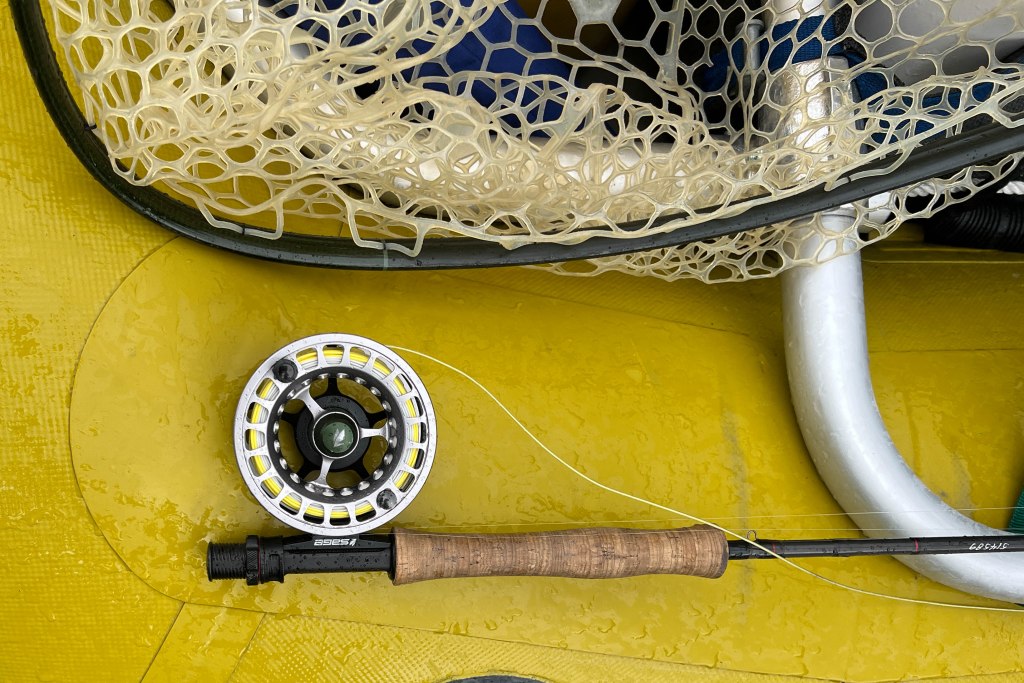
Being a fishing guide is like being an employee of a very well-paying business. However, you also have costs to simply be that employee and earn the trip fee.
A guide can make a good living; however, to make it worthwhile, they must recover several upfront and recurring costs. Tipping your fishing guide is a great way to show your appreciation for someone who was prepared, knowledgeable, and professional.
Conclusion
Being prepared to tip your fishing guide with cash is part of being a good client. In most cases, a 20% tip is the proper amount to tip them if they meet or exceed your expectations. Fishing guides not only are experts in their field, but they incur substantial costs up front. Additionally, guides spend countless hours practicing their craft when not guiding so they can be prepared when you hire them.
For more information on guided fly fishing in Crested Butte or other locations in Colorado, please email us at info@slackwaterco.com.
Thanks for reading.
Guided Crested Butte Fly Fishing Awaits!
If you’ve ever dreamed of a Colorado guided fly fishing trip, look no further! Our author, Dan Jones, is a premier fly fishing guide based in beautiful Crested Butte, Colorado. Learn more about a Crested Butte fly fishing trip today!