

Many people getting into rafting or any whitewater sport may need help distinguishing the difference between oar and paddle rafting.
Rafting can be experienced in different ways, with “oar rig” and “paddle rafting” being two distinct methods. Each approach offers a unique experience, catering to different preferences and levels of participation.
These two methods of rafting are different, and both have redeeming qualities depending on the purpose of the rafting trip.
Let’s dig into the details of oar vs paddle rafting.
Oars vs Paddles – How They Differ
Before getting into the details on how the two types of rafting, its crucial to have an understanding of the differences between and oar and a paddle.
What is an Oar?
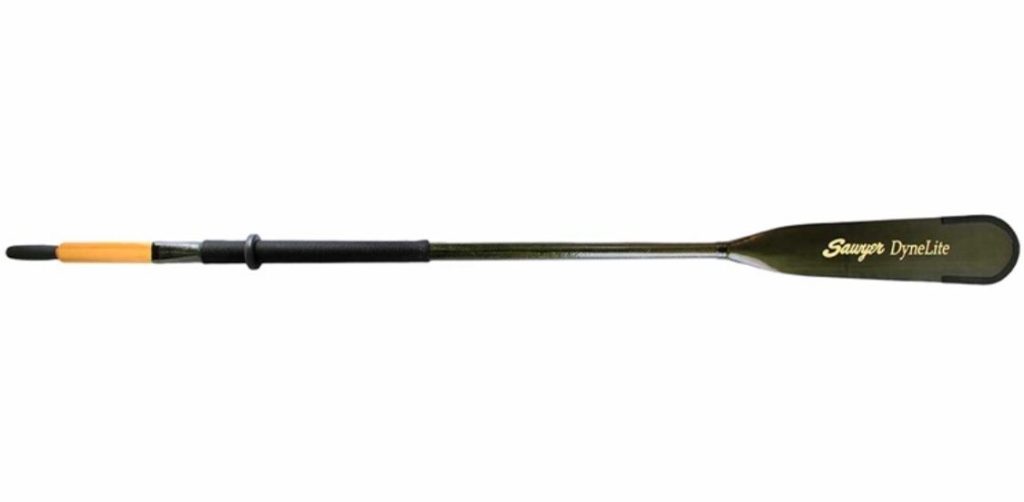
An oar is an instrument used to propel a watercraft forward. It is longer than a paddle and stationed at a pivot point on the boat. The location the oar pivots on is U-shaped and called an oar lock.
The longer portion of the oar (aka the Outboard section) is on the outside section of the boat. The section that’s on the side of the boat is called the Inboard section.
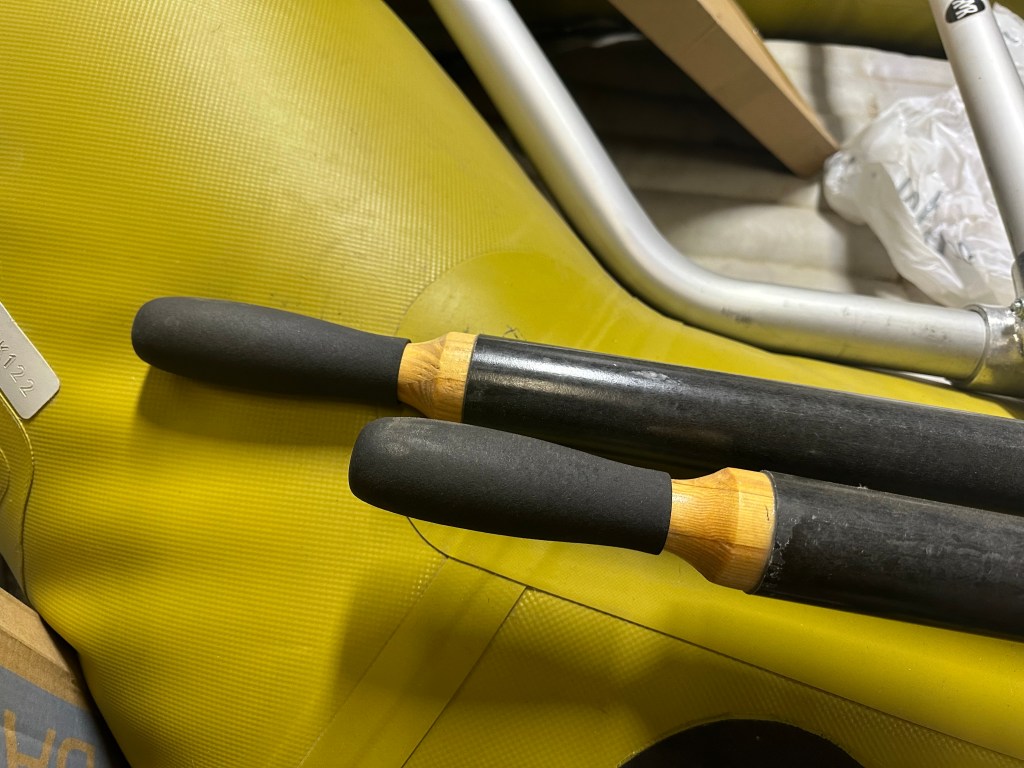
Oars are used when rowing a boat. The rower, or captain, pulls or pushes on the short end of the oar while the long end is in the water. This motion moves the boat forward or backward.
When rowing a raft, the captain will be in charge of the oars to help navigate the raft down the river.

An oar’s length for rowing a raft will vary from 8 to 11 feet long.
Below is a video of someone rowing a raft through a large rapid in the Grand Canyon, Hance Rapid. You’ll notice the longer section of the oar is dipped into the water while the captain pushes or pulls the shorter end of the oar to move the raft.
The Parts of an Oar
There are three distinct parts of an oar.

- Handle/Grip – the part you old
- Shaft – the longest part of the oar between the handle and the blade
- Blade – the part of the oar that’s dipped into the water to propel the raft.
When rowing a raft, you push the oars away from you to move the boat forward. You pull the oars toward you to slow the raft down or go backward.
To get the leverage needed to maneuver the raft, oar locks are needed.
The oar lock is bolted to the frame of the raft and helps secure the oar to the boat. Most modern oar locks are “cobra” shaped, like the letter “U”.

What is a Raft Paddle?
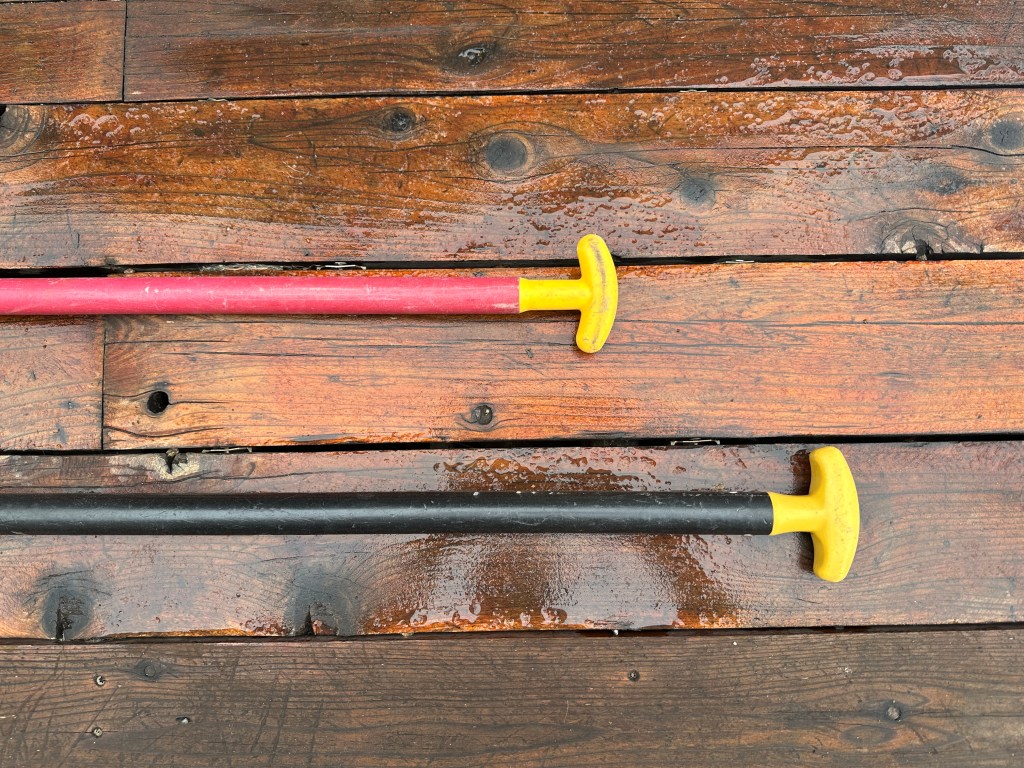
A paddle is a rafting tool for which you hold on to with two hands to propel the boat forward or backward.
Paddles are generally sold as a single item, whereas an oar may be sold in a pair.

Paddles are around 5-feet long and consist of the same main components of an oar: the grip, the shaft, and the blade.
Paddles for rafting are comparable to paddles used for canoeing. When using a paddle, there is no pivot point like an oar uses. Instead, rafters will dig the blade into the water in front of them and pull the boat forward.

How Are Oar and Paddle Rafts Different?
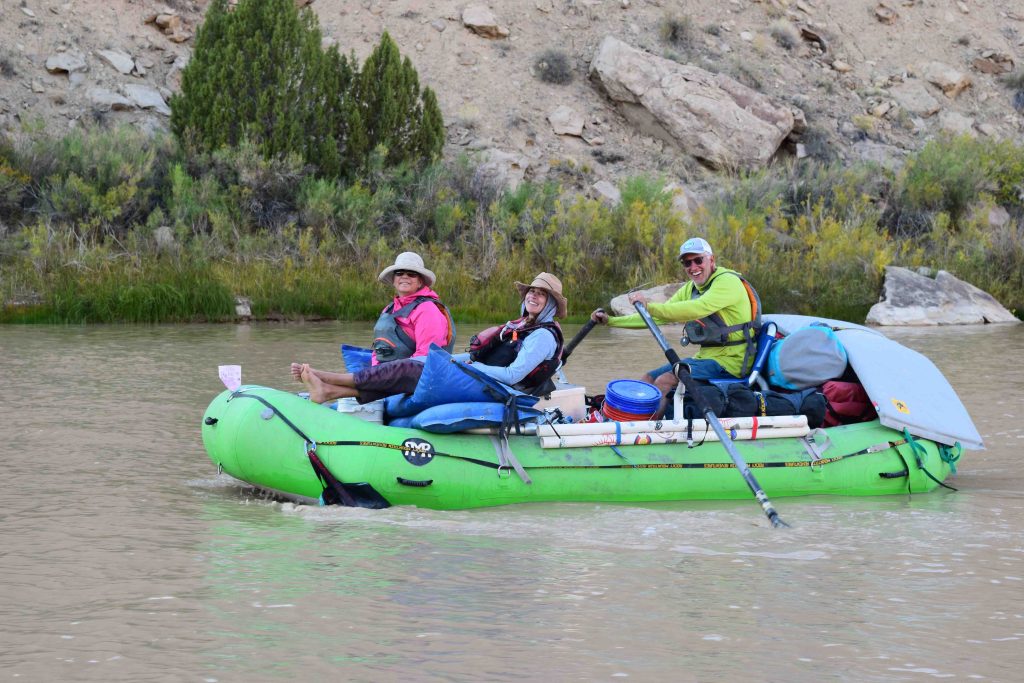
A whitewater raft with an oar rig has a metal (usually aluminum) frame strapped to the boat and is set up for one person to maneuver the raft down the river with oars. The energy created from the guide rowing the oars transfers to the frame and, ultimately, the raft.
An oar rig is set up to carry fewer people than a paddle raft but can hold hundreds, if not thousands, of pounds of gear for extended expeditions.
Oar boats are also used in float fishing applications. These types of rafts are maneuvered by one person who controls the oars.

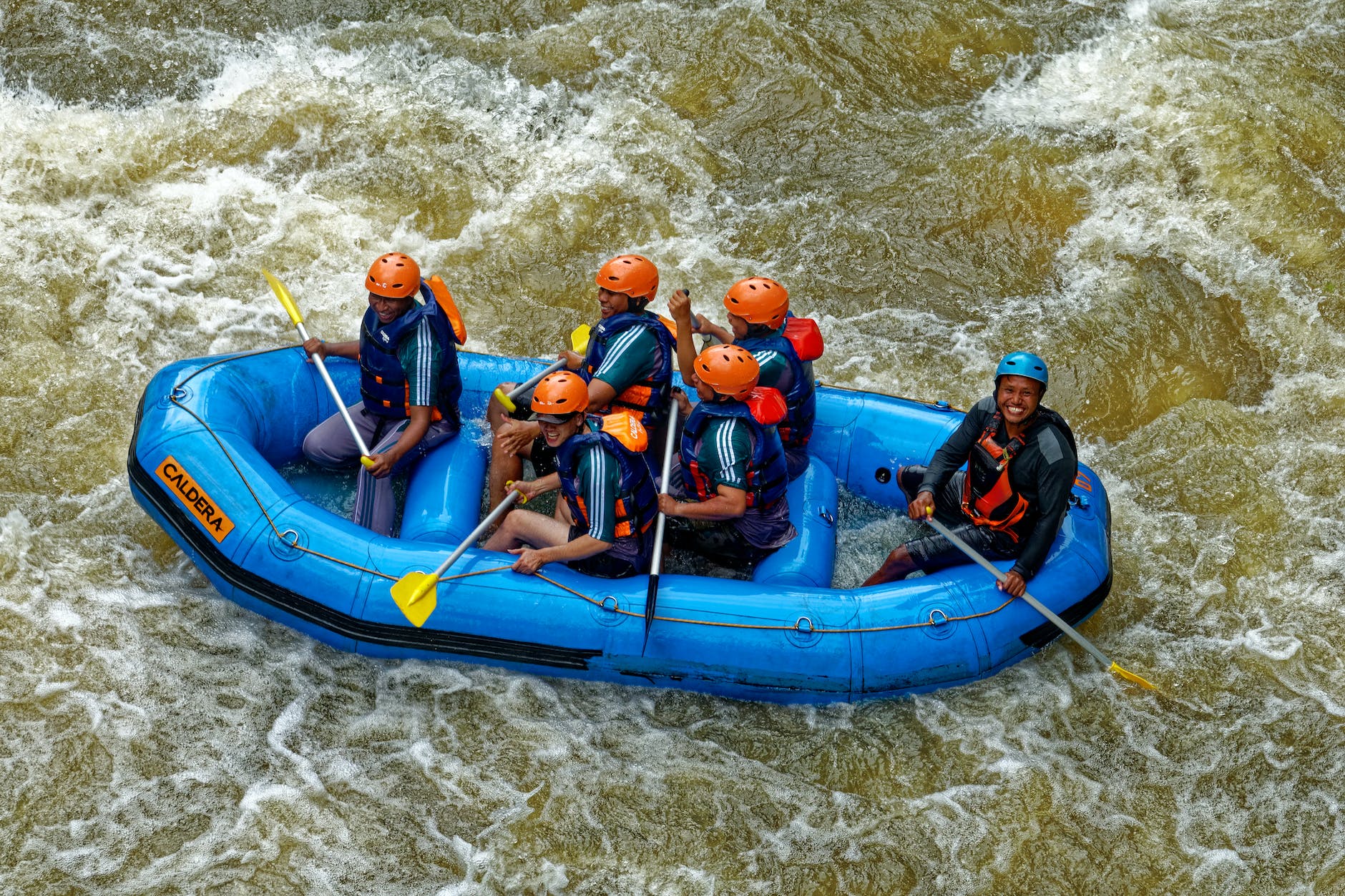
A paddle raft is used when several people paddle it down the river. All passengers help the raft navigate rapids and other obstacles. Paddle rafting is geared towards shorter river trips and emphasizes carrying people over gear.
Paddle rafting is generally less logistically intensive than oar-rig rafting, for several reasons.
Let’s dig into the details of oar rig rafting.
Oar Rig Rafting Basics
There are several reasons why oar rig rafting is different from paddle rafting. Let’s explore the main characteristics of an oar rig vs a paddle raft.
Control
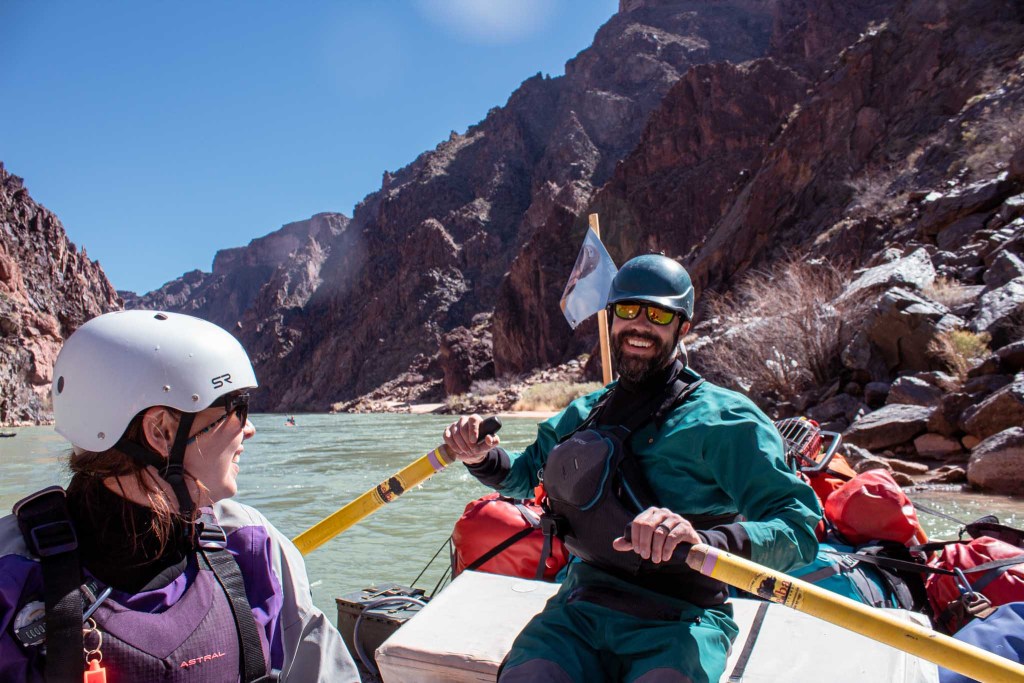
The guide uses oars (long poles with attached blades) to steer and navigate the raft in an oar rig. This setup allows the guide more control over the raft’s direction and makes it easier to maneuver through rapids.
Typical oars are between 8 and 11 feet long. The length of the perfect oar can also depend on personal preference or the style of the raft. The wider the raft, the longer the oars needed.
With an oar rig raft, only person, the captain, is required to be on the boat. This differs from paddle rafting where multiple people are generally required to help maneuver the raft.
Passenger Experience
Participants in an oar rig typically have a more relaxed experience as they don’t need to actively paddle. Instead, they can focus on enjoying the scenery, listening to the guide’s commentary, and occasionally assisting with balance or weight distribution.
Guide’s Role
Oar rig guides play a significant role in navigation, ensuring the raft takes the safest and most efficient path through rapids. Overall, the guide has an enormous responsibility to keep the boat upright and the passenger(s) safe.
This approach is particularly suitable for individuals who want a relaxed passenger experience.
Scope & Price
Although paddle rafters can take their boats on overnight adventures, an oar rig is far better suited for this sort of mission. The frame allows for safely hauling tons of gear for days or weeks. Oar rig rafting often requires the use of a trailer to transport the boat as well as high levels of logistical planning.
The price to get into a new oar-rig raft is significantly higher than that of a paddle raft. You can expect to spend between $6,000 and $12,000 for all the basic rafting gear needed.
Oar rig gear typically holds value better than paddle raft gear due to the aluminum frames that can virtually last a lifetime. As such, oar rig rafting gear can often be found for 20-30% less than its new counterparts.
Paddle Rafting Basics
Paddle rafting is a completely different beast than oar rig rafting. Here are the main reasons why:
Active Participation
Paddle boating involves participants actively paddling together under the guidance of a guide. The guide gives commands to coordinate paddling efforts, allowing the group to work as a team to navigate rapids.
Teamwork and Interaction
Paddle rafting promotes a high level of teamwork and interaction among participants. Everyone in the raft contributes to propelling and maneuvering the raft, creating a strong sense of camaraderie.
Safely Running a rapid as a team is an incredible experience for everyone!
In paddle rafting, we refer to the number of people on the boat with the abbreviation of “R#”. If you are R2 rafting, that means you are rafting with two people. An R3 boat means your rafting with three people, and so on.
On occasion, people can R1 a raft, but it requires technical paddling skills as well as an acceptance for higher consequences.
Intensity and Engagement
Paddle rafting offers a more physically engaging experience. Participants feel the river’s power firsthand as they paddle through rapids, making it an excellent choice for those seeking an adrenaline rush.
On some rivers, there are short breaks when paddlers don’t have to remain engaged and can simply enjoy the scenery. On more intense rivers, paddlers will be paddling and working the entire time.
Guide’s Role
While guides in paddle rafting still play a crucial role in providing instructions and ensuring safety, participants are more directly involved in the navigation process, adding to the thrill of the experience. The guide is most often responsible for steering and making subtle corrections to the boat’s drift.

Scope & Price
Paddle rafting is generally geared towards shorter missions with fewer logistics. It is simple and requires less gear.
It is possible to take a paddle raft on a long, multi-day rafting trip. However it is more physically demanding than rowing and generally not as comfortable.
Team Slackwater has R2 paddled a raft down the Green River in Colorado/Utah for 42 miles over four days. We completed the mission with smiles on our faces, but we likely won’t take a trip like that again without an oar rig.
Someone buying their first 12-foot raft for paddle rafting adventures can expect to spend between $3,000 and $5,000 on the raft and all gear required. Used equipment can sometimes be found for 30-50% less.
How To Paddle a Raft
When paddle rafting, it is crucial for all passengers to remain engaged and alert. Your guide will call out paddle strokes and it is your job to follow the instructions.


In paddle rafting, you will hold the paddle with two hands; one on the grip and one on the shaft. If you are on the right side of the raft, you’ll hold the shaft with your right hand and the grip with your left. This is the opposite from if you’re on the left side of the raft.
Rather than using just your arms to propel the raft forward or backward, it’s advised you engage your core and use your whole body with every stroke.
Here is a quick video on the techniques for paddle rafting.
Are Raft Paddles Different Than Canoe Paddles?
Rafting paddles are typically the same shape as a canoe paddle, however they may be a couple of inches longer.
In both canoeing and rafting, a single-bladed paddle is used.
Rafting paddles are generally made out of more sturdy material than a canoe paddle due to the extreme nature of whitewater rafting.
Canoe and Rafting paddles are both different than a kayak paddle which has two blades and a single shaft attaching them.
Oar Rigging vs Paddle Rafting – Which one is More difficult?
Over long distances, rowing a raft is a much more efficient way to travel. Additionally, rowing is performed by one person where paddling is typically done by several people.
For running whitewater, paddling a raft is often preferred because the learning curve is less steep than learning to row.
So in general, paddling is easier to learn and very efficient over short distances in fast water with rapids. Rowing is easier on the body over longer distances, but it has a sharper learning curve.
Oar Vs Paddle Rafting Summary
The choice between oar rig and paddle rafting depends on personal preferences and the experience you seek. Both methods of whitewater rafting are rewarding and, most of all, fun.
Many people who are getting into rafting for the first time begin with paddle rafting due to the simplicity of the sport and the lower barrier to entry from a cost perspective. Over time, it is not uncommon for people to invest their time and money into oar-rig accessories for their paddle raft.
At that point, a raft owner is able to run whitewater with friends after work or take multi-day raft adventures through some of the most beautiful places on the planet.