

The Taylor River is one of Crested Butte’s fly fishing crowned jewels and one of the best tailwaters in Colorado. Its Gold Medal waters hold copious amounts of beautiful brown and rainbow trout, many over 18 inches long.
Get the most recent fishing report from the Taylor River here!
The primary area of the Taylor where people fly fish is from Almont to the Taylor Reservoir Dam. This section is approximately 20 miles long, with varying sections of private and public access points.
This trout stream is best accessed from Gunnison, CO to the south or Crested Butte to the northwest. During the summer, it can be accessed from Taylor Park on the west side of Cottonwood Pass.
The Taylor River is one of the more technical fisheries in the Crested Butte area. However, with the right tactics, and skills, this river can offer one of Colorado’s best fly fishing experiences.
Being a tailwater, the Taylor River is a relatively predictable fishery. However, it can also be challenging due to its tricky wading conditions and crystal clear water.
It’s always recommended to fish this river with a friend. And when the water is too high, consider fishing on a neighboring trout stream for the best conditions. Spring Creek is a great option nearby when the flows on the Taylor are too high.
Taylor River flows are best when it’s not blown out during high runoff times. We like to target trout when river flows are more manageable in the spring, late summer, and fall.
Taylor River Description
The Taylor has great fly fishing and is one of Colorado’s best tailwaters. Its consistent flows throughout the summer, ample bug activity for months on end, and cool water temps during the heat of the summer make it a haven for trout.
The sections of this trout stream vary from being a meandering creek at its headwaters to a consistently reliable tailwater below the dam to a raging whitewater river upstream of Almont.
There are four primary sections of the Taylor River:
- Taylor Above the Reservoir
- Catch & Release (C&R) section below the dam
- Upper Taylor (below the C&R and above Five Mile)
- Lower Taylor (Five Mile to Almont)

The only section of the Taylor River that can be fished year-round is the C&R section. The rest of the river will be covered in ice throughout the winter from at least December through mid-March.
The best time of year to fish multiple sections of the river in one visit is between April and October.
| Section | Typical Length of the Season | Best Part of the Season |
| Above the reservoir | May to October | June, July |
| C&R | Year Round | Year Round |
| Upper Taylor | March to November | April, May, August, September |
| Lower Taylor | March to November | April, May, August, September |
Anglers will frequently encounter commercial and private whitewater rafting on the Upper and Lower Taylor from May to September. These sections provide great family-friendly and thrill-seeking whitewater opportunities close to Crested Butte and Gunnison.
Remember to politely share the water with anyone rafting on the Taylor.
Above the Reservoir
The Taylor River begins as a freestone river high in the Colorado mountains above Taylor Reservoir, east of Taylor Peak. It is named about Jim Taylor who was an early prospector in Colorado.
With its true headwaters located below Taylor Peak, the Taylor runs in a general southeast direction past the ghost town of Bowman and the Dorchester Campground until it flows into the Taylor Reservoir.
The river’s tailwater section begins at the Taylor River Dam and travels southwest until it reaches its confluence with the East River in Almont, CO.
There are limited fishing opportunities above Bowman due to the minute nature of the river’s headwaters. Thus, beginning your angling journey no further upstream is generally recommended.
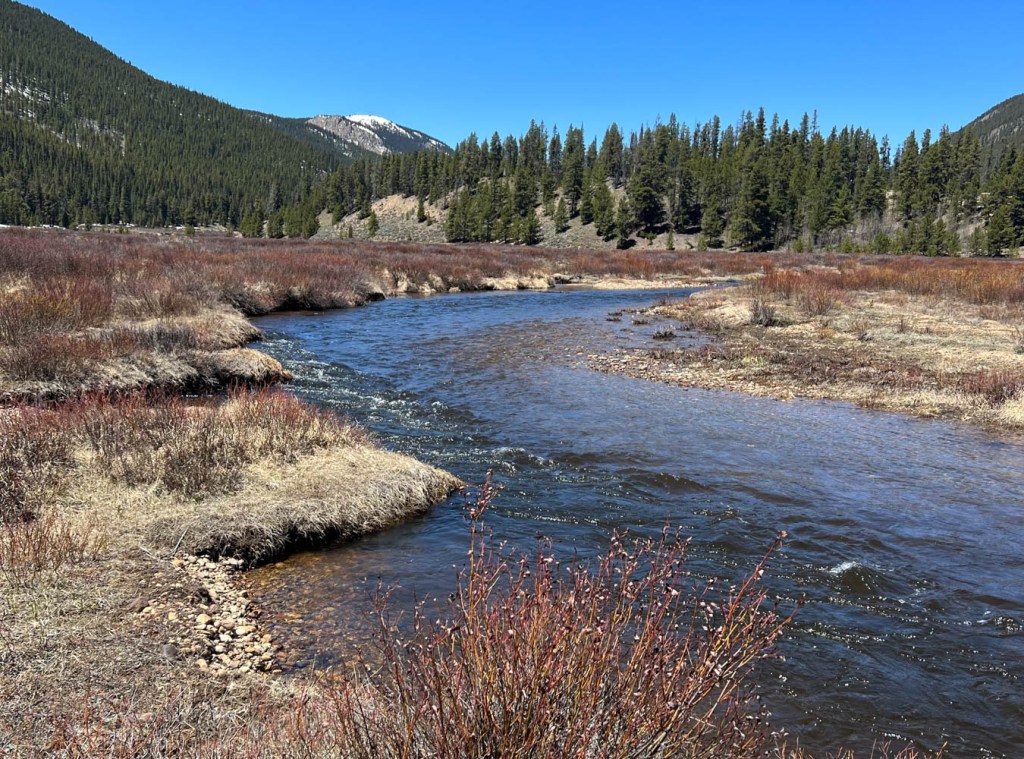
From Bowman to the Taylor Reservoir inlet, there are about 15 miles of water. Here, you’ll find many public access points and some great camping, all in the Taylor Park area.
We like to fish this section when river flows are between 100 and 250 CFS. Check stream flows for this section here.
Anglers can find browns, brookies, and rainbows in the section above the reservoir. Most will be smaller fish in the 8-12 inch range. However, occasionally, a fish over 15 inches can be found in an undercut bank.
Rainbows are stocked in the Taylor Reservoir each summer, of which some will swim upstream near the inlet. Larger Rainbows from the lake will also swim upstream in the spring to spawn. Browns will exhibit a similar routine in the fall when they are getting ready to spawn.
We like to fish with dry flies and/or dry droppers above the reservoir. Excellent flies for this section include Stimulators, Royal Wulffs, and smaller hopper patterns. For nymphs, we recommend not getting too fancy. Pheasant Tails, Copper Johns, and other size 16-20 beadhead jig patterns without too much flash will generally work.
We recommend fishing above the reservoir for a more secluded fishing experience than you’d get below the dam.
The Taylor River above the reservoir is one of the best places to fish in Colorado when finding peace and isolation is your goal.
The creek widens and slows down at the inlet to the reservoir. During certain times of the year, the inlet can be full of stocked rainbow trout from the lake eager to take an egg, leach, or mop fly pattern. We recommend checking out the inlet between May and June for the best opportunities.
Catch & Release Section
Below the dam is the famous Catch & Release (aka C&R or Hog trough) section of the Taylor. This 1/4 mile section of water holds plenty of trout that can reach record size, making it one of the more prolific tailwater sections in the state.
The C&R section also will be busy nearly every day of the spring, summer, and fall, making it more of a “combat fishing experience.” As such, it is not a peaceful experience most anglers are looking for.

While catching a pig of a trout on small flies can be fun, we often recommend staying away from the C&R section for a more peaceful angling experience.
In our opinion, the best time to fly fish at the C&R is in November or March when fewer people will be braving the cold, and the fish will be nearly as cooperative as they are throughout the rest of the year.
Long leaders no smaller than 5x are recommended at the C&R. When targeting the bottom of the river here, we often will use drop-shot or split shot to get our nymphs deep.
On occasion, we’ll use a 6x tippet; however, the delicate nature of a smaller material can make landing a fish difficult and requires precise rod handling.
Every Taylor River angler should have mysis shrimp fly patterns in their box, as this is one of the primary food sources here. Read more about mysis shrimp in the recommended tactics section below.
A size 16-18 mysis shrimp are a great place to start when rigging your fly rod. When fishing nymphs in tandem, pair a size 18-24 midge or a size 18 bead head jig for extra weight.
The C&R section is NOT an easy fishery. To be successful, accurate casts and excellent dead drifts are required. On a busy day, any given fish may see hundreds of nymph presentations, making the fish pretty darn selective.
Please be careful of the redds (aka trout spawning grounds) in the C&R section.
Upper Taylor River
Below the C&R, the river flows through the Taylor Canyon. There are a few miles of river that are not accessible to the public beginning directly below the C&R. You’ll know it’s private land from the tall and pronounced signs, fences, and barricades.
This private section is about three miles long.
Below this private section, the river has tons of public access locations and excellent fishing.
Here are some of the best locations within the canyon to park and explore the river:
The Taylor has some inherently tricky (often dangerous) wading throughout its entire stretch below the dam. The riverbed consists of large, slippery rocks, making moving quickly quite challenging. Further, foot entrapments can be a real risk if you don’t place your foot carefully.
To alleviate some of the wading challenges, we recommend the following:
- Always fish with a partner and keep an eye on each other.
- Use a wading staff for extra support in the swift currents.
- Use wading boots with metal plates or spikes to help grip the slippery surfaces.
- When in doubt, choose a different location.
Lower Taylor River
Approximately 13 river miles downstream of the dam, another large swath of private access takes hold of the canyon.
Some notable private landholders are Harmel’s on the Taylor and the Wilder Ranch home sites. Check out the patio at Harmel’s during the summer for great vibes and live music.
Traveling further downstream, you will encounter the Five Mile River Access. This are includes a boat ramp, a large parking lot, and plenty of public access to the river. There are outstanding fly fishing opportunities from Five Mile to Almont with minimal private land sections.
Because the Lower Taylor is closer to the action in Gunnison, Almont, and Crested Butte, it is often a go-to choice when anglers have limited time to fish.

The lower section is possible to float fish from a raft when flows are sufficient. However, this is not a beginner section of water. There are several Class II+ rapids throughout this section that require quick maneuvers, great balance, and accurate casting.
Taylor river flows most suitable for floating are when water is measured at around 300-400 CFS out of the dam.
Keep in mind that you cannot drive a boat trailer to the river at Five Mile. Instead, you must carry/drag your boat down the steep ramp by hand.
We recommend using a smaller craft because of the inability to drop a boat directly off a trailer. A smaller raft (12 feet long or shorter) with a fishing frame is recommended for floating the lower Taylor.
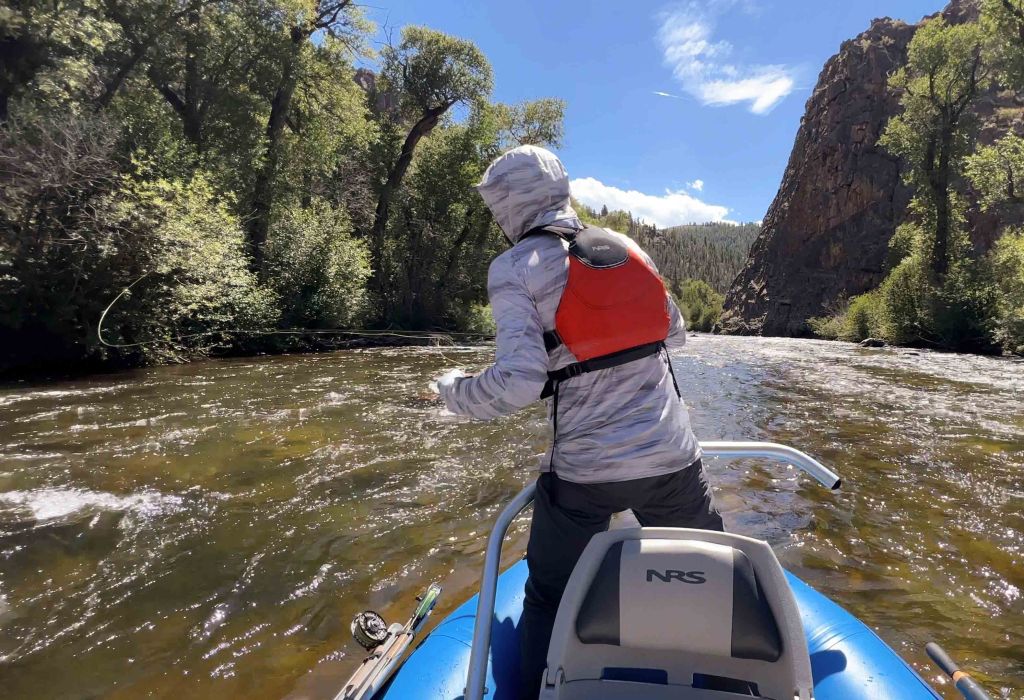
The river below Taylor Reservoir is dam release controlled, meaning flows don’t vary much throughout the day. However, during the height of spring runoff or during/after a significant rain storm, the river’s streamflows will bump up a touch.
Taylor River Trout below the C&R will be primarily rainbows and browns. Most fish in this section will vary in size from eight to 17 inches long. Although it is not uncommon to hook into a trout 20 inches or longer.
Optimal wade fishing conditions are when streamflows out of the Taylor Reservoir Dam are between 180 and 300 CFS, which are typically in April, May, August, September, and October.
You can find links to streamflow data from the USGS below.
Recommended Fly Fishing Tactics
The tactics used throughout the varying sections of water on the Taylor can vary dramatically. Read on to learn the basics of how to best catch fish in each location.
For current, up-to-date information on conditions, check out the Taylor River Rishing Report, a subset of the Crested Butte Fishing Report
Above the Reservoir Tactics
The river is a small and technical fishery in the skinny sections of the Taylor River in the Taylor Park area. Single dry-fly angling on light tackle is recommended for the first several miles of the Taylor’s journey.
Towards the beginning of the season, mayflies will be your best bet. As June comes to an end, caddis may become present with Elk Hare dries being a choice dry fly.
We advise using stealthy approaches to the river not to spook fish.
When in doubt, or when dry fly fishing isn’t in the cards, use a dry-dropper technique with a size 14 or smaller dry fly. Most fish in this section don’t have mouths large enough to consume a fly larger than that.
Reliable nymphs include size 18 pheasant tails, size 16-18 french jigs, and flossy worms with hook sizes between 14 and 16.
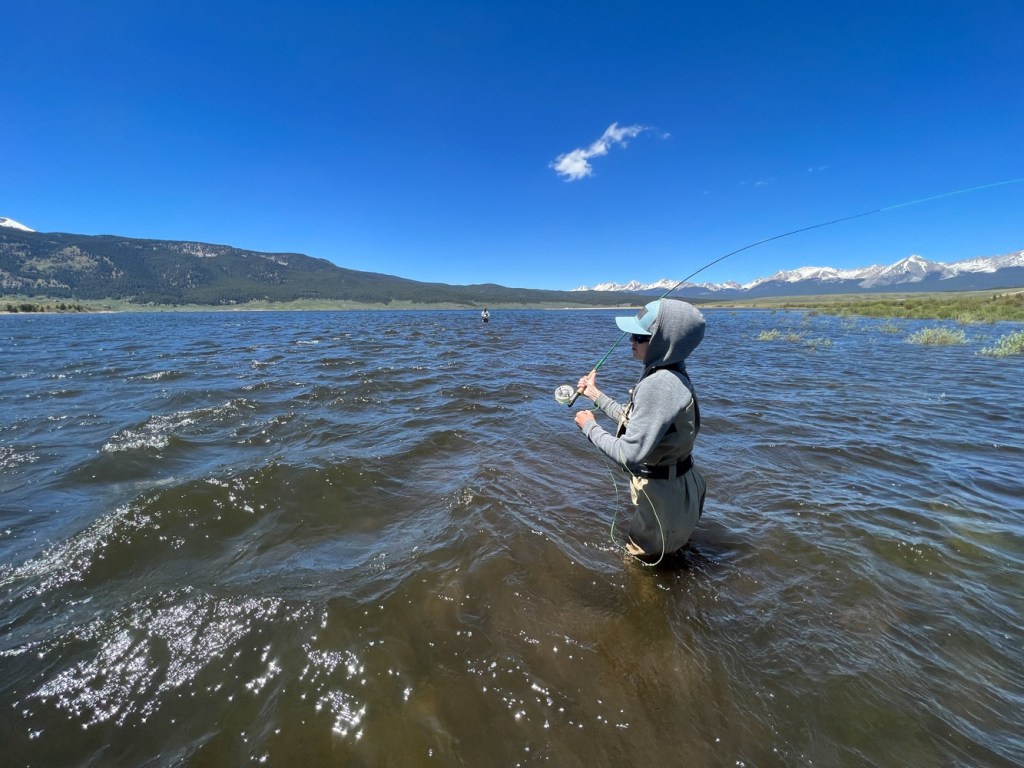
Fishing can sometimes be incredibly hot at the inlet to the Taylor Reservoir, especially in mid to late June. Don’t complicate things too much at the inlet – a bobber indicator with a flossy worm and/or a mopfly will often do the trick.
Other inlets anglers can explore in the Taylor Park area include Texas Creek and Willow Creek. The same tactics listed above can be fruitful at approximately the same times of year.
The maps below show where anglers can park when accessing the Taylor River, Texas Creek, and Willow Creek inlets.
Taylor River Inlet:
Texas Creek Inlet:
Willow Creek Inlet:
C&R Fly Fishing Tactics
At the C&R section, anglers can most consistently fool trout with midges, eggs, small mayfly nymphs, and Mysis shrimp patterns. Mysis shrimp flow out of the dam consistently throughout the year, providing an endless supply of nutrient-rich meals for trout waiting below. Mysis shrimp are one of the reasons trout in the C&R have such vibrant colors.
Mysis Shrimp in Colorado’s Best Tailwaters
Mysis Shrimp, also known as Opossum Shrimp, were introduced into the Dillon, Ruedi, and Taylor Park Reservoirs in the 1970s as a means to feed Kokanee salmon in their waters. As a result, these shrimp-like crustaceans began flowing out of the dams, leading to huge trout fattening up on them within the tailwaters below the dams.
Other great tailwaters in Colorado that contain Mysis Shrimp include the Blue River north of Dillon, CO, and the Fryingpan River northeast of Aspen, CO.
Nevertheless, don’t be afraid to throw a single dry fly should you see fish rising in July or August.
From the C&R down to Almont, watch for the green drake hatch in July and August for some of the most exciting dry fly fishing of your life.
A fantastic Drake imitation is a size 12 Parachute Adams or a large green Drake dry fly pattern.
Using your “inside voices” at the C&R is most appropriate to limit the impact of your presence for others trying to fish in peace.
Upper & Lower Taylor River Tactics
Below the C&R, your primary focus should be on perfect dead drifts in deep pockets and runs. Mayflies, Caddis flies, terrestrials, and junk flies are all appropriate forms of tackle in this section of the Taylor, so long as drifts are deadly accurate.
Nymphs will be your best choice for most of the year, with single/double dry fly opportunities at times and excellent dry dropper fishing in August and September.
Learn more about setting up the dry dropper rig for a versatile fly fishing tactic.
One of the best hatches on the Taylor will be the Green Drake hatch, generally in July. Large drake patterns will often easily fool trout during these hatches, with many fish “dolphin-jumping” out of the water at dry flies. Watch for large insects swarming the surface in early July, and tie on a size 10-14 Green Drake imitation for a guaranteed good time!
However, if you don’t see fish rising, we recommend anglers stick to nymph fly or dry dropper fishing.
Because fish can be a little more picky on this tailwater, we recommend fishing with relatively realistic flies tied most on size 16 and 18 hooks. Hook size matters immensely on the Taylor as fish are typically keyed into the most realistic fly patterns that mimic real aquatic insects.
Although choosing the right hook size for trout fishing is especially important on the Taylor, it’s also an important thing to consider when fishing any rivers in Colorado.
Casts need not be longer than 15-20 feet in most applications. Longer casts for many anglers will result in poor drifts in the swirling currents of the Taylor.

Some of the more aggressive trout in the Taylor will quickly dart downstream after being hooked. Fighting fish downstream of you is challenging and requires skill and (sometimes) luck.
Remember, if the water is moving too swiftly and you’re more concerned about staying upright than getting a good drift, we advise you to consider fishing elsewhere. Read more about other trout streams in the area.
For more information on the specific fly fishing conditions, read Slackwater’s Taylor River Fishing Report.
Taylor River Flows: CFS Measurements
Below are the links to streamflow measurements in three sections of the Taylor River. This data includes up-to-date measurements of how much water is flowing through the stream at any given time.
With the exception of the C&R, the measurements above the reservoir and at Almont will report the stream flows as “ice affected” throughout the winter.
Below are links for the Taylor River flows:
Best Fly Rod for The Taylor
We recommend a 9′ 4-weight rod for the section above the reservoir. This rod will be incredibly versatile with medium-weight nymph rigs and dry-fly rigs. Further, the 9-foot length will help you cut through the wind better than anything shorter.
In the skinniest of water new Bowman (above the reservoir), anglers can put a stubby 7’6″ 2-weight or 3-weight to work, so long as it’s not windy.
For the C&R, the Upper Taylor, and the Lower Taylor, we recommend a 9′ 5-weight or a 10′ 4-weight.
A 9′ 5-weight is excellent for windy days and for when you’re frequently changing between heavy/long nymph rigs, dry flies, dry-droppers, or even streamers.
As a rule of thumb, when fishing Colorado’s top tailwaters, be prepared to hook into big, strong fish. Therefore we recommend using a rod that feels good to you and can handle a large trout.
Our Favorite 9-foot, 5-weight Rods:
- Best budget Rod: Orvis Clearwater
- Best Mid-Price Rod: Sage Foundation
- Best High-Level Performance Rod: Scott Centric
Read more here on the best mid-priced fly rods.
A 9′ 5-weight rod is generally the most versatile rod for Colorado fly fishing applications, and it works pretty well on the Taylor. Furthermore, this rod will also be the easiest rod for a beginner to learn with.
When nymphing is the most productive tactic, we recommend the longer 10′ 4-weight. A rod with these dimensions is excellent for light and heavy nymph rigs. Its length helps the angler mend easily and reach better when high sticking. This rod will also perform well when nymphing was the plan, but conditions warrant a change to a dry fly.
A long 4-weight rod helps a fly fisherman feel the strike better than a 5-weight rod of the same length.
If tactical nymphing is your game, a 10’6″ 3-weight will be your best choice.
Or if you’re strictly cherry-picking days on the small to medium headwaters of the river (on non-windy days), we invite you to check out the Scott G-Series 884/4.
Pros & Cons

Pros
- It can be an incredibly rewarding fishery in terms of trout numbers and size.
- Located in a beautiful canyon below the dam and a gorgeous meadow above the reservoir.
- It’s easy to access from your car, with plenty of pull-outs along Highway 742.
- When fishing is on on the Taylor, you’ll know!
- Taylor River Flows are relatively consistent throughout the summer, making it easier to predict fishing conditions.
- One of Colorado’s best and most reliable tailwater fisheries.
Cons
- High-water fishing is nearly impossible unless fishing at the C&R.
- Rocks are very slippery year-round, making wading dangerous at times.
- Trout are more picky on the Taylor and require deadly-accurate drifts.
- The section above the reservoir has a shorter window for being most productive.
- The C&R can feel like a zoo of people trying to catch “the big one.”
Other Items to Consider
In the spring and fall, trout on the Taylor will spawn, and it’s our job as anglers to avoid disturbing this process. Rainbow trout will spawn in the spring and browns in the fall, creating a nest called a redd in mellow areas of the river.
Redds are shallow areas of the river where a trout has cleared away debris, making a safe environment to lay eggs.
When you see a fish holding in unusually shallow water, it’s an indication the trout is in its spawning phase or protecting her eggs. Avoid casting to trout in redds or stepping in their area during the spring and fall.
Read more about redds to learn what they look like and how to fly fish ethically during a spawn.
How to Get There
From Gunnison, Colorado, travel north on Hwy 135 to the small town of Almont. At Almont, turn right onto Hwy 742 to enter the Taylor Canyon.
Follow this road for 20 miles to the C&R section and another 7 miles to the section above the reservoir.
Public access begins just one-quarter of a mile from the turn-off onto Highway 742.
If you’re traveling from Gunnison or Crested Butte, you’ll first encounter the Lower Taylor, which meets the East River in Almont, Colorado. If you’re traveling over Cottonwood Pass (which is only open in the summer), you’ll attack the Taylor from the Taylor Park area. See the maps below.
Almont, Colorado is where the Lower Taylor ends at its confluence with the East River.
When traveling from Buena Vista over Cottonwood Pass, you’ll be able to easily reach the Taylor River above the reservoir:
Conclusion
The Taylor River is one of our favorite places to fly fish and one of the best tailwaters in Colorado. Anglers from Crested Butte or Gunnison can access the river with a short drive, and there’s always an opportunity to catch a large fish.
There are four primary sections of this river that are great for fly fishing during various times of the year.
For more information about angling on the Taylor River or for a guided angling trip near Crested Butte, please reach out to us at info@slackwaterco.com.
Check out Slackwater’s fishing reports from the Taylor River which will be updated regularly throughout the summer.
Thanks for reading!
Team Slackwater