
Fly fishing can be an exhilarating experience! However, for the beginner fly fishing, it can sometimes feel intimidating.
Angling is hard, and it can have a steep learning curve. That’s why we’ve put together a list of 29 tips to help beginner fly fishers wade through the challenges of catch a fish with a fly rod.
Let’s get to it.
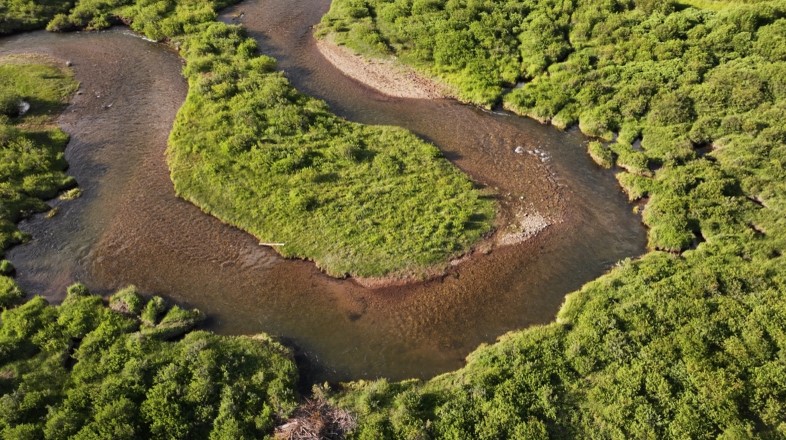
Observe the Water For Trout Feeding Patterns
Take some time to observe the water, including the movement of insects, fish activity, and currents before making your first cast.
These few moments can help you identify what may be happening on the water that day, and could help you choose the right fly and presentation techniques.
Are fish feeding on the surface? Are there bugs flying in the air? Can you visibly see where the trout are holding? Look for answers to these questions to be a better angler.
Beginner Fly Fishing Begins With a Great Cast
Your cast is your lifeblood in fly fishing. Without a solid cast, little else matters.
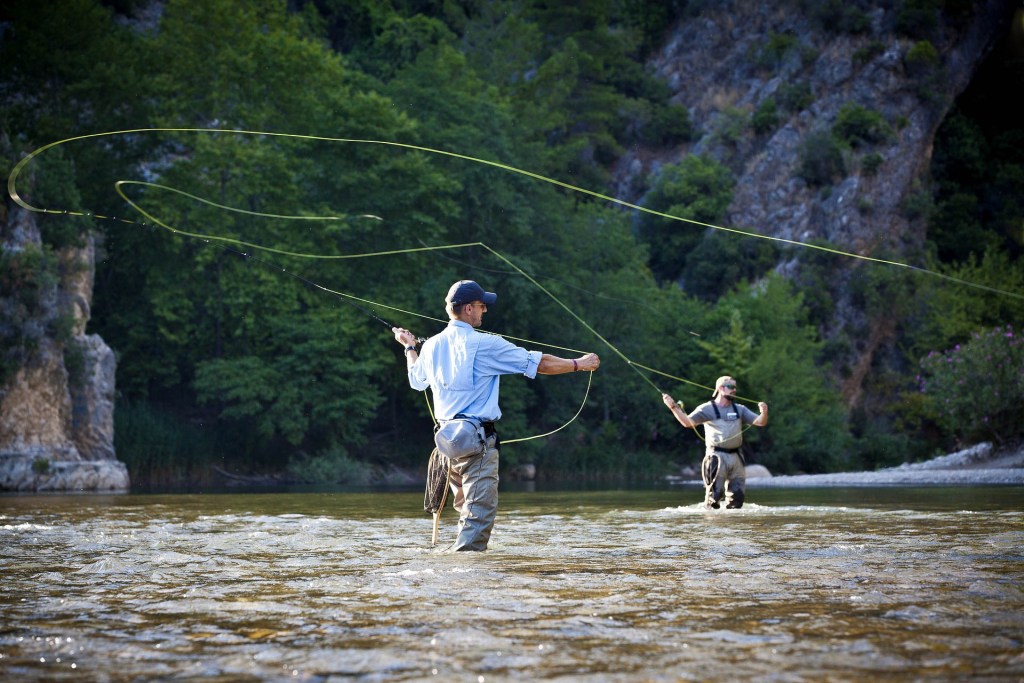
So, work on your casting technique! Practice casting tight loops at short distances and long distances. Practice your back cast and practice your roll cast. And after every cast, critique yourself to help dial in what you can do better.
And practice in all conditions. For example, casting with a headwind or sidewind can be a fly angler’s worst nightmare. But sometimes windy days are what we’ve got! So practice casting in all conditions to become better at delivering flies to feeding fish.
Remember, good casts (and drifts) catch more fish!
PRO TIP
Ask a friend to video tape your casts so you can critique your own technique.
It’s often easier to understand what you’re doing wrong when you can visualize it.
Fish Your Nymph Flies Deeper
Too often, beginner fly fishers don’t fish their nymphs deep enough. This mistake prohibits them from presenting their fly to fish residing at the bottom of the river.
Fish usually hold in the deepest, coolest, slowest water they can find. Therefore, get your flies to them by fishing them deeper.
Using drop shot, split shot, or heavier point flies can help get your nymphs where they need to be.
Match the Hatch
Learn about the insects present in the water and use fly patterns that mimic them. Matching the hatch increases your chances of attracting fish.
One of the best ways to match the hatch is by turning over some underwater rocks to see what types of bugs are crawling around. Or, use a river sein to study what bugs are floating downstream.
Our hatch chart for the Crested Butte area can be found at this link. Although this is specific for Crested Butte, it mimics the hatch cycle for most of Colorado.
Learn The Dry Dropper Rig: An Excellent Beginner Fly Fishing Tactic
The dry dropper rig is one of the most essential fly fishing rigs that all beginners should know.
This essential fly fishing setup involves tying a dry fly to the end of your leader, and dropping a nymph fly subsurface. With this rig, the angler can effectively fish two distinct sections of the water column at the same time.
The dry dropper rig is beginner friendly because it’s easy to learn, can be setup with a variety of types of flies, and it is easy to know what a fish has eaten your fly.
Learn more about the dry dropper rig here.
Use Appropriate Fly Fishing Gear For Beginners
Choose the appropriate fly rod, reel, line, and leader for the type of fishing you’re doing. Varying conditions and fish species may require varying gear setups. So it’s best to evaluate the kind of fly fishing you’ll do, then carefully select your gear.
You can find our articles on the Best Fly Rods for Beginners and the Best Fly Reels for Beginners at these links.
Remember that while it’s important not to spend thousands of dollars on expensive equipment, it’s also crucial not to buy the least expensive gear.
Instead, find something in the middle that’s affordable and gets the job done.

Fish Water That’s Less Popular
When I pull up to a parking lot and notice there are a dozen other anglers already there, it’s time to drive further up the road. Just because there’s a bunch of people fishing a spot, it doesn’t mean it’s the best fishing. To me, it means that spot may have fish but it also has a ton of pressure.
As a beginner fly fisher, fishing popular water is one of the biggest mistakes you can make.
Instead of fishing the most popular locations, look for areas where there are no other anglers. When there’s no one else fishing a zone, the fish may be “fresher” and be more willing to take your fly.
Get The Fishing Report Before You Go
Being prepared with the right information before getting to the river can help you catch more fish.
Before you hit the water, we recommend either calling a fly shop or doing a quick Google search for the fishing conditions in your area. Fly shops will generally be very helpful by pointing you in the right direction.
For Colorado fly fishing applications, we invite you to read our Colorado Trout Stream Review as well as check out our fishing reports from Crested Butte.
Learn to Read the Water
Understand the different types of water, such as riffles, pools, and runs. Also, learn the difference between freestone and tailwater rivers.
Fish tend to hold in specific areas depending on their feeding habits, the water conditions, and the time of year. In the winter, fish are only in the deepest and slowest moving water. During the heat of the summer, trout can be found in deep holes, fast riffles, or pockets behind boulders and rocks.
Practice Stealth
Approach the water and fish quietly. Wear earth-tone clothing, avoid sudden movements, and stay low to reduce the chances of spooking fish. Many beginner fly fishermen and women don’t think that quiet, smooth moments near the river matter — well, they matter!
On guided fly fishing trips, we always remind my clients to approach the water quietly and try not to make many sudden movements.
And, while we can’t say for sure that fish can see that orange hunter’s hat on your head, a forest green or grey ball cap will probably suit you better.
Choose locations carefully
Pick your location where you’ll fish with high amounts of discrimination.
Always consider safety first, ensuring that you feel comfortable wading into the river when the currents are swift and deep. When fly fishing with kids, choose a location that has little or no chance of them getting swept off their feet.
Additionally, choose locations where you have knowledge of fish feeding. Use visual clues to determine if trout are in the zone, along with your understanding of features throughout the river that make certain spots more or less fishy than others.
Wade Fishing is Better for Beginners
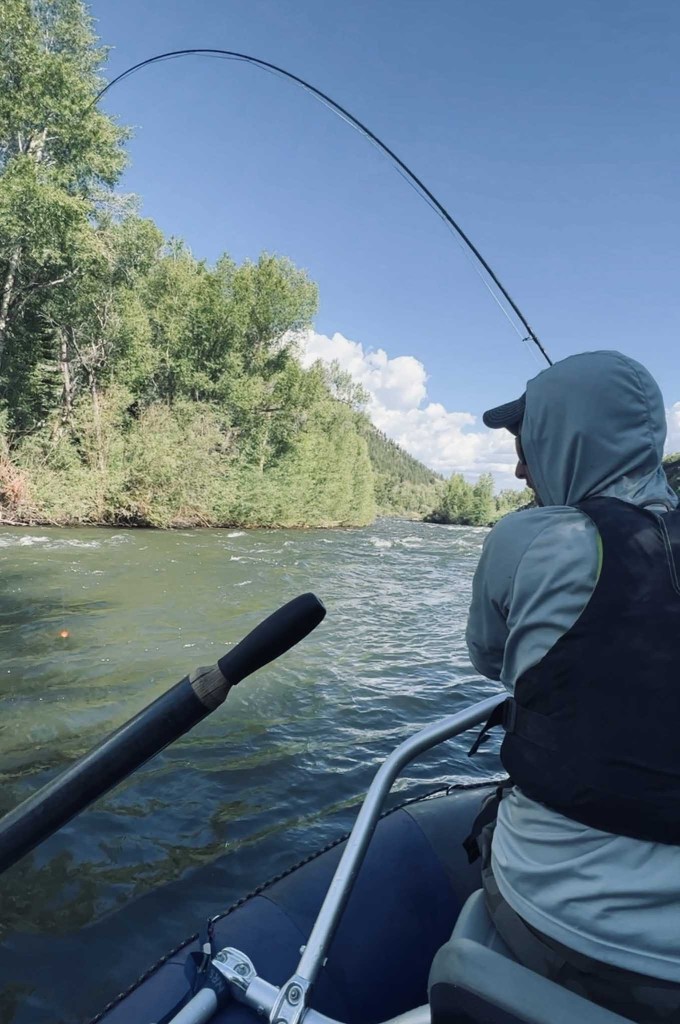
Wading is the best way to learn the basics. Fly fishing is inherently technical, and it’s best for beginners to learn slowly at the pace of a wade fly fishing trip.
When float fishing, there are fewer opportunities to correct mistakes or take shots at a hole, run, or riffle more than once. When fishing from a drift boat, you must have an increased sense of focus and skill.
Although float fishing can be an incredibly rewarding experience, it is generally geared towards intermediate and advanced anglers.
Float fishing can, however, be a nice way for anglers with mobility or balance issues to cover some water.
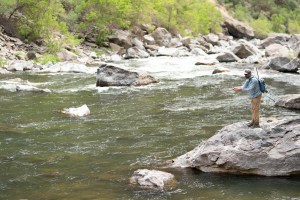
Fish During Prime Times
During the heat of the summer, trout are often more active during dawn and dusk due to the sun’s position in the sky and the temperature of the water. These periods are known as the “golden hours” and can provide excellent fishing opportunities.
During the spring, fall, and winter, trout may be more active during the warmest part of the day when insect activity is more pronounced and the water is warmer.
Ask a local fly fishing professional for advice on the best times to fish a specific river.
Learn Several Fly Fishing Methods
Fly fishing for beginners requires knowing at least a few different rigs. There are many ways to present a fly to a feeding trout, and some of the most popular fly fishing setups include:
- Indicator nymphing
- Euro-nymphing
- Mono-rig nymphing
- Dry-dropper
- Dry Fly Fishing
- Streamer Fishing
Each technique is unique and offers varying ways to catch a fish with a fly rod. Become familiar with them for your best chances of being a successful fisherman or woman.
Focus, Focus, Focus
Strikes can easily be missed when you’re not 100% focused on the task at hand. On guided fly fishing trips, clients sometimes take their eye off their fly for a moment, resulting in missed takes.
Fly fishing is a sport that requires your full attention to be successful.
As a beginner angler, you’ll likely get distracted more than you should. So the next time you’re on the water, see if you can quiet your mind and give your cast and your drift 100% undivided attention.
Use Beginner Flies You Can See
It does an angler no good if they can’t see their dry fly hit the surface and drift downstream. If you can’t see it, you can’t fish it.
So that’s why we recommend using larger flies that are easy for a beginner fly fisher to spot.
If you’re having trouble spotting your fly in the water, consider changing your fly to something larger or with more contrasting colors. Or use a double dry fly rig to lead your smaller dry fly with a larger one.
Use Polarized Sunglasses
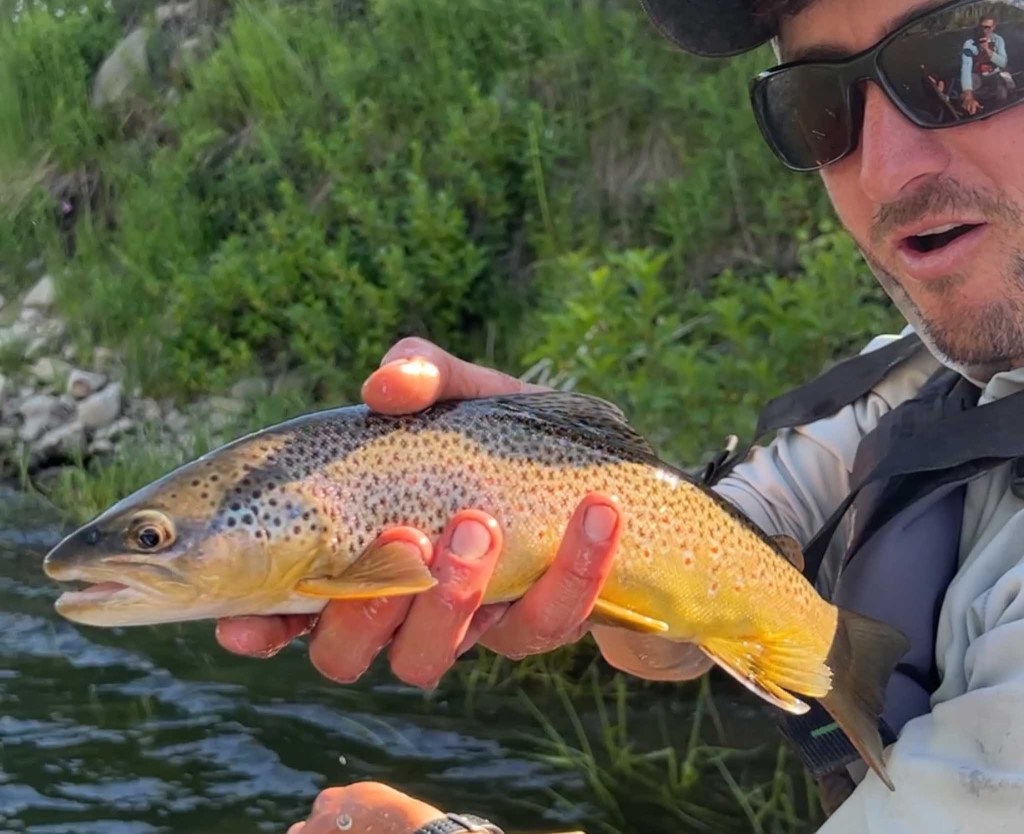
Polarized sunglasses help reduce glare on the water’s surface, allowing you to see fish and underwater structures more clearly. Sunglasses also provide a protective barrier between your eyes and hooks flying through the air.
Again, if you can’t see it, you can’t fish it.
Practice Tying ThE Essential Fly Fishing Knots
A beginner fly fisher needs to know only a few basic knots. It is best to know how to tie these knots quickly when you get to the river. The basic knots are:
- Clinch or Improved Clinch Knot (attaching a fly to tippet)
- Double Surgeons Knot (tying two pieces of material together)
- Non-slip Loop Knot (for tying a streamer to a leader)
The four videos, below, detail how to tie the basic knots you need to know for fly fishing.
A great way to begin practice tying these knots is with an eye-bolt from your local hardware store and some yarn. You’ll build up muscle memory over time and knots will be easier to tie when using very thin pieces of tippet material.
Test Your Knots
One of the best feelings in the world is bringing a large fish to the net on light tippet. And one of the worst things is losing a big fish because you had a bad knot.
After tying on every fly, check the knot by putting a little pressure on it, emulating the tug from a fish. Not checking your knots is one of the biggest mistakes a beginner fly fisher can make.
If the tippet breaks off upon your test, tie on some fresh material. It may be frustrating momentarily, but you’ll be glad it didn’t happen after a large fish took your fly.
Shorten Your Cast
Long casts are often unnecessary for catching trout in Colorado. Our trout streams generally aren’t that large, and we can typically sneak up on a fish by casting at it from downstream.
Instead of using a “hero-cast”, keep your casts and your drifts short and simple. In most instances, trout can be caught with casts no longer than 15-20 feet.
To do this, get as close to feeding trout as possible without spooking them and cast short, precise casts directly into the feeding zone.
- Fly Rod Weight Chart | How to Choose a Fly Rod 101
- The Drop Shot Nymph Rig: How To Catch More Trout
- How to Set Up the Dry Dropper Rig for Fly Fishing
- Best Beginner Fly Rods of 2024 (Tested)
- Best Fly Rod Combos | Expert Reviews Fly Fishing Setups
Using a long cast is a common mistake that many beginner anglers make.
Dress Appropriately
The best clothing for fly fishing is clothing that you’re comfortable in. When an angler is comfortable, they are able to focus better on the fishing rather than regulating temperatures.
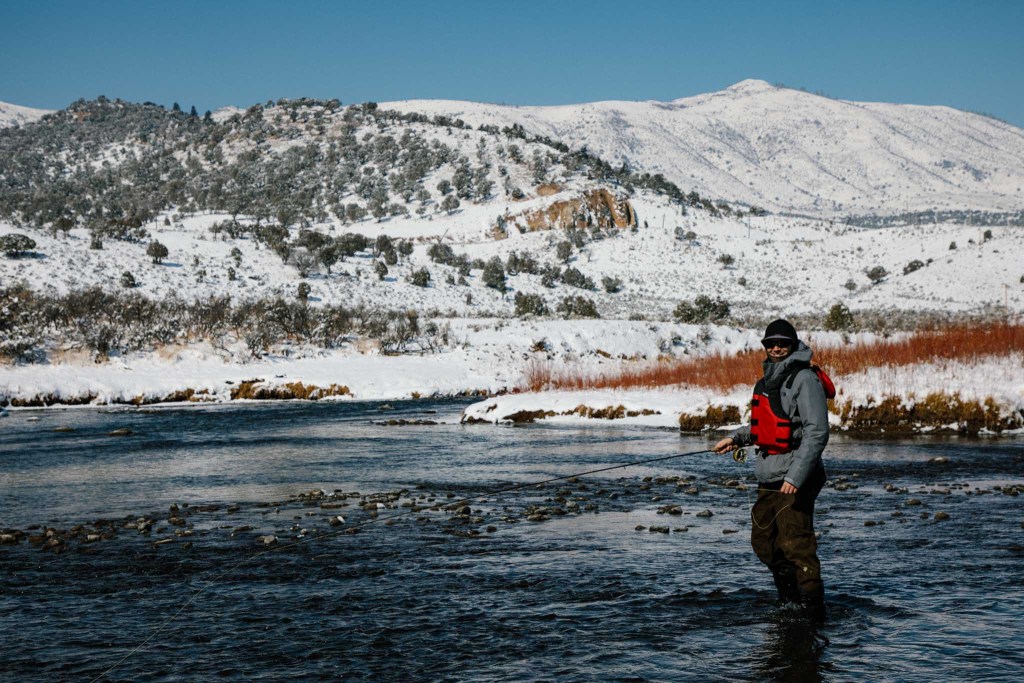
On the frigid days, dress in several layers. On hot days, you may leave the waders and insulating jackets at home and do some wet wading.
We recommend clothing that will keep you warm even when wet, such as wool or polar fleece.
Consider using weighted flies, split shot, or drop shot
If you’re fishing your nymphs below your dry fly or indicator at least 1.5x the river’s depth, you have good drifts, and you’re still not catching fish, consider using a heavier fly. Or if that’s not a good option, consider adding split or drop shot to your rig.
Statistically speaking, beginner anglers don’t catch as much as veterans due to the lack of weight in their system. Read more here on the best flies of 2023 in Crested Butte, Colorado rivers.
Eliminate Drag
Drag in fly fishing is when your flies float through the water unnaturally. You fly line will impose drag on your fly by pulling it away from its natural drift. And drag is bad!
Even the smallest amount of drag can decide whether a fish takes your fly or not. So encourage anyone who is a fly fishing beginner to learn what drag looks like early on and eliminate it!
When fly fishing, we are in the business of managing our fly line to give our flies the best drift possible. To eliminate drag, you can:
- Take line off the water or put line on the water.
- Mend your line upstream or downstream.
- Use a high-stick technique or a low-stick technique.
- Shorten Your Cast or get closer to your target
Sometimes, it takes a combination of all of these tactics to get the perfect dead drift.
Vary Your Retrieve and Angle When Streamer Fishing
Experiment with different retrieval techniques. Some days, fish may respond better to a slow, steady retrieve, while others may prefer a faster, erratic retrieve. Play around with it and see if changes make a difference.
Additionally, try casting your streamer down and across just as much as up and across. Bait fish don’t always swim in a predictable pattern, thus using several different angles can help figure out what is attractive to predatory trout.
Set The Hook Downstream
Any beginner fly fisher should know that fish will naturally face upstream (99% of the time) when they take your fly. Thus, if you set the hook upstream, you’ll often pull the fly out of its mouth.
Instead, set the hook downstream with your rod tip close to the surface for a better shot at lodging the hook into the trout’s mouth.
Read more here about tips for fighting big fish after the hookset.
Use Upstream Side Pressure
After you’ve set the hook downstream, rotate your rod upstream and apply side pressure. Most of the time, applying upstream side pressure to a hooked fish is the best way to land them.
If you’re above (upstream of) the fish when it’s hooked, consider what you can do to get below (downstream of) it. This generally means moving from the middle of the river towards the bank and getting below the fish if possible. Then, put side pressure on the fish to pull it out of its column and towards you.
Read more here about how to fight fish that have gone downstream.
And this video below is a great resource from Tom Rosenbauer detailing how to land a downstream fish.