
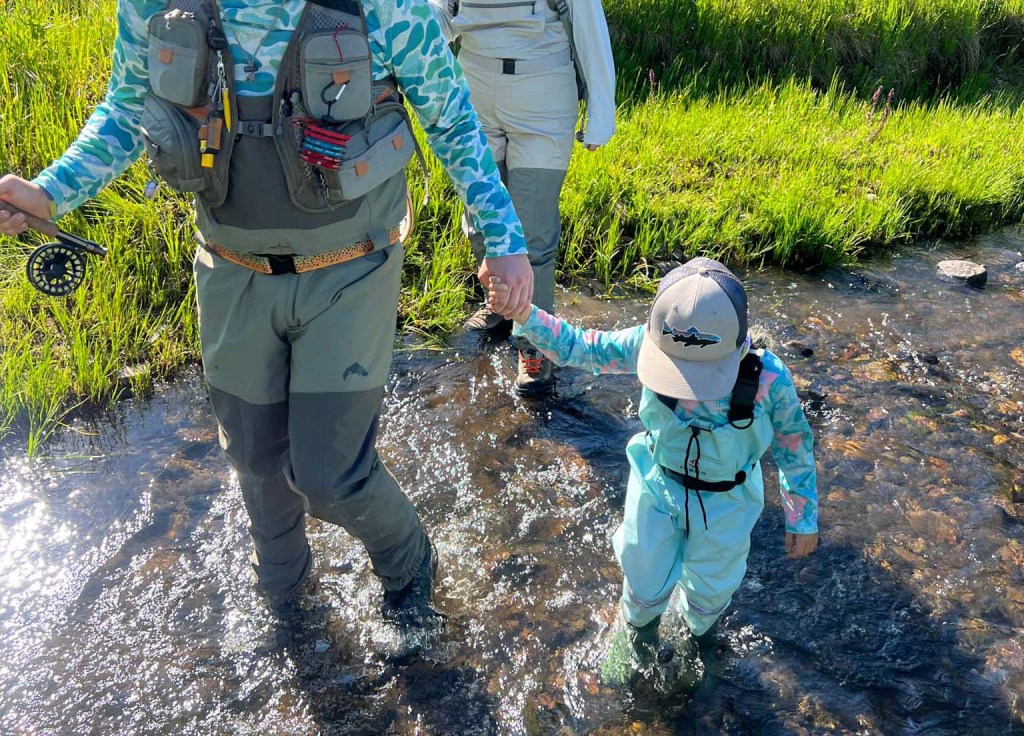
Fly fishing with kids can be a wonderful experience, but it requires some special considerations to ensure they have a positive and enjoyable time.
If your child is younger, they will require much different considerations than older ones.
For example, its recommended that parents take young children fly fishing for no more than an hour or two due to shortened attention spans.

We want kids to create fond memories of their time on the river rather than negative memories of being bored. And for, say, a 7-year-old, the experience needs to be tailored quite differently than for a 13-year-old.
Or, for kids who struggle with patience, it’s up to the parents to lead by example and show them how to appreciate the process for what it is, even when fly fishing becomes challenging.
Here are some of the best tips to make the fly fishing experience memorable for you and your child:
Simple Gear: Start with kid-friendly gear like lightweight, shorter fly rods. Kid-sized waders and boots can also make them feel more comfortable and capable.
For smaller children (generally under ten years old), an 7.5-8.5-foot 4-weight rod will be more comfortable and easier to cast than a traditional 9-foot, 5-weight.
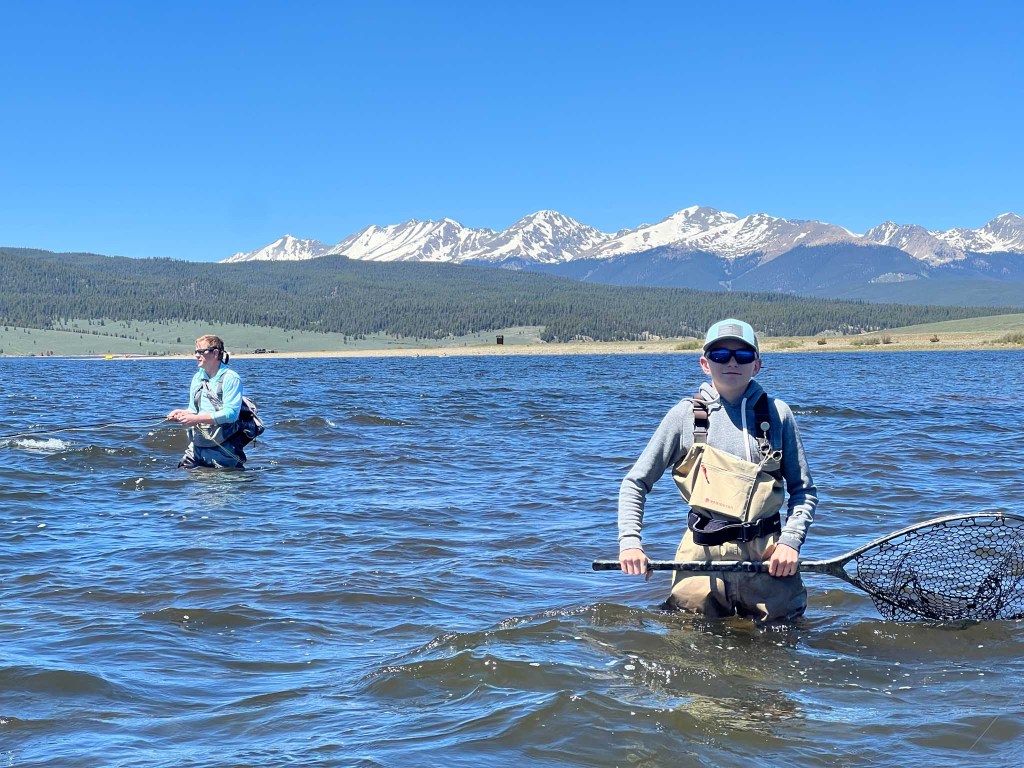
Teach Safety: Prioritize safety by teaching kids how to properly handle the fishing gear, including the fly rod, line, and hooks.
Teach them about wading safety and the importance of wearing sunglasses to protect their eyes from UV rays and flying hooks from a surly cast.
Use Appropriate Flies: Choose simple, easy-to-see flies that are more likely to attract fish. Terrestrial insects (like ants and beetles) or larger, brightly colored flies can be good choices.
One of my rules of thumb when fly fishing is if you can’t see it, you can’t fish it.
This is especially true for children. Thus, when fly fishing with kids, oversize your flies by just a touch or use a brightly colored indicator if you deem the conditions favorable for that type of angling.
Choose the Right Location: Pick a location suitable for kids, with easy access, safe wading areas, and a good chance of catching fish. Consider places with calm waters and plenty of space for casting.
In Crested Butte specifically, we never suggest families with young kids go fishing on the Taylor River due to its slippery rocks, technical fishing conditions, and swift currents.
Instead, we recommend families go fishing in places with minimal hazards and high probabilities of netting fish.
Contact us at info@slackwaterco.com for more information on family-friendly fly fishing locations near Crested Butte, Colorado.
Practice Casting: Practice casting in an open area before heading to the water. Help your child develop basic casting skills to avoid frustrations when they’re at the river or lake.
A great place to practice casting is in your backyard, driveway, or a nearby park. Set up hula hoops as targets and create a game out of it.
Be Patient: Patience is vital when fishing with kids. Be prepared for tangles, missed strikes, and learning moments.
Stay positive, celebrate small victories, and teach them that making mistakes is part of the fly fishing process – and it is okay!
(This advice is also important for adults to remember).
Explore Nature: Take breaks to explore the natural surroundings. Teach your child about the plants, insects, and animals they encounter. This adds an educational element to the trip.
We often like to find insects under rocks or on the banks to help kids (and adults) learn what a real aquatic bug looks like.
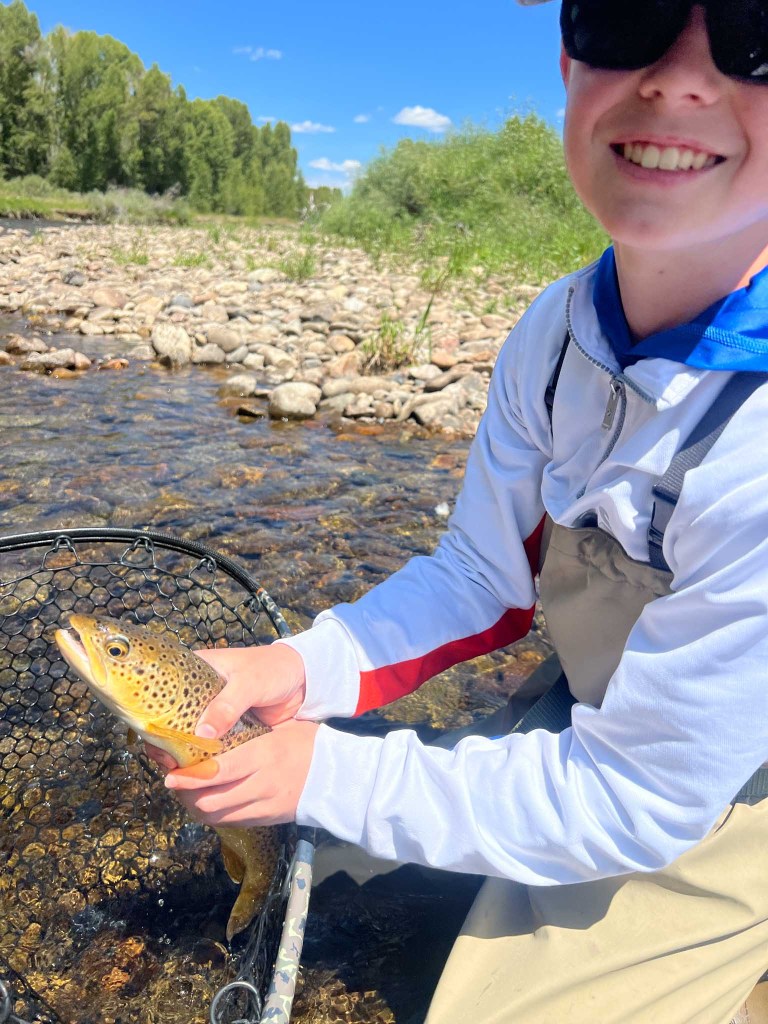
Catch-and-Release: Emphasize catch-and-release practices to teach your child about conservation and respecting the environment. Teach them how to handle fish gently and release them properly.
Most people don’t know that trout are more fragile than other fish species and cannot survive extended periods out of the water, especially after you fight them to the net.

Bring Snacks and Drinks: Pack plenty of snacks and drinks to maintain energy levels. Fishing can be tiring, and having a quick snack break can rejuvenate your child’s enthusiasm.
For an easy-to-use, lightweight water bottle that keeps on giving, we suggest the Grayl Water Bottle Filtration system. The Grayl water bottle filters water straight from the river and allows anglers to bring only one bottle rather than several liters in many bottles.
Focus on Fun, Not on Numbers: We all go fishing to catch fish. But even professional guides don’t always catch ‘em. That’s why we suggest that parents never emphasize the size of a fish or the number of fish caught.
Instead, teach your child that all fish caught are special. And even days when zero fish are caught can be fun!
Stay Flexible: Be flexible with your plans. If your child gets tired or loses interest, be ready to call it a day and leave on a positive note.
Lead by Example: Show enthusiasm and enjoyment for the activity. Kids often mimic the behavior and attitude of adults, so if you’re having fun, they’re likely to enjoy it more.
Too often, we see adults showing their frustration on the river when losing a fish or having a tough day of fishing. Do your best not to teach your kid those toxic behaviors.
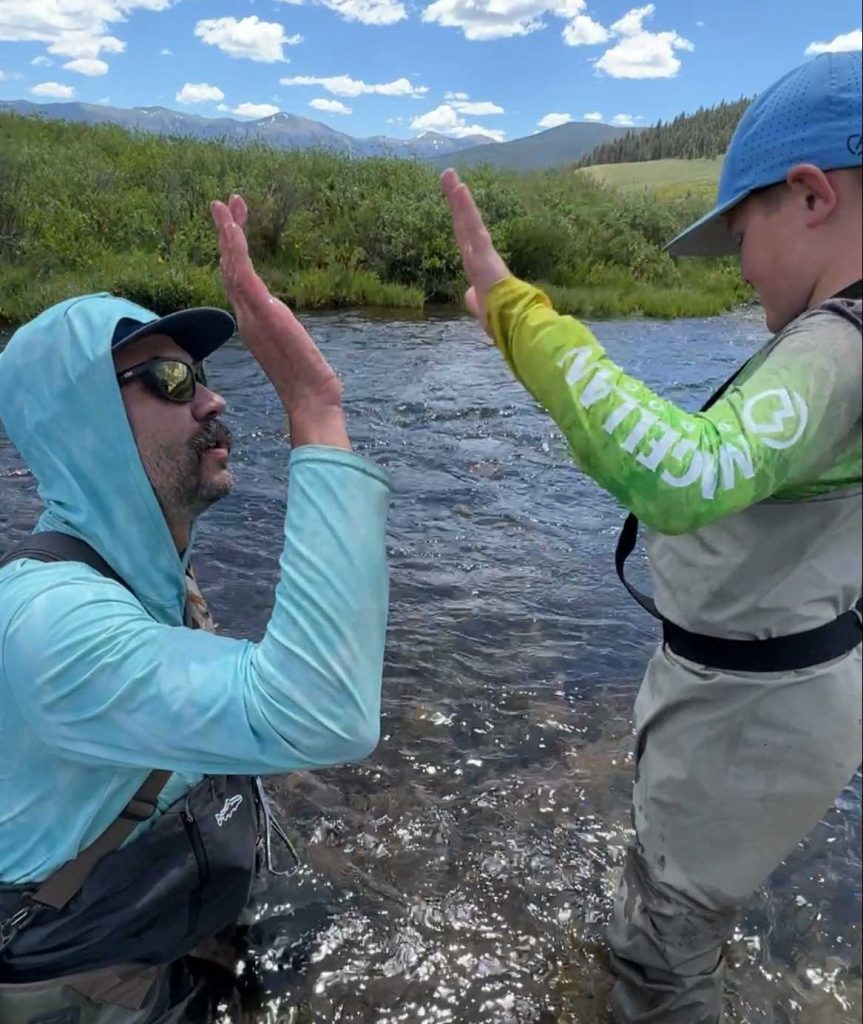
Celebrate Effort: Praise your child’s efforts, and celebrate small and large successes, regardless if fish were caught. Focus on the enjoyment of the experience rather than solely on catching fish.
Capture Memories: Bring a camera to capture the moments. Taking photos of your child with their catches or in their fishing gear can create lasting memories.
And, in the spirit of protecting our fragile fisheries, consider taking a photo of only one or two fish per outing. Keeping the fish wet helps decrease its stress levels, which can reduce mortality rates. Kids won’t know this on their own… so help them learn.
Short Sessions: As mentioned above, keep the fishing sessions relatively short, especially for younger kids. Children often have shorter attention spans, so it’s better to have a few successful shorter trips than one long, potentially frustrating outing.
Unless your child is unique and can handle a full-day guided fishing trip, we often suggest half-day trips for families.
The Bottom Line
Fly fishing means a variety of things to different people. But at the end of the day, for most of us, it’s about learning something new and HAVING FUN! Focus on those two things to successfully share one of your passions with them.
Now go have an AWESOME day with your family! Thanks for reading.
Team Slackwater.