

Understanding the basics of essential fly fishing gear, including tippet, can feel overwhelming to a beginner fly fisher. In this article, we will explore all you need to know about fly fishing tippets, including the differences between leaders and tippet and tippet materials and an easy-to-read tippet size chart.
This post may contain affiliate links, meaning Slackwater earns a commission for the referral if you decide to make a purchase through the links, but your price stays the same. Even if you click through to buy a fly rod and you end up buying a fly box, we earn a commission. We thank you for supporting Slackwater!
Fly Fishing Tippet Size Chart
Understanding fly fishing tippet and leader sizes is an important concept that all fly fishers must grasp to be successful on the water.
Tippet sizes follow a universally recognized “X” rating system, where the diameter decreases as the number increases. For example, 4x tippet is thicker than 5x tippet.
This tippet size chart details the diameters for tippet sizes from 0X to 7X. Sizes are measured in thousandths of an inch, and tippet breaking strength is measured in lbs.
The tippet size chart below is used when choosing the right size of tippet for the application.
Fly Fishing Tippet Size Chart
| Tippet Size | Diameter (in inches) | Breaking Strength (Lb Test) | Fly Size |
|---|---|---|---|
| 0X | 0.011″ | 15.5 lbs | 1/0 – 4 |
| 1X | 0.010″ | 13.5 lbs | 2 – 6 |
| 2X | 0.009″ | 11.5 lbs | 6 – 10 |
| 3X | 0.008″ | 8.25 lbs | 8 – 14 |
| 4X | 0.007″ | 6 lbs | 12 – 16 |
| 5X | 0.006″ | 4.75 lbs | 14 – 18 |
| 6X | 0.005″ | 3.5 lbs | 16 – 24 |
| 7X | 0.004″ | 2.5 lbs | 20 – 26 |
Tippet is made from varying materials and by several fly fishing brands. Read more about tippet materials below.
What is FLy Fishing Tippet?
Tippet material is an extension of a fly fishing leader. Additionally, it is used in various applications of nymph fly fishing.
When an angler wishes to extend the length of their leader, they can tie an additional piece of tippet to the terminal end of their leader to make it longer and/or extend the leader’s life.
When nymph fishing, tippet is used to tie on dropper flies that are suspended beneath the surface.
In fly fishing, it’s proper to say both “tippet” and “a tippet,” depending on the context:
Both usages are correct, so you can use either depending on whether you’re referring to the material in general or a specific piece of it.
Read more about fly fishing tippet vs fly fishing leaders below.
How To Choose the Right Fly Fishing Tippet Size
Choosing the right size of tippet depends on the following considerations:
This chart of tippet sizes details the best application for each size of tippet and recommended types of fly.
| Tippet Size | Best Application | Type of Fly |
|---|---|---|
| 0X | – Very large fish – Very large streamers – Dark Water | 1/0 – 4 Streamers |
| 1X | – Large fish – Spring runoff conditions – Large streamer fishing – Dark water | 2 – 6 Streamers |
| 2X | – Large fish – Very dark water – Streamer Fishing – Large nymph fishing in dark-colored water | 6 – 10 Streamers & Nymphs |
| 3X | – Small & large fish – Spring runoff conditions – Dry fly and nymphs – Beginners learning to fight fish – Nymphing in dark-colored water | 8 – 14 Dries, Nymphs, Streamers |
| 4X | – Small & large fish – Spring runoff conditions – Dry fly and nymphs – Beginners learning to fight fish – Moderately clear water | 10 – 16 Dries & Nymphs |
| 5X | – Small & large fish – Moderately clear and clear water – Dry fly & Nymph fishing – Delicate presentations – Beginner & Advanced Fly Fishers – Medium and small-sized flies | 14 – 18 Dries & Nymphs |
| 6X | – Small & medium fish – Crystal clear rivers and still water – Delicate presentations – Intermediate & Advanced anglers – Small flies | 16 – 24 Dries & Nymphs |
| 7X | – Small fish – Small and very small flies – Crystal clear rivers and still water – The most delicate presentations – Advanced anglers only | 20 – 26 Dries & Nymphs |
Considerations When Choosing Fly Fishing Tippet Size
When choosing the best fly fishing tippet size, anglers should match the tippet to the application. For beginner anglers, we recommend using 4x and 5x most of the time unless the water is murky or dark. 2x or 3x is acceptable when the water is dark.
4x and 5x tippet is generally the most versatile size of tippet for trout fly fishing. These sizes strike a good balance between strength, lack of visibility, and ability to cut through the water without too much drag.
It is rare that fly fishers use 0x, 1x, or 7x unless they are fishing in a very specific way, such as fishing for very large fish with large flies (0x and 1x) or fishing still water with dry flies for smaller fish (7x).
The larger the tippet size, the easier it will be to land a large fish and protect it from breaking on abrasive objects in the river. However, using thicker tippets also has disadvantages, such as being more visible to fish and creating more drag.
The smaller the tippet size, the more discrete and delicate an angler can present their flies. Regardless, a smaller, thinner tippet lacks the stiffness required to deliver heavy flies at longer distances, and it will break much easier.
If you are a beginner, we advise you to use the largest tippet possible due to its strength.
Best Tippet for Beginner Fly Fishers
There are a variety of different types of tippet available, varying greatly in terms of price and application.
The best tippet for trout fishing for beginners is affordable, easy to work with, and catches plenty of fish. As such, we recommend ~30-yard spools of nylon tippet in sizes 3x to 5x.
We typically use tippet from Rio Products, but we also use other companies, such as Scientific Angler, Orvis, and Cortland.
Here are our favorite picks for the top tippet for fly fishing beginners.
Best Tippet for Beginner Fly Fishing

Rio Powerflex Tippet 3 Pack

Scientific Anglers Tippet
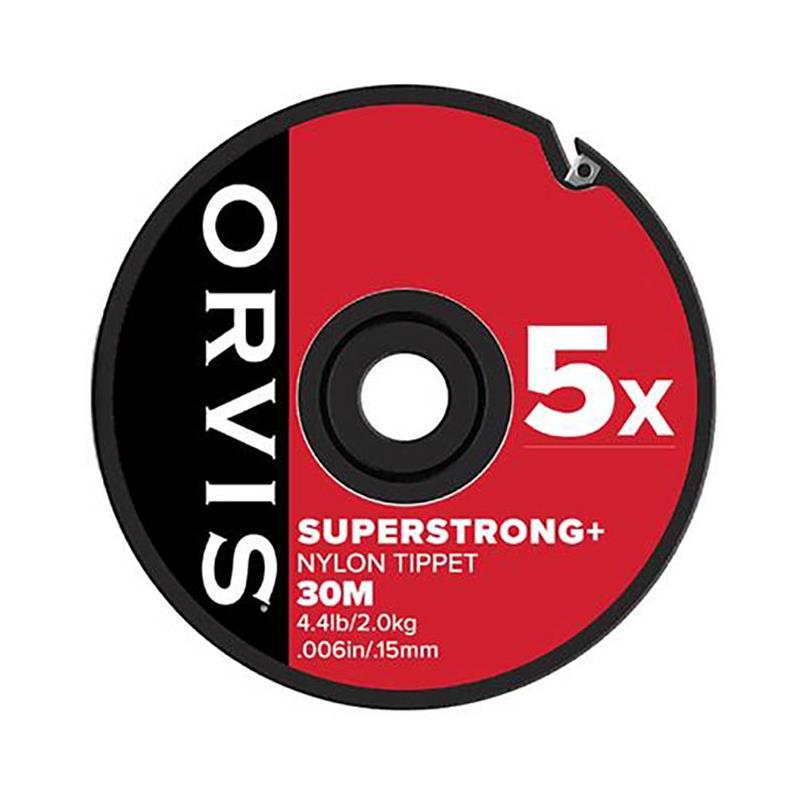
Orvis Superstong+ Tippet
The offerings from Rio, Scientific Angler, and Orvis (above) are all excellent products for trout fishing. These are all nylon tippet spools and cost less than their fluorocarbon counterparts.
Advanced anglers often opt for tippet made with Fluorocarbon for its durability and because it is less visible to fish.
Read more below about Nylon vs Fluorocarbon tippet material.
Tippet Materials: Which is Best?

Tippet material used in fly fishing is engineered to optimize stealth, strength, and accuracy. Tippet is made of nylon monofilament, fluorocarbon, or copolymer synthetics.
This chart below examines the differences between nylon monofilament, fluorocarbon, and copolymer tippet materials. Continue reading to learn more about tippet sizes, including a tippet size chart.
Fly Fishing Tippet Materials Comparison Chart
| Nylon | – Floats well – Is more flexible than fluorocarbon – Best knot strength – Cost-effective | Copolymer Synthetic | |
| What it’s made from | Nylon Monofilament | Polyvinylidenfluoride (PVDF) | Multiple materials, generally including nylon and one or more other polymers |
| Pros | – All-around use | – Slightly less visible to fish – More abrasion-resistant than nylon – Degrades slower than Nylon from UV Rays – Sinks faster than nylon – Does not absorb water | – Floats similarly as well a nylon – A moderate level of abrasion resistance, depending on the manufacturer |
| Cons | – Doesn’t sink as well as fluorocarbon – More visible to fish – Highly affected by UV rays | – Most expensive tippet – Doesn’t float as well as nylon – Less supple | – Can be more expensive than straight nylon – Is affected by UV rays more than fluorocarbon. |
| Best Application | – Dry fly fishing – Beginner fly fishers on a budget | – Tactical nymph fly fishing – Streamer fishing – Clear/Slow Rivers – All-around use | – All around use |
| Price Point | $5 to $8 for 30 yds | $10 to $18 for 30 yds | Varies, depending on the manufacturer |
Nylon Monofilament vs Fluorocarbon Tippet
Although there are three classifications of tippet material, the chirping you’ll most often read in forums and fly shops compares nylon (or monofilament) and fluorocarbon tippet.
Because of its advanced strength, we prefer fluorocarbon over nylon monofilament in trout streams with rocks, debris, and other abrasive hazards.
We must stop fishing when the tippet breaks, which makes us less efficient on the water. As such, spending a little more on a good, strong tippet will help keep you fishing.
However, before deciding on fluorocarbon vs nylon, we advise anglers to consider the type of fishing they’re doing and any budget constraints.
Best Fluorocarbon Tippet
If you’ve decided to use Fluorocarbon, we recommend these two tippet spools.
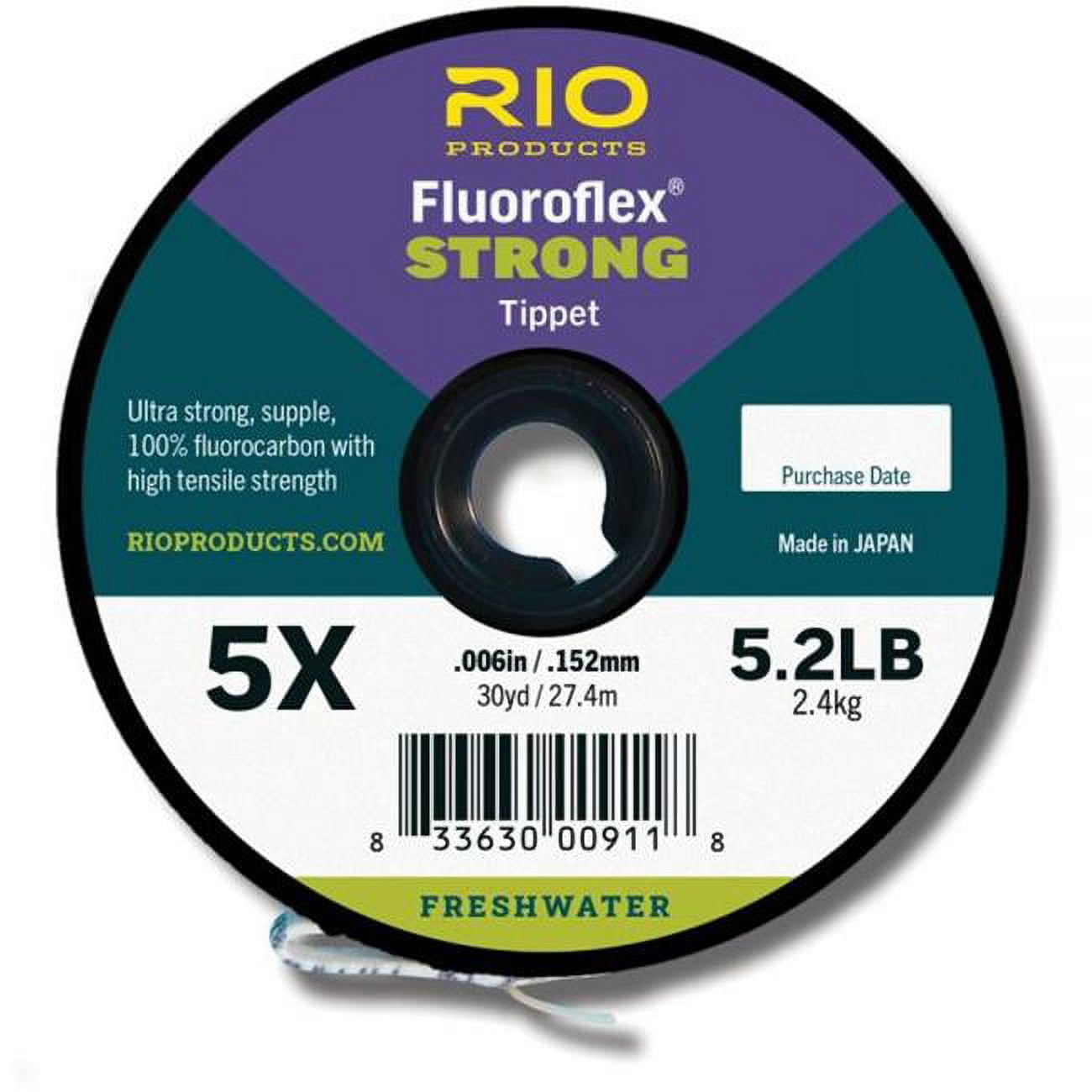
Rio Fluoroflex Strong Tippet
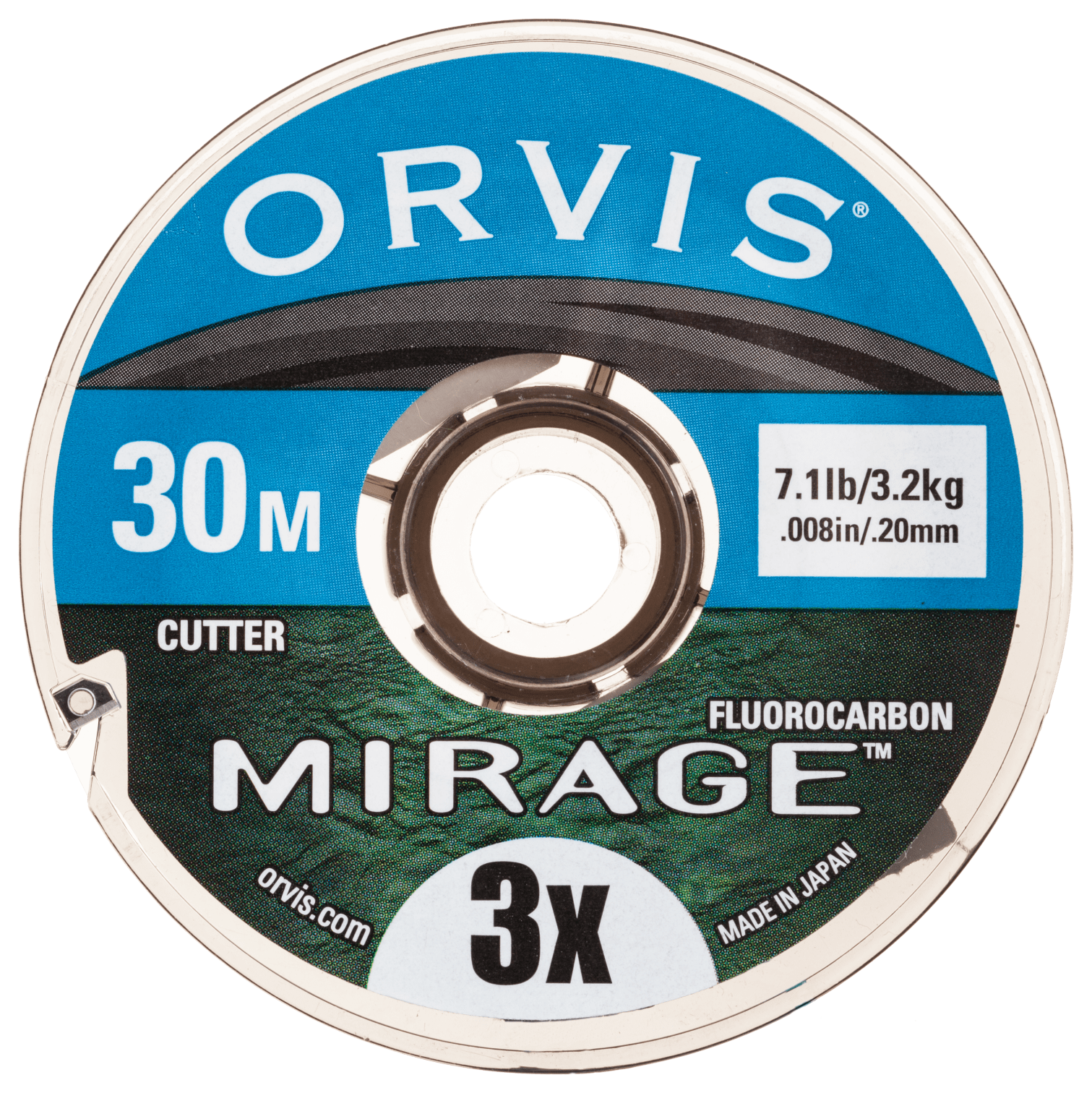
Orvis Mirage Tippet
Leaders vs Tippet: What’s the Difference
To understand the difference between leaders and tippet, let’s begin by breaking down the basic elements of a fly line setup. Here, we will answer questions like, “What is fly line backing,” and “How are leaders and tippet materials different?”
Fly Line Backing
Fly fishing backing is a thin, strong, continuous piece of material attached to a fly reel’s arbor. The backing is typically made of Dacron for trout fishing and is a 20 lb test.
There are two primary purposes for having backing in your fly line setup:
- To provide an “insurance policy” if a feisty trout makes a run that exceeds the length of your fly line. Larger species, such as salmon and steelhead, are more prone to “take you to the backing” than a trout, but it’s not unheard of either.
- Fly line backing also takes up space on your reel’s spool and provides weight to perfect your rod’s balance. Without it, our fly line would be wound too tightly on the spool, making it challenging to reel it in quickly.

Fly Line
A fly line is a specific type of fishing line with mass to help cast artificial flies. It is attached to the backing on your reel’s arbor, most commonly with an Albright Knot.
Here’s a short video on how to tie the Albright Knot.
Fly lines are thicker than leaders, often come in high-visibility colors, and contain buoyancy properties determining whether the line will float or sink.
Fly lines also come in different types and sizes, designed to match the weight of a fly rod and specific fishing styles. They are an essential piece of gear that helps transfer the energy of an angler’s cast to their leader, tippet, and fly in that order.
Leader
A leader is a piece of material attached to a fly line’s terminal end. The leader is made up of two distinct pieces: the butt section and the tippet section.
The leader is a tapered section of material that starts thicker where it’s attached to the fly line (the butt section) and gradually gets thinner towards its terminal end (the tippet section).
A leader should be tapered because it helps anglers transfer energy from their fly line and rod more smoothly.
The thicker section of the leader will help carry the flies forward, while the thinner section will help the flies land delicately. The thinness of its terminal end is also less visible to spooky trout, making it easier to present an artificial fly naturally.
You can buy tapered leaders made of one continuous piece of material or hand-tie several pieces together to create your own leader.
Pre-tapered trout leaders will come in lengths from 7.5 to 12 feet, but it’s always possible to shorten or lengthen them to your preference.

Tippet
Lastly, the tippet is the terminal section of a fly fishing leader. It is uniform in diameter (thickness) and designed to be nearly invisible to wary fish. In the tippet size chart above, you’ll notice that the tippet is only fractions of an inch thick.
Anglers often tie additional sections of tippet material to the end of their tapered leader to extend the leader’s life. Flies can be tied directly onto a pre-tapered leader or an additional section of tippet material.

Tippet is sold on a spool in bulk quantities and in different sizes.
Tippet material is also used in dropper fishing applications. Specifically, tippet will be tied to the bend of a dry fly’s hook in dry dropper fishing or used as an extension piece tied to the eye of the top nymph’s hook when fishing multiple subsurface nymphs.
So What’s the Difference Between Leaders and Tippet?
Contrasting leaders against Tippet isn’t exactly an apples-to-apples comparison because tippet is simply part of the leader. You can’t have a trout fly fishing leader without a tippet section.

While leaders can be made from a singular piece of material, including a tippet section, spools of tippet material can be purchased separately and used to extend the life of a pre-constructed leader.
Further, tippet material can be used to construct a leader from scratch, add to a pre-constructed leader, or drop nymph flies in dropper rigs.
Measuring Fly Fishing Tippet Breaking Strength
Fishing line break strength is often measured in a “pound test,” which measures the weight a line can hold before it breaks.
In fly fishing, however, we rarely talk about nor care about breaking strength. Instead, we discuss the diameter of the tippet, measured on the “X” rating system.
We most often care about the tippet’s flexibility, its ability to land gently on the water, and how well a fish can see it.
Can You Use A Leader Without A Tippet Extension
Yes, you can use a pre-constructed leader without attaching additional tippet material.
Several leaders sold by companies like Orvis, Umpqua, and Rio will already have a thin tippet section in the leader.
However, that thin section will break or be nipped off over time, decreasing the leader’s length and life.
In most Colorado trout fishing applications, we advise attaching small amounts of tippet material to your leader’s end to preserve its life and save you money.
Remember, a leader must be tapered from thick to thin to transfer energy in your cast smoothly.
Best Tippet for Trout Fly Fishing
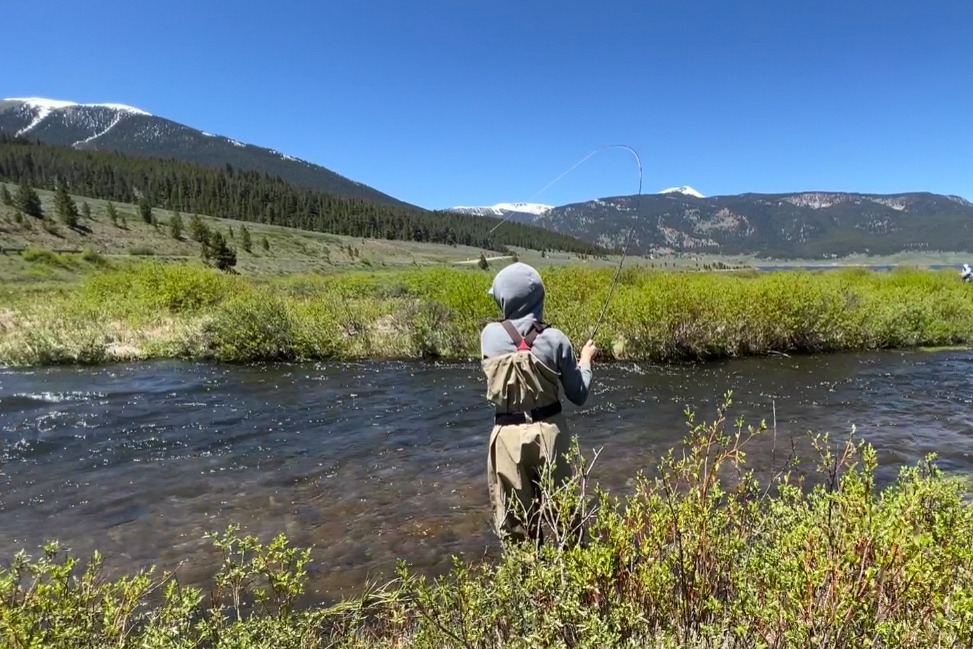
The best tippet for trout must be almost invisible, strong enough to hold the fish, and supple enough to allow the fly to move naturally.
A trout tippet made of fluorocarbon is often preferred in clear waters due to its refractive properties similar to that of water. Nylon, however, provides a supple and forgiving connection, making it an ideal choice for dry fly fishing, where the natural drift of a floating fly is paramount.
But we still like a 9-foot leader with 5x fluorocarbon tippet for the best trout fishing setup.
Per the tippet size chart, above, you’ll notice 5x tippet is only .001 inches smaller than 4x and .001 inches larger than 6x, all while hitting the sweet spot of around 4.75 lbs of breaking strength.
Best Tippet Brands
The brands of tippet available on the market range from household names to niche producers.
Several options are available, from Cortland’s innovative tippet to the tried-and-tested durability of other leading brands like Rio and Scientific Angler. Each brand offers its own take on tippet sizes and formulations, allowing anglers to fine-tune their setup to their exacting standards.
Here are our favorite companies that produce fly fishing tippet:
How is Tippet Sold?
Tippet material is sold on plastic spools. The most common length on a spool is 30 yards. For the casual fly fisherman or woman, 30 yards of tippet should last a year or two, depending on how often flies need to be re-tied.
You can also find tippet in 50- and 100-yard spools that fit in your pocket.

Fly fishing guides sometimes use even larger spools since they use so much tippet daily. Spools with several hundred yards of tippet on them are larger and more cumbersome, making them better for float fishing guides.
Since the best tippet can be expensive (and devastating to drop in the river and lose), we recommend most fly fishers to buy the 30 yard spools. These will stay fresher (not expire) for longer periods of time and will be less costly if you drop one.
Scroll to the bottom to learn more about how you know when your fly fishing tippet has expired.
What Are Tippet Rings?
A tippet ring is a small ring that serves as a pivot point between the leader and the tippet.
It is permanently attached to a thicker part of your leader using a clinch knot. Smaller tippet is then attached to the tippet ring to drop your nymphs.
By integrating a tippet ring, anglers can easily extend the life of their leaders and quickly swap out tippet lines. The circular ring shape allows different tippet sizes to be attached without using a double surgeon’s knot.
We like to use 25 lb/2mm tippet rings from Rio Products.

The best application for using a tippet ring is when you’re building your own leader for contact nymph (euro) fly fishing. Because we’re counting on our nymph(s) to sink, the mass of a tippet ring is welcomed into the system and provides an almost seamless connection to your subsurface flies.
We don’t recommend using a tippet ring when dry fly fishing because the ring has too large an impact on a dry fly’s drift.
How to Carry Tippet
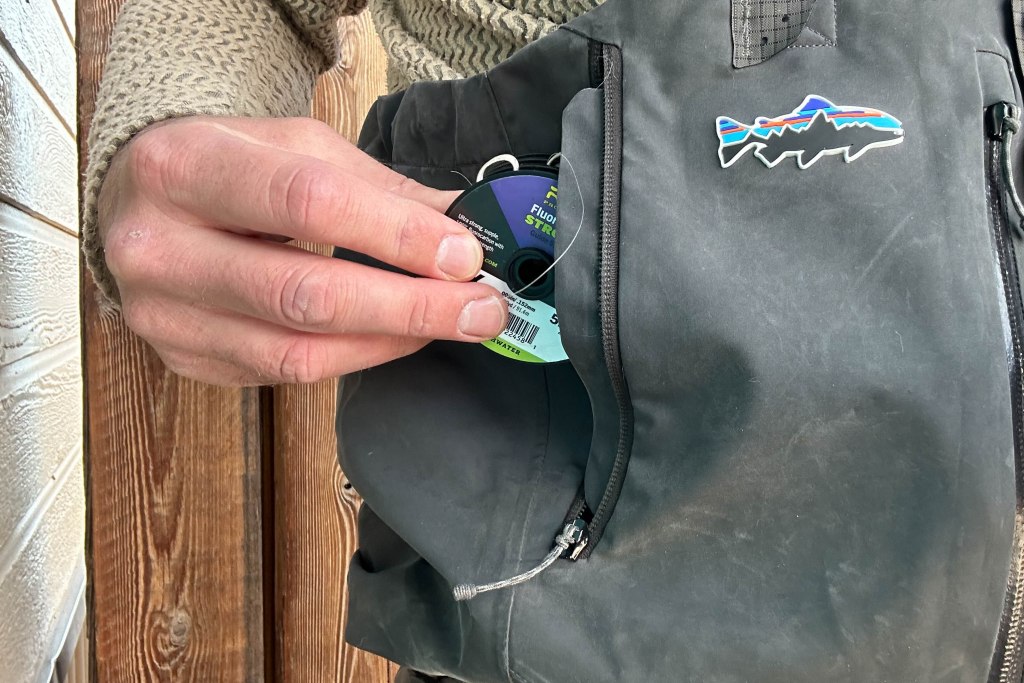
How to carry tippet is as much about personal preference as it is about practicality.
There are three primary ways that anglers carry tippet spools, each with pros and cons.
Tippet Spool Holder
This is the most common way to carry tippet and a popular fly fishing accessory under $25. It is made by almost every fly fishing brand and secures tippet spools on the outside of your fishing bag, lanyard, or vest.
Pros
- Easily accessible tippet
- An excellent way to secure the spools to your bag
- Ability to carry 5+ spools at a time
- You can retrieve tippet with one hand.
Cons
- Fly line will get caught on it
- Rat’s nests of tippet material are unavoidable
Here are a few popular tippet spool holder tools:

In Your Fishing Bag
This is a simple system of throwing your tippet into your hip bag, chest bag, or sling. It costs nothing and allows you to store all your tackle in one place.
Pros
- Costs $0
- It’s not in the way and won’t get your fly line caught
Cons
- It will get lost in your bag if you’re not well organized.
- It’s not as accessible and quick to access.
- Requires two hands to un-ravel.
In a Designated Pocket – THE BEST WAY!
This is our favorite method. It is a cost-effective way to carry your fly fishing tippet and allows quick and easy access.
This method includes carrying 2 or 3 spools of the most commonly used tippet diameter in one designated pocket in our waders or pants. We carry a spool of 3x, 4x, and 5x.
We put only one piece of tackle in that pocket, making it easy to access anytime. Because it is always out of the way in a zipped pocket, our fly line never gets caught on it. Additionally, it helps protect the tippet from deteriorating in the sun.
We store less frequently used tippet (0x – 2x) separately in our bag.

Pros
- Easy, quick access
- Keeps the tippet out of the way
Cons
- You can lose the spools quickly if you forget to zip your pocket
- Requires two hands to un-ravel material.
Anglers have devised various systems using tippet accessories like specialized spool holders that can clip to a vest or dangle from a pack. Effective organization of your tippet line can be the difference between fumbling through gear and making a seamless, timely fly change.
Discarding Fly Fishing Tippet: Does Tippet Expire?
The lifespan of a tippet spool truly depends on how it’s stored and how much time the tippet spends in the sun.
If you keep your tippet in an external tippet spool holder and fish 100 days a year, you can (A) expect to use up tippet spools quicker and (B) expect the spools exposed to UV rays to deteriorate faster.
However, if it is maintained and stored properly and doesn’t get too much sun, a spool of tippet should last a couple of years.
We like to store our spare tippet spools in a zipped pocket, out of the way, and protected from UV rays to help extend its lifespan.
However, if you are concerned that your tippet spool has expired, visually inspect it for wear and tear and perform a few tests to see how easily it breaks. Expired tippet will appear more brittle and break under minimal stress.
How To Make a Tapered Fly Fishing Leader
Hand-tying a leader out of separate pieces of material is a great way to build a custom-tapered piece of tackle and save money.
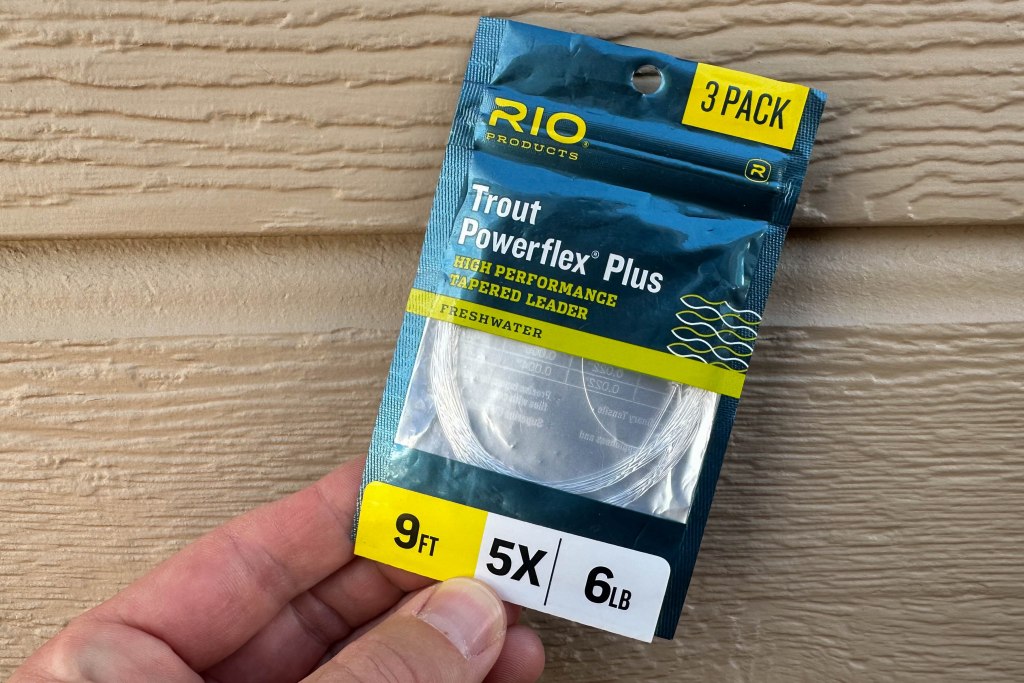
Manufactured leaders with a taper built in are great but somewhat costly in the long run. A hand-tied leader can be just as effective with the right material, clean knots, and attention to detail.
Here’s how to make your own leader out of tippet material:
Hand-tied 9-foot 4x/5x tapered leader.
- 4 feet 1x
- 18 inches 2x
- 18 inches 3x
- 24 inches 4x or 5x
We recommend using a double surgeon’s knot to attach the pieces. Although it can take a little more time than using a pre-constructed tapered leader, we enjoy building our own because it gives us more control over the taper and saves us money.
A fluorocarbon tapered leader from a company like Rio will cost $4-$7, while building your own leader will cost less than $1.
Here’s a video explaining how to tie the double surgeon’s knot.
Conclusion
Fly fishing tippet is an essential piece of gear that all fly fishers need to be successful. Tippet is made in various diameters, as noted in our tippet size chart, and most popularly from nylon or fluorocarbon material.
The best tippet material for your specific trout fishing application will depend on the type of fishing you’re doing, the kind of water you’re fishing in, your skillset, and your budget.
Thank you for reading.
Are you new to fly fishing? Do you need help finding the right beginner gear?
Look no further than Slackwater’s comprehensive guide to the best fly fishing gear for beginners. We believe that the best fly fishing gear should be of high quality but rarely do we need the most expensive equipment to get the job done.
Check out our Ultimate Guide to Beginner’s Fly Fishing Gear for more information on WHAT YOU NEED to get started fly fishing.
Shop for the best beginner fly fishing gear
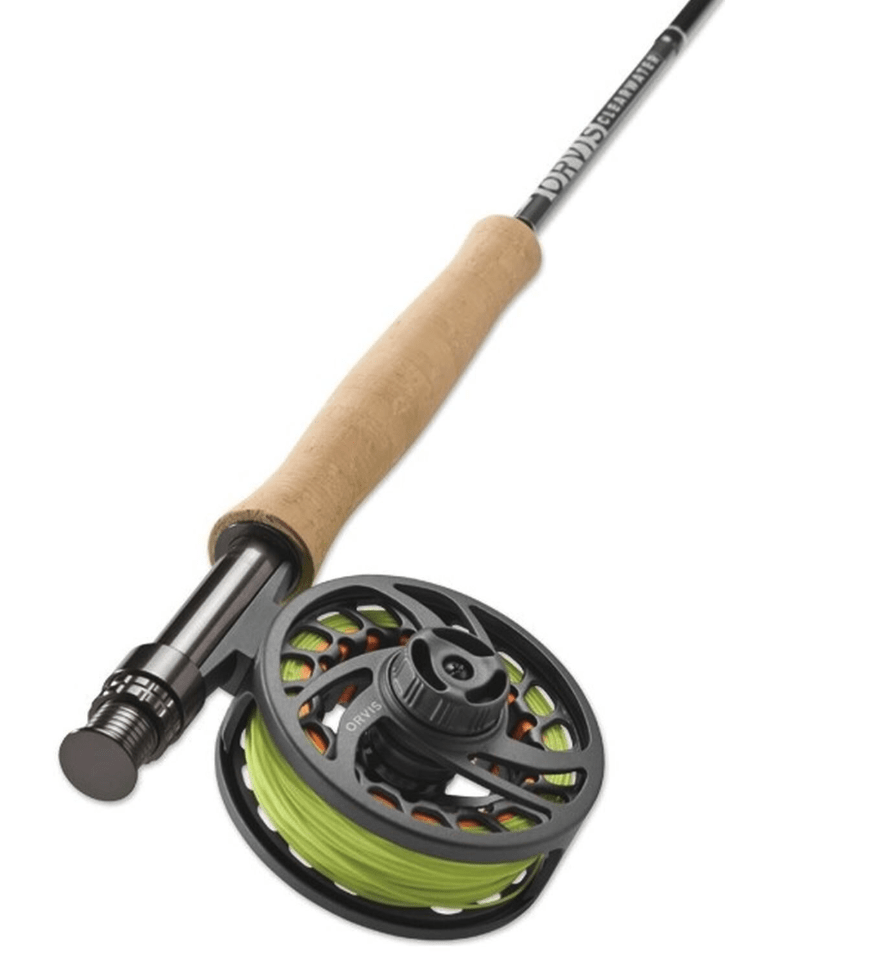
Orvis
Clearwater Combo

Simms Freestone Pack
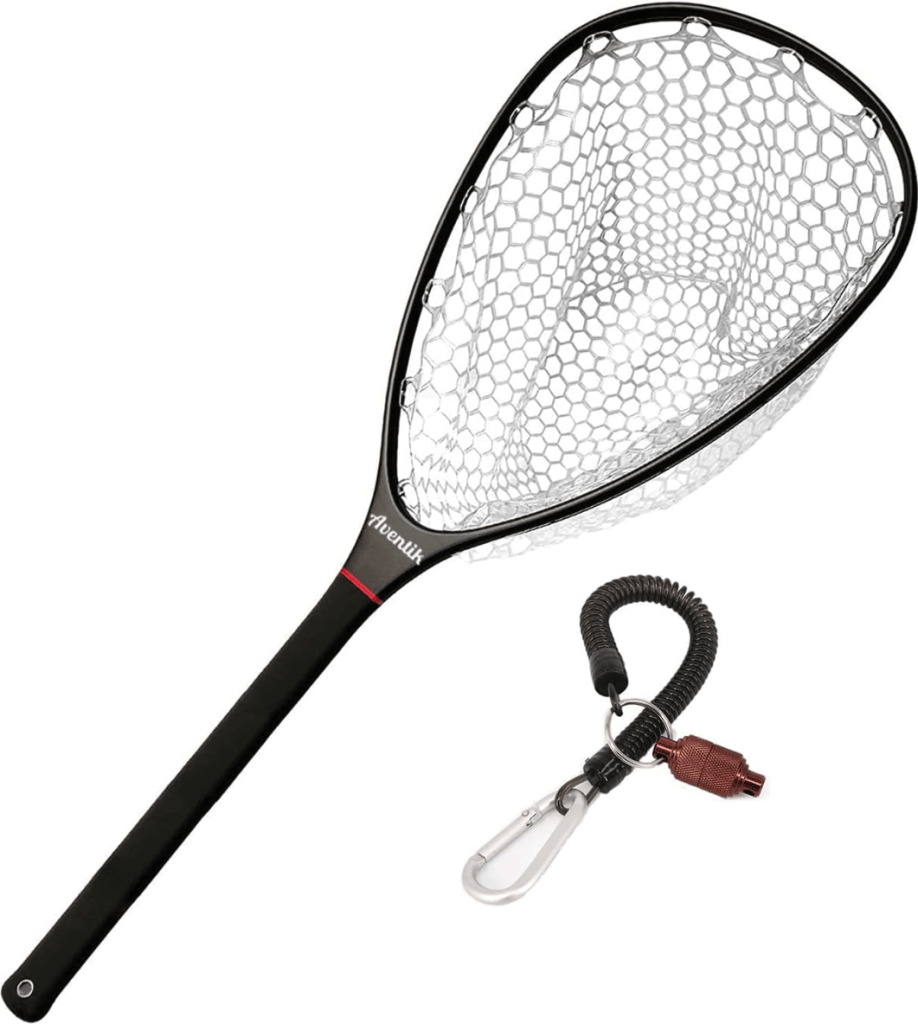
Aventik Floating Net
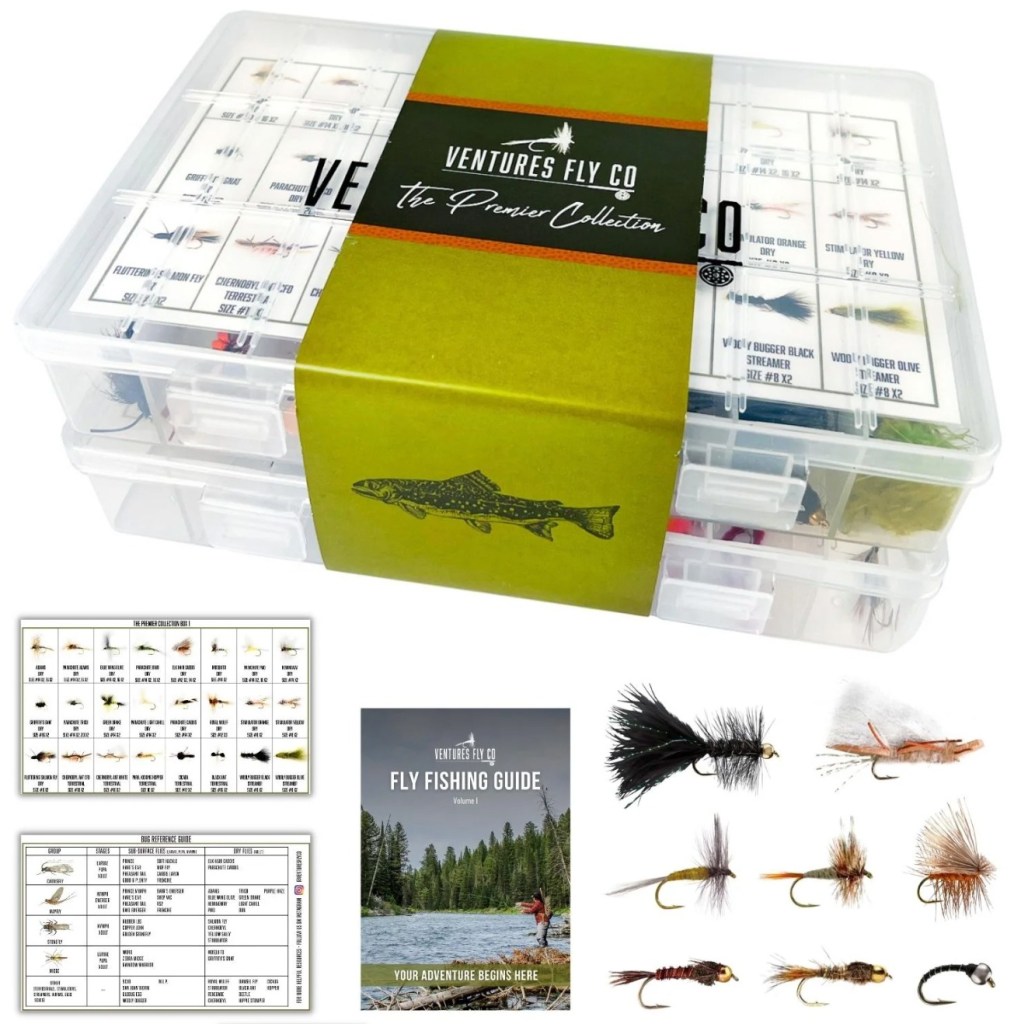
Ventures Fly Co Assortment
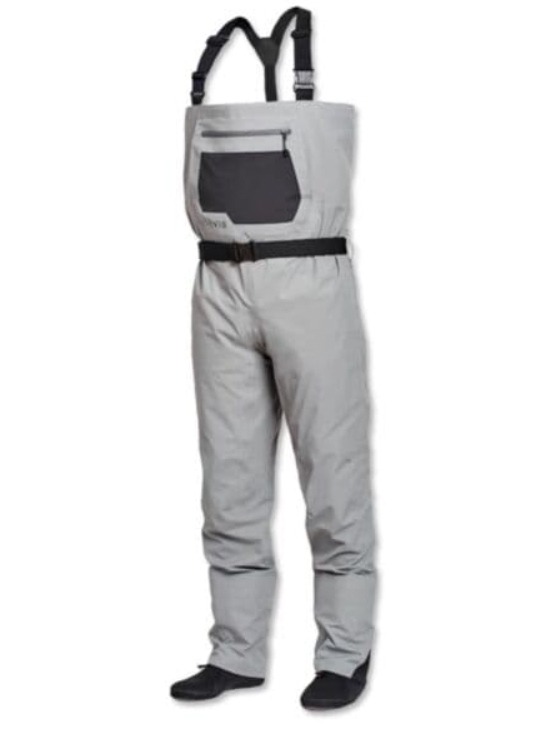
Orvis Clearwater Waders
