
Rapids are found in rivers where fast-moving water flows past obstacles, such as rocks, creating turbulence and conflicting currents.
To fully comprehend the nature of whitewater rafting, it’s essential to understand the mechanics behind rapids. In this article, we will unpack the details of what rapids are, how they’re formed, the hazards they create, and how rapids are classified.
What Are Rapids In A River?
River rapids are turbulent sections of rivers where water cascades over obstacles, accelerates down steep gradients, and rushes through narrow pathways. The resulting turbulence churns the water into a white, foamy section of water, aptly called whitewater.
The whitewater sections of a river can be important to the overall health of the river system. The splashing that occurs captures air bubbles in the water, effectively dissolving some oxygen that is used by fish and aquatic insects.
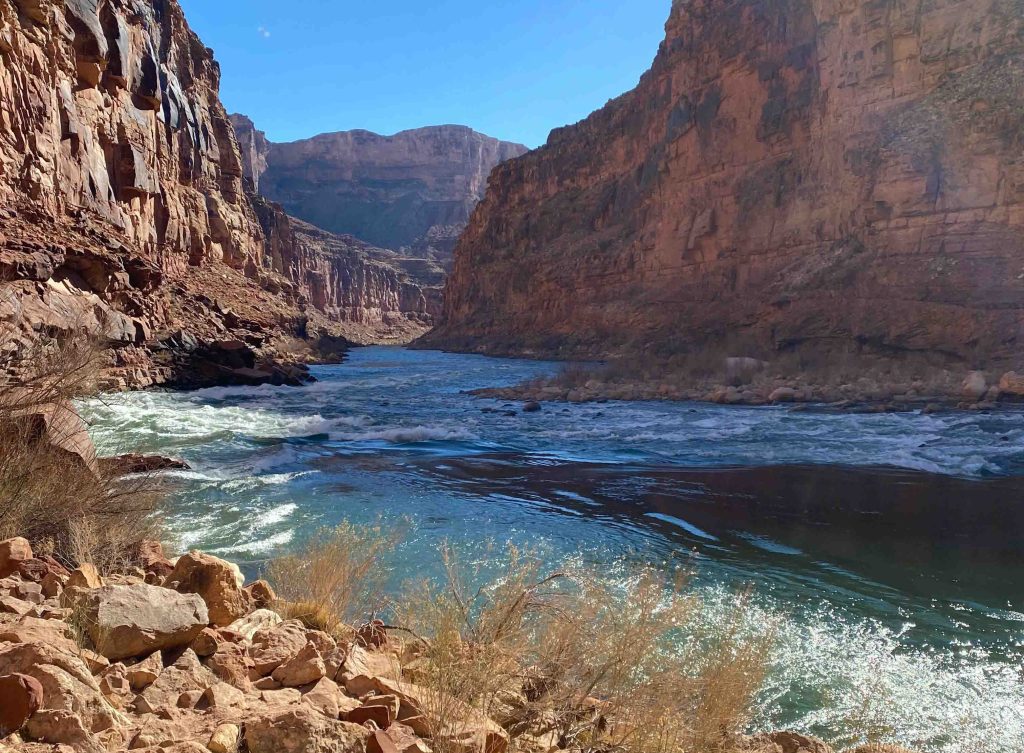
Whitewater is classified on a scale of 1 to 6, with the lower number being a more mellow rapid and the higher number being more turbulent and consequential.
A quick guide to rapid classifications
- Class 1: Small waves and riffles, few or no obstacles.
- Class 2: Medium-sized waves, some obstacles, straightforward rapids with clear channels
- Class 3: Lots of waves and complex currents. Holes and obstacles are abundant.
- Class 4: Complex river sections with fast currents and lots of obstacles. Swimming can be dangerous.
- Class 5: Very strong waves, constant obstacles, dangerous features. Some waterfalls can be present.
- Class 6: Substantially un-navigatable (i.e. not raftable). Violent rapids with the strongest currents and waterfalls.
For a more detailed definition of rapid classes, read further down in this article.
Below is a video of people taking on the Royal Gorge section of the Arkansas River west of Cañon City, CO. The Royal Gorge is a Class 4 white water section.
How Are Rapids Formed?
Rapids are formed when water speeds up as it passes over an obstacle in the river, creating a turbulent and swirling streamflow. As such, there are three elements required to form a rapid: flow, obstacles, and acceleration.
Flow
The fundamental requirement for rapids is a steady supply of water moving down a river. Stillwater, such as water found in a lake, cannot have a rapid. Slow-moving rivers with a low gradient also cannot contain rapids. All rivers have gradients, but only the ones with sharp gradients have rapids.
Obstacles
When flowing water passes over and around an obstacle (generally a rock or boulder), the river’s flow changes and begins to swirl. These conflicting currents can make a rapid challenging and hazardous.
In whitewater sports, obstacles are something that we are always on the lookout for. Obstacles make rapids fun and exciting but can also create hazards.
Acceleration
There are two ways that a river’s water can accelerate: (A) The gradient of the river bed increases or (B) the river’s path narrows and constricts. When the speed of the water increases, the intensity and violent nature of the rapid will become more significant.
Gradients increase when there are sharp changes in the elevation of the riverbed. Extreme examples of abrupt gradient changes are waterfalls or steep pour-overs.
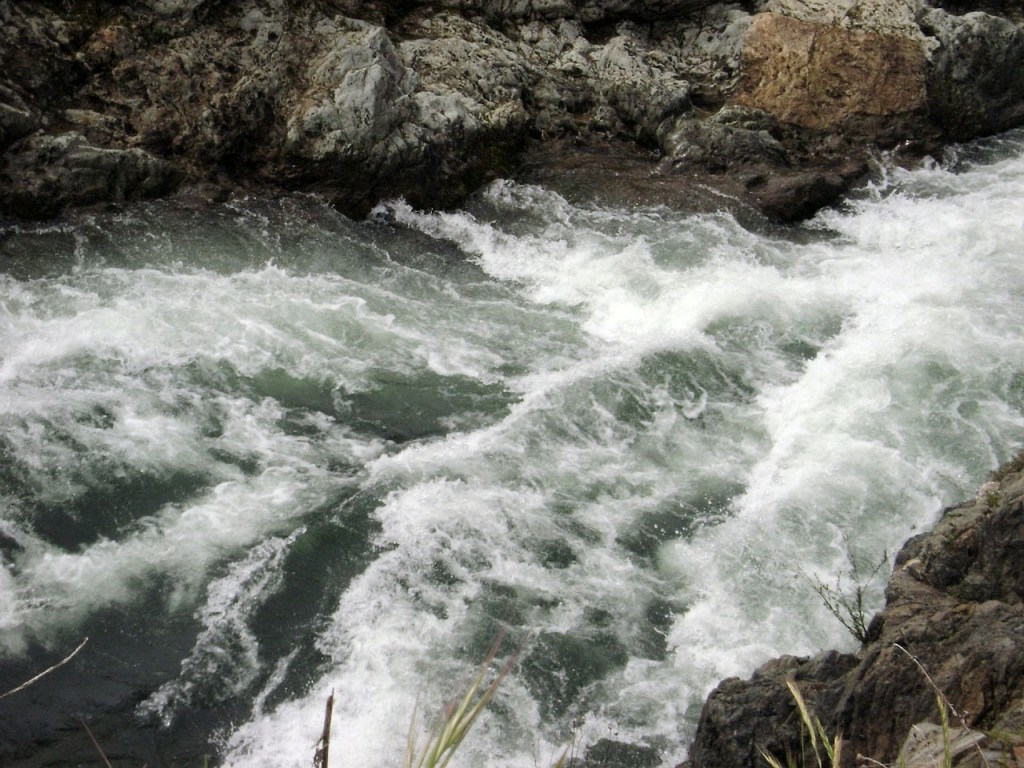
A river’s gradient is measured in feet dropped per mile. Some guidebooks will take gradient measurement a step further and detail the elevation change of individual rapids.
The path of the river constricts when water is forced through a narrower passage, often as a result of varying levels of erosion in the landscape.
A great analogy of a river’s constriction is when you partially put your finger over the end of a garden hose, causing the water to speed up as it spews out of the smaller hole created.
The most intense rapids are formed from an increased gradient and a constriction of the river’s channel at the same time.
Features of a Whitewater Rapid?
The formation of a rapid creates several features that are often viewed as hazards. The four primary features are:
- An obstacle
- A hole
- A wave
- An eddy
River Obstacles – Rocks, Boulders, Trees, Debris
A key element of a rapid forming is water passing by an obstacle in the river. Obstacles in a river may include rocks, boulders, trees, or other debris in the water. When the streamflow is low enough or the obstacle is large enough, you will be able to visibly identify the obstacle downstream.
Other times, obstacles can be submerged and create other hazards for boaters, such as sticker rocks, strainers, or sieves.
When running whitewater, you should attempt to avoid all encounters with obstacles to prevent the chances of pins, flips, or damage to their raft.
Holes
When the streamflow increases and begins to cover the obstacle, it creates a pour-over into what we call “a hole”. These pour-overs are essentially small, concentrated waterfalls sprinkled throughout the river.
Regardless of the size of a hole, the swirling hydraulics that these features create can be powerful enough to capsize a raft or hold objects and people underwater.
Check out the video above of running whitewater, including several rapids, on the Poudre River near Fort Collins. The Poudre River is one of the best whitewater rivers in Colorado for families.
Experienced whitewater rafters may intentionally navigate their boat into a hole for a more thrilling experience. Holes will slow down your boat, allowing for a rugged and wild ride that many whitewater rafters are looking for.
The largest and most powerful holes, also called “keeper holes,” should be avoided. And remember, folks, never enter a hole sideways!
Waves
When streamflow further increases, those pour-overs and holes will become waves. Encountering a wave is typically less hazardous than an encounter with a rock or a hole but should still be navigated with caution.
Large wave trains (strings of waves all in a row) or lateral breaking waves can often be powerful enough to knock a raft off course or flip a boat if approached incorrectly.
When riding a raft through a wave, it can feel comparable to riding a roller coaster!
River Eddies
Immediately downstream of an obstacle in a river, such as a boulder or rock piles that protrude out from the riverbank, you’ll find an eddy. Eddies are defined as the upstream current created after water passes by an obstacle in the river.
Once water passes by a boulder, it will attempt to backfill the low-pressure area downstream of the boulder, creating an upstream current.
Learn more about eddies in Slackwater’s article on What Are Eddies and How To Identify Them.
How Are Rapids Classified?
We classify rapids according to the International Scale of River Difficulty. It’s important to note that all rivers are different, and classifications may vary from one river to the next.
Additionally, classes of rapids can change based on the flows of the river.
Some rapids become more technical and consequential at higher flows, and others become easier and more straightforward. On the contrary, some rapids become more challenging at lower flows.
Definitions for Whitewater Rapid Classes
Flat Water Definition
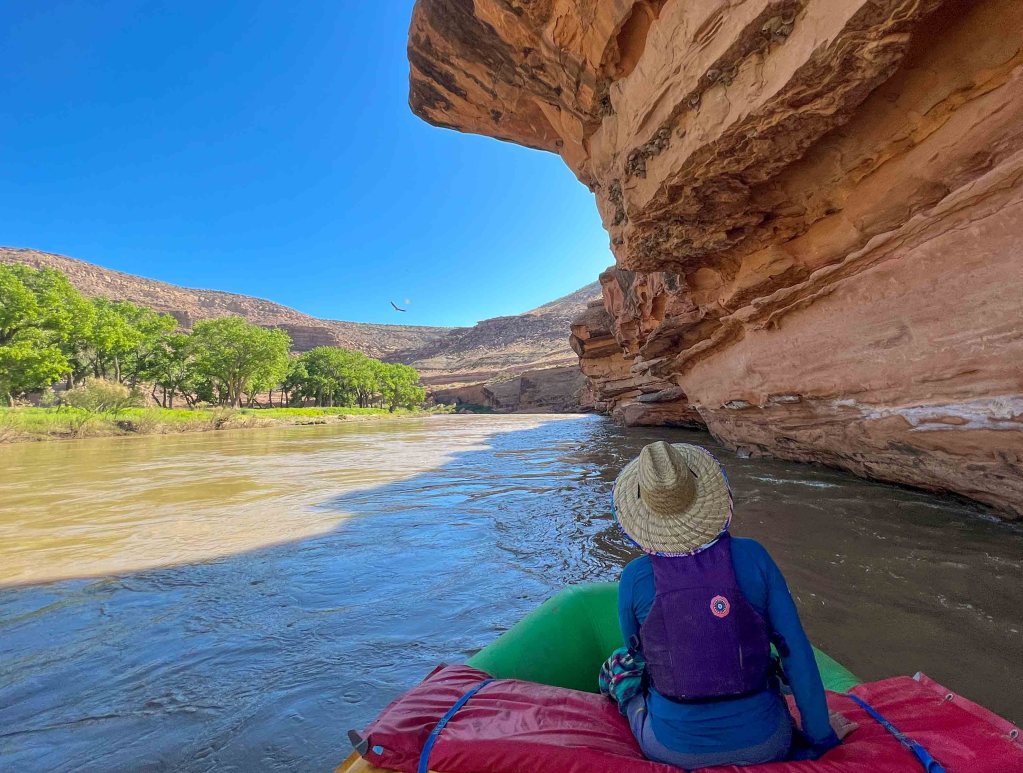
Rivers with no rapids. The water is moving, but the gradient is mellow, and no obstacles exist. Rafting on flatwater rivers is a fun and relaxing experience, and it can be a very good place for families with kids to go rafting.
Class 1 Rapid Definition
Fast-moving water with riffles and small waves. Few obstructions, all obvious and easily missed with little training. Swimming these rapids is generally not consequential.
In class 1 rapids, you must have solid skills to maneuver a raft or kayak, but you don’t need to be an expert. You’ll need to know how to read water and currents as well as how to steer your boat.
Class 2 Rapid Definition
Straightforward rapids with wide, clear channels. Some basic river running maneuvers may be required. Swimmers are seldom injured, and group assistance is seldom needed if a passenger falls into the water.
Class 2 rapids are considered beginner or low-intermediate whitewater. You will find waves, small holes, large eddies, and some obstacles that should be avoided. Class 2 rapids are generally not considered terribly dangerous, but anyone navigating through them should have experience running whitewater and a sound understanding of reading currents.
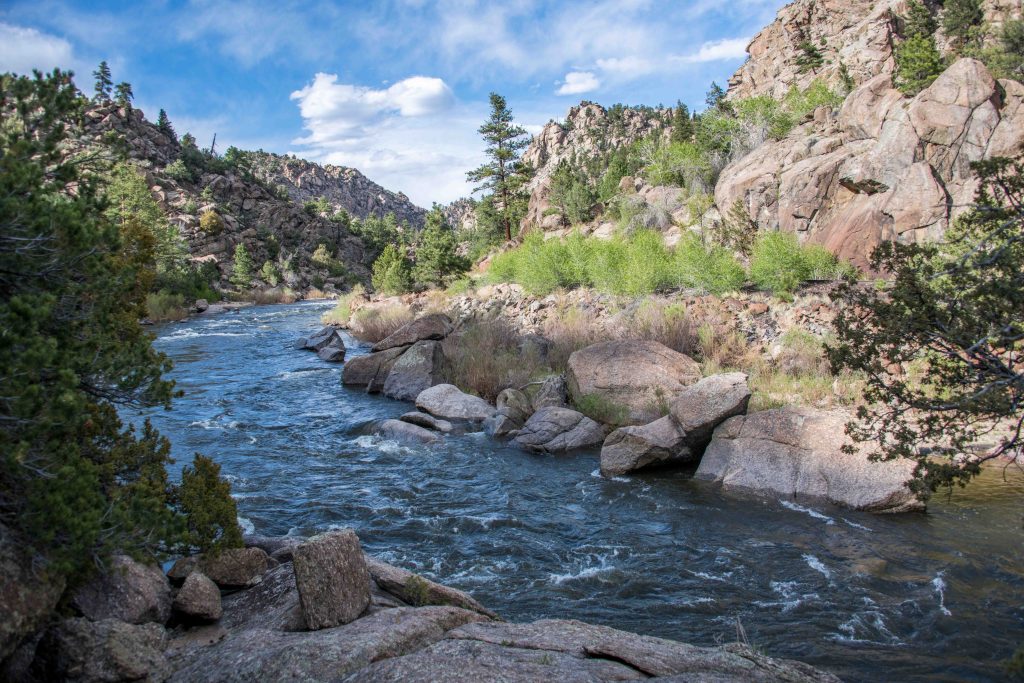
Class 3 Rapids Definition
Class 3 rapids are defined as containing moderate, irregular waves that can be difficult to avoid. Complex maneuvers and proficient boat control are often required in these rapids and large waves or strainers may be present but can be avoided. Class 3 rapids will contain strong eddies and powerful current. Scouting Class 3 rapids is advised for less experienced parties. Self-rescue for swimmers is usually easy, but group assistance may be required to avoid long swims.
Class 3 rapids are where the true excitement of running whitewater begins. These rapids can be rowdy and splashy and require high levels of focus to navigate safely. If you are a beginner in rafting or paddling a kayak, we recommend practicing running several Class 2 rapids before you attempt a class 3.
Here is a good video from NOLS showing what it is like to paddle through a Class 3 rapid.
Class 4 Rapids Definition
Class 4 rapids are intense, powerful rapids requiring precise and quick boat handling. Large, unavoidable waves and holes or constricted passages may be present in Class 4 whitewater.
Class 4 rapids may require “must” moves above dangerous hazards, and scouting is essential for anyone who is unfamiliar with the river. The risk of injury to swimmers is moderate to high, and water conditions may make self-rescue difficult.
Class 4 rapids are very exciting and should be approached with caution and extreme levels of respect.
The short video below is a riverside view of the Pine View Class 4 Rapid on the Poudre River in June 2020. Many features throughout this rapid are unavoidable and require precise maneuvers.
Class 5 Rapids Definition
Long, obstructed, or very violent rapids that expose a paddler to added risk. Drops may contain large, unavoidable waves and holes or steep, demanding routes. Rapids may continue for long distances between pools. Eddies may be small, turbulent, or difficult to reach. Scouting is recommended but may be difficult. Swims are dangerous, and rescue is often difficult, even for experts.
You should not attempt a class 5 rapid unless you are an expert at running whitewater and have safety measures in place in the event of a swim.
There are only a few commercial outfits in Colorado that offer guided rafting trips through Class 5 rapids. AVA rafting is one of them. Check out their video on rafting Gore Canyon below.
Class 6 Rapids Definition
These runs have almost never been attempted and often exemplify the extremes of difficulty, unpredictability, and danger. The consequences of errors are very severe, and rescue may be impossible. These rapids are for professionals and high-level whitewater experts only.
Here’s a video of Class 6 rapids in the Niagra Gorge.
Summary
An essential element of running whitewater is understanding the mechanics of a rapid, how they are formed, the hazards they create, and how they are classified.
Rapids are formed when there is flowing water, an obstacle the water passes over, and an acceleration of the water’s flow downstream.
In a body of whitewater, river enthusiasts may encounter features such as rocks, holes, waves, eddies, strainers, sieves, and stickers.
Whitewater is classified on a scale of 1 to 6, and should always be approached with caution. Class 1 and 2 are beginner-friendly. Class 3’s are for intermediates with previous whitewater experience. Class 4 whitewater is for advanced river runners and people with lots of river experience. Class 5 rapids are for high-level experts only. Class 6 rapids can be deadly and should always be avoided.
When in doubt, we encourage people to choose a more mellow section of the river or go with an experienced guide.
Thanks for reading,
Team Slackwater