

As a fly fishing guide from Crested Butte, Colorado, I believe in owning quality equipment without breaking the bank. This is especially true when selecting a mid-range fly rod.
Through guiding and personal use, I’ve had the privilege of casting and guiding with various mid-priced fly rods.
As a whole, I believe rods in the $500 price range, give or take a little, are the best fly rods for the money. These rods will be magnitudes better than a budget fly rod, and ALMOST as good as a high-end rod. A mid-priced rod will be made by a reputable company and will be constructed with excellent componentry.
In this article, I’ll share my insights on the top three mid-priced fly rods I’ve enjoyed fishing and guiding with: the Orvis Recon, the Sage Foundation, and the Redington Vice.
Disclosure: I use these rods in varying weights and lengths, but most often, I use them in 9-foot, 4/5/6 weights. This article is not an apples-to-apples comparison of these differing rods in one size but a summary of solid fly rods in the mid-level price range.
At the end of the article, I discuss which rod I would pick if I could only have one. Fish on!
Orvis Recon
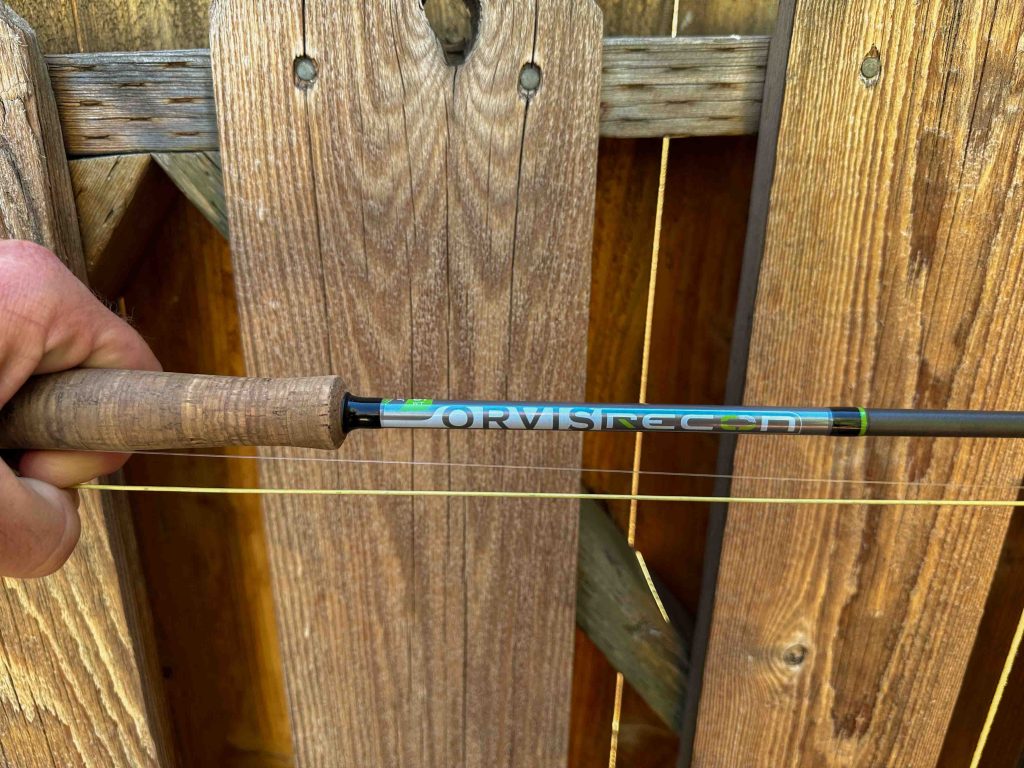
The Orvis Recon series has long been a favorite among anglers seeking a well-balanced combination of performance and affordability.
The Recon fly rods are renowned for their versatility and are well-suited to the diverse fishing opportunities for most western United States Rivers.
Why I Like It:
The Orvis Recon has proven to be a dependable workhorse on the waters around Crested Butte. Its versatility allows me to confidently guide clients on everything from small, technical creeks to larger rivers and even high alpine lakes.
The Recon’s medium-fast action (emphasis on the fast side of things) enables precise casts in tight quarters, which are common in Colorado fly fishing. But it can also sling heavy nymph rigs on the Taylor River or Gunnison River. Additionally, it’s more affordable than a high-end rod, and I know it will be a reliable tool for me for years.
I like to put the Recon in the hands of my clients because most of my clients don’t have excellent casting strokes – yet. But the recon helps them get there with a fast recovery, leading to more accurate casts and, ultimately, more fish in the net.
What I Don’t Like About It:
Very little. If anything, the lack of the hook keeper above the cork. But what’s new about that? No Orvis rods have it. So dumb.
At $600, it is towards the top end of what a mid-range rod should cost. I feel like it’s worth closer to $500, in my opinion. But this may be because of my admiration for the Sage Foundation, which costs under $500, discussed below.
Lastly, the rod tube doesn’t feel appropriate for the price point. It looks and feels like a rod tube for a $200 rod, which makes it subtly less exciting to unpack for the first time. The tube does not correlate to the rod’s performance, but it seems cheap. I think Orvis could do better.
Material:
The Recon is constructed using Orvis’ proprietary high-performance graphite, ensuring a lightweight yet durable rod that can handle various fly fishing situations. I’ve never had a problem with the craftsmanship of the Recon nor do I expect to.
Should it ever break, I won’t have a worry. Orvis gear is solid, and their customer service is better. They’ll take care of me when needed, and they’ll take care of you too.
Action:
The Recon boasts a versatile medium-fast action, striking the perfect balance between power and accuracy. It also recovers quickly, lending to precise casts without much effort. These characteristics allow for the delicate presentation of dry flies and the ability to easily cast larger streamers or nymph rigs.
I also own some Orvis Helios 3F rods, and in comparison, the Recon rod is not far behind from a performance perspective. It is a touch heavier than the Helios and feels like it doesn’t load quite as easily. However, with a good casting stroke, it can cast nearly as well.
Components:
Premium components, including chrome snake guides, a highly sensitive tip, and a sleek olive matte finish, enhance the overall quality and aesthetics of the Recon.
Honestly, I like the look of the Recon better than that of the Helios… that white label above the cork on the Helios is atrocious! C’mon Orvis!
Why casting at long distances doesn’t matter!
There are an incredible amount of articles on the internet reviewing fly rods and placing an enormous amount of emphasis on how accurately they cast at 30 feet, 50 feet, and 75 feet. This is especially true with the Yellowstone Angler’s Fly Rod Shoot Out.
Now, I do find most of those reviews from Yellowstone Angler helpful. But I feel like they’re missing the boat, talking too much about how a rod casts at a long distance.
In Colorado, 90% of all fish I catch are with casts between 15 and 25 feet. Short, simple, accurate casting leads to precise, controlled drifts. And more fish in the net. Period.
This differs in places with larger rivers, such as Montana or Patagonia, but not here. Not in Colorado.
Beginner (or casual) angling clients often argue that they must cast their line far to target fish on the other side of the stream. My take is these people enjoy casting more than they enjoy catching. Can you prove me wrong?
Instead, I advise anglers to get as close to the target zone as possible without spooking the fish. Generally, this is within 20 feet if you can approach the zone with stealth. Try it next time you fish, and let me know how it goes! With this approach, I bet your hook-up rate improves because you can more easily control the drift.
The Bottom Line: When choosing your next fly rod, put less emphasis on how well it casts any further than 30 feet. A good angler will know it won’t matter in most Colorado fly fishing applications.
Instead, pay attention to its action, ability to pick up line, swing weight, and recovery speed. Those are the things that matter most.
SAGE FOUNDATION
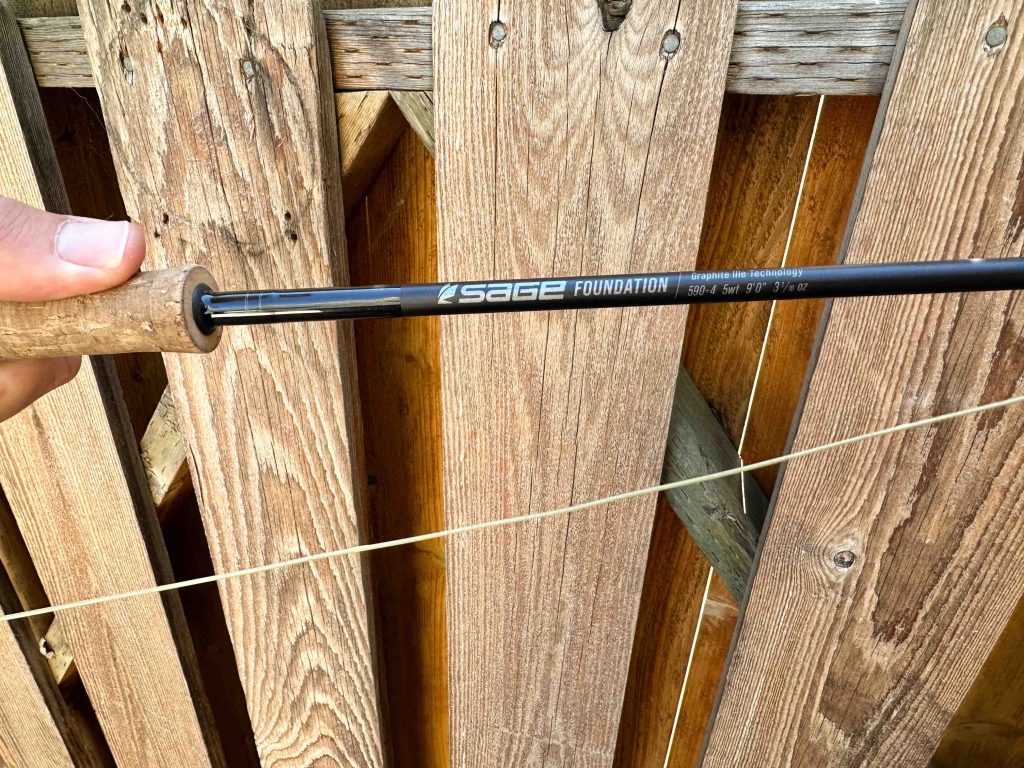
Sage is a brand synonymous with high-quality fly rods, and the Sage Foundation continues this tradition while remaining accessible to a broader range of anglers. This mid-priced rod delivers exceptional performance well-suited to Crested Butte’s varied fishing conditions.
Why I Like It
The Sage Foundation is a standout choice for anglers seeking a versatile, mid-priced fly rod. Its fast action is particularly advantageous when dealing with windy conditions common on the river, allowing for more accurate casts.
This is especially true when fly fishing in more open areas around Crested Butte, such as on the lower part of the upper Gunnison River, in the meadow of Spring Creek, or up high in Taylor Park on one of the many trout streams up there.
Can it cast a long distance too? Yeah, it can. But like I mentioned above, it doesn’t matter that much.
It is tough to tell any significant differences between a Sage Foundation (priced around $500) vs. a Sage R8 Core priced at $1050), other than a few cosmetic items and their weight. The rod is virtually as stiff as an R8 Core and equally versatile, especially for the intermediate angler. For a rod that’s half the price of a “high-end” rod, it’s downright a great value.
I’ve worked with the 490-4 (9-foot, 4-weight, 4-piece) and the 590-4 (9-foot, 5-weight, 4-piece) and enjoy them both. For a more beginner angler, I suggest the 5-weight. If you can handle casting in variable conditions and can load a fly rod well, the 4-weight is an absolute blast!
What I Don’t Like About It
Again, same as the Recon – very little. Is it as light as a high-end rod? No. Is it as accurate? No. But it’s not very far behind.
Here’s a quick weight comparison to show you how little difference there is:
- Sage R8 Core 490-4: 2 11/16 oz
- Sage Foundation 490-4: 2 7/8 oz.
Only 3/16 of an oz different!
My only problem with buying a Sage product is dealing with the company from a warranty perspective. I’ve broken rod tips and had issues with reels in the past, and it feels like you’re talking to a BIG company when you’re dealing with getting a repair done. Additionally, sometimes it takes a long time to get a replacement (like, several weeks to months at times).
Conversely, Orvis makes you feel like their friend when you call in to get a rod repaired. Orvis is a massive company that makes you feel like you’re calling the local fly shop in a small town… and I like that.
Material
The Sage Foundation is constructed with Sage’s renowned Graphite IIIe technology, which ensures a lightweight and responsive rod that maintains excellent strength and durability. Similar to the Recon, I have had no issues with how the Foundation was made.
Action
This rod features a fast-action design, offering superb line control, accuracy, and long-distance casting capabilities. Its fast action makes it versatile for different fishing techniques and fly sizes.
I like fast-action rods as a starting spot for beginner to intermediate anglers. Learning to cast with a fast-action rod is easier than with a medium-action rod. This is especially important when the wind picks up or you’re chucking heavier rigs.
Components
Quality components, such as hard chrome snake guides and a black anodized aluminum reel seat, contribute to the rod’s overall durability and functionality.
The Foundation has a matte finish, which is unique among fly rods and something I find to be pretty cool!
The Recon also has a matte finish, but you’re still paying $600 for that rod compared to $495 for the Foundation. I understand this finish is less expensive to manufacture, making it less costly to buy. And let’s be honest, the aesthetics of a fly rod may be an important characteristic, but it’s not the most important.
REDINGTON VICE

When it comes to balancing quality and price, the Redington Vice series is a compelling choice. This rod’s performance and affordability make it a go-to option for many angling, especially those without a solid casting stroke.
The rod is stiff as hell and will get the job done. It’s not as delicate as the Recon or the Foundation, and I don’t think it’s as accurate due to its slower recovery speed. But it’s as strong and stiff as any rod in its price range and better than most rods in the Redington lineup.
Why I Like It
Stiffness, affordability (under $300), and reliability to huck heavy rigs.
The Redington Vice has earned its place among my top mid-priced fly rods for its impressive value for money. My favorite place to use the Vice is when fishing from a drift boat or when a client has trouble loading a lighter, more delicate rod. I own the Vice in 9-foot, 5-weight, and 9-foot, 6-weight models.
The Vice’s versatility shines in Crested Butte angling applications, where fishing conditions vary regularly. Its fast action allows for relatively precise casting, even in adverse weather conditions, making it a reliable option for guiding clients through challenging situations.
The Vice’s affordability makes it an excellent choice for beginners looking for a quality rod that will cost less.
What I Don’t Like About It
Its lack of delicacy is my main beef with the Vice. I have a proficient casting stroke (or at least I think I do, most of the time), and it’s very challenging to cast light rigs or dry flies with any gracefulness with this rod. Therefore, I don’t think it is as versatile as the Recon or the Foundation. I also hate the green color, but that’s not a make-or-break thing.
Material
The Vice rod is constructed with multi-modulus carbon fiber blanks, offering a blend of strength and responsiveness without excessive weight. However, you will notice quite a bit of arm fatigue if you cast this rod all day. This is especially true compared to the Recon or Foundation, which have a much lighter and more delicate feel.
Action
Redington describes the Vice as having a fast-action design, which provides the angler with the necessary power to cast accurately and handle larger fish. Can you handle large fish with a more delicate, lighter rod just as well? Yes, you can. But the Vice’s power is something one should consider a positive.
I’ll emphasize that there’s nothing “medium-action” about this rod, which makes it a fine choice for those still developing their casting stroke.
Components
The Vice features a glossy green finish and an anodized reel seat. Other than the flashiness of the paint color, I’ve noticed no other issues with its craftsmanship or design.
CONCLUSION
As a fly fishing guide in Crested Butte, Colorado, I understand the importance of equipping oneself with reliable gear that balances quality and price. The Orvis Recon, Sage Foundation, and Redington Vice are three mid-priced fly rods that have consistently impressed me with their performance and value.
However, if I were to pick only one, I’d like the Foundation. The price point beats the Recon by $100, and it simply feels and casts like a high-end rod. For your money, this is one of the best fly rods you can own.
The Foundation is light, responsive, and accurate enough to place flies where needed.
My personal rod quiver consists of several higher-end rods from Scott, Sage, Winston, and Orvis. But I still regularly pick up the Foundation as my go-to fly fishing tool.
When choosing a mid-priced rod, consider it a rod you will own for the rest of your life. Take your time, research thoroughly, and find the rod that brings you joy and many fish to the net.
Please email me at info@slackwaterco.com with any questions!
Dan