

People new to fly fishing often hear about redds and that they should avoid them. However, for a beginner fly fisher, it can be challenging to know what a trout redd looks like, prompting the question, “What is a redd?”
In this article, we will discuss trout redds, how to identify them, and why you should avoid targeting spawning trout.
In the above video, you will see spawning, further helping understand what is a trout redd.
What is A Redd?
A trout redd refers to a spawning area for trout in a river or trout stream. It is a gravel nest that fish create in shallow areas of a river or stream in order to lay their eggs.
When fly fishing, it is important to avoid disturbing trout redds. Anglers should never step on them or cast to fish that are currently inhabiting the redd.
Fishing regulations often protect these areas during the spawning season to ensure the species’ survival. In Colorado, brown trout typically spawn in the fall, and rainbow trout spawn in late winter or early spring.
While protections and advisories may be in place, it is generally up to the angler to keep their head on a swivel and identify redds throughout the river.
No one is out there to police this ethical practice — so you must police yourself.
Where are Trout Redds Located in a River?
Redds can be found in shallow areas of the river that are well oxygenated and have consistent flows. Because trout make their nest in the shallower areas, redds are typically located close to the river’s edge.
Some redds can be found in eddies, although not exclusively.
A river eddy is located downstream of an obstacle such as a boulder. After the water passes by the obstacle, it attempts to backfill the space behind it, forcing the current to flow upstream. This upstream current that is present after an obstacle is called an eddy. If an eddy is shallow, mellow, and has consistent flows, a trout may have nested in the area.
Learn more about eddies and how they impact a fly fisher’s approach to a river.
Further, a trout redd will be in a place where trout can easily clear away smaller pebbles with their body. The trout cannot easily make its nest if the riverbed’s rocks are too large and heavy.
Why Should We Avoid Redds When Fly Fishing?
All anglers must be aware of the presence of redds and always avoid fishing on or to them.
Fishing on or to a trout redd disturbs spawning and can negatively impact fish populations. Catching fish while they are spawning can put too much stress on the trout to the point they cannot spawn or die.
Spawning fish are already using up tons of energy to spawn, so it’s best we let them be. Instead, anglers should focus on areas adjacent to redds where trout and other fish may be feeding or resting.
Read more about fly fishing during a spawn below.
It’s not always easy to identify a redd because they look different from stream to stream. But in general, redds are lighter in color and rarely contain any aquatic vegetation.
What Does a Trout REdd Look Like?
For the beginner angler, recognizing what a trout redd looks like can be challenging, especially when all of the riverbed looks alike!
You can spot a trout redd when most of the riverbed is darker with a light-colored patch in the middle, generally a few feet wide and in shallow water.
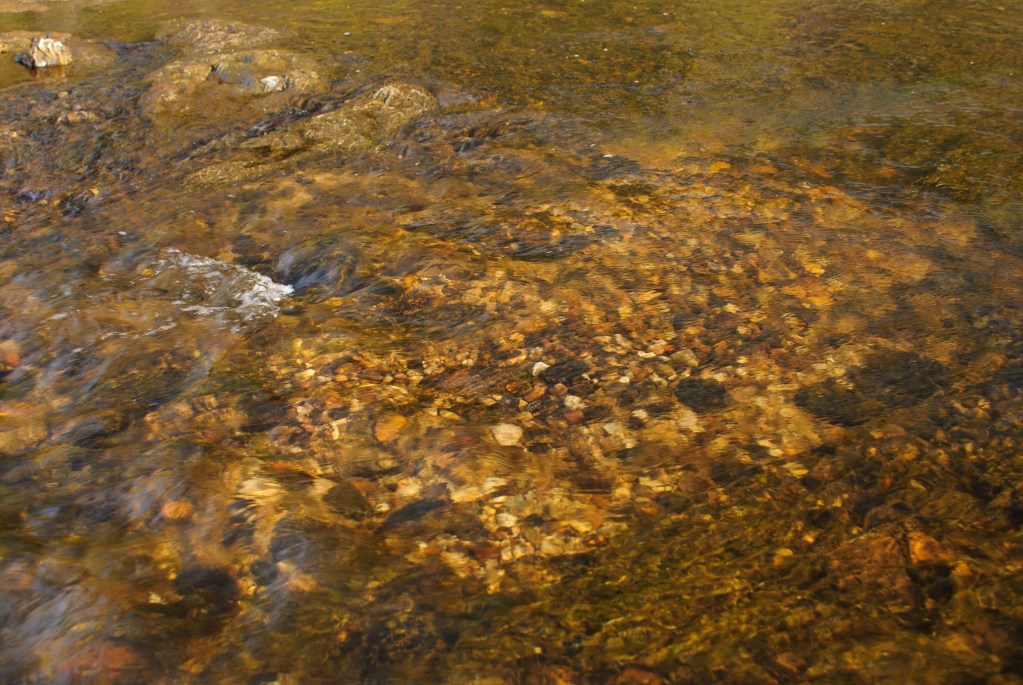
Often, trout hover over this nest in shallow water, making a redd easier to identify. Other times, the spawn has been completed, and you won’t see any fish in the redd. However, during spawning season, you should assume there are eggs still in the redd.
A trout redd may appear cleaner and a slightly different color than the surrounding river bed due to the trout clearing away rocks and pebbles with their body.
A clear indication of a redd is a large fish holding in shallow water (often less than 12 inches deep).
Mature trout that are not spawning will typically hang out in deeper water or areas where they have cover from predators, such as an undercut bank or under a fallen log. Thus, a large trout in shallow water can indicate a spawn is occurring, or the fish is guarding its nest.
How Does a Trout Create Their Nest?
The trout will make their nest, or redd, by clearing debris away from the area.
Female trout will find a shallow, well-oxygenated area to begin the spawning process. She will use her body to clear away gravel to form an indentation in the riverbed, acting like a nest.
She will “clean” the area by clearing away any silt, sediment, and algae. This process will change the appearance and nature of the riverbed. The cleaning process can damage the fish’s body because she repeatedly flaps her tail on rocks violently.
You can identify a trout that has recently spawned when its body and tail appear injured and beat up.
A male trout will eventually pair with the female to fertilize the eggs she laid.
A female trout will deposit anywhere between 200 and 8,000 eggs on the redd. After they’ve been fertilized, the female will again use her belly to cover the eggs while they mature.
The Argument Against Avoiding Trout Redds
In other types of fishing, it’s common practice to target a species near its spawning season. And we get that!
But trout are different.
Trout are fragile fish and demand careful practices when targeting them. In many Colorado rivers, the ecosystem depends on the spawning process to successfully repopulate the stream each year. But some argue that Rainbow trout, which are not native, shouldn’t be considered in areas where Cutthroats are also spawning.
So the questions arise and should be discussed…
- If a trout stream has a surplus of fish, should that change our approach?
- Are native trout BETTER than non-native trout?
- If we are catching fish to keep rather than to release, does that change our opinion?
We can see both sides of the argument. However, we tend to encourage anglers to respect the species regardless of its native heritage.
To us at Slackwater, any fish caught on the fly is special!
When Do Trout SPawn?
Each species of trout has its own, unique spawning patterns. However, when doubt arises, you can rely on your knowledge of timing and the river’s environment to determine whether trout are spawning.
Rainbow and Cutthroat trout spawn in the spring between February and May in Colorado trout streams and other western rivers. The best water temperatures for these fish to spawn are between 42 and 44 degrees.
Brown and Brook Trout will spawn in the fall, generally between September and December. We’ve found that browns occasionally will spawn when water temperatures are a touch warmer but prefer a similar environment to their Rainbow and Cutthroat counterparts.
We like to carry a river thermometer in our fly fishing bag to monitor the water’s temperature. For a budget-friendly, reliable tool, we like the Encased Stream Thermometor from Orvis. At about $12, it is an inexpensive and important angling tool we should all carry.
Other trout stream thermometers are available on outlets like Amazon.
Best Water Temperatures for Trout To Spawn
| Species | Season | Water Temps |
| Rainbow & Cutthroat Trout | Winter/Spring (Feb-May) | 42° – 44° F |
| Brown & Brook | Fall (Oct – Dec) | 42° – 44° F |
Can You Fly Fish During a Trout Spawn?
It’s important to note that there is nothing wrong with fishing during the spawn. But it is never good to fish to a spawning trout.
Fishing during the spawn means you are targeting fish that have gathered in the general area of the spawn. This means you’re targeting a trout that may be looking to eat an egg or two from a spawning trout.
Pro Tip: Throwing an egg pattern downstream of a redd can be a great way to catch a trout!
For instance, rainbow trout in the fall may hang out near spawning browns in hopes of eating some of their eggs. We like to cast downstream of a brown trout’s redd to test if there’s a predatory rainbow waiting to meet our fly!
Conclusion
It is not uncommon for a beginner angler to not know how to identify a trout redd. Hopefully, this article has helped you understand what a redd is and what these trout spawning areas are like.
It is our job as fly fishers to protect the natural resources we have access to in our rivers. Colorado trout streams are a precious commodity, and we all have a responsibility to protect them.
To be the best stewards of our public lands, fly fishers must be able to identify redds, know what a spawning trout looks like, and understand why we should avoid targeting trout on a redd.
For more information about redds, check out this video from Tactical Fly Fisher. Or reach out to us at info@slackwaterco.com.
About the author
Dan Jones of Slackwater is an author and premier Colorado fly fishing guide based in Crested Butte. He specializes in walk-wade fly fishing on the East, Taylor, and Gunnison Rivers, as well as many other trout streams in Gunnison County.
Dan loves Crested Butte angling and is passionate about sharing his knowledge and joy with others. For more information about fly fishing in Crested Butte this year, contact Dan via email at info@slackwaterco.com.