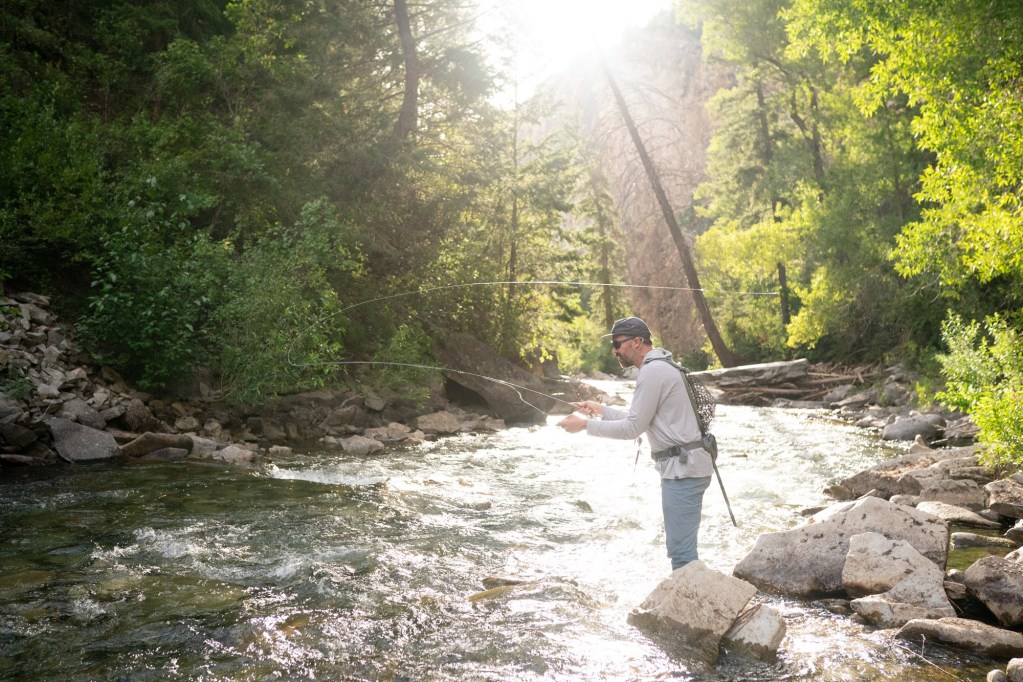
There are two primary types of rivers where fly fishers target trout — tailwaters and freestones. A tailwater river is one that flows out of a man-made dam. A freestone river gets its flows from snowmelt and other forms of precipitation, making it truly dependent on nature.
Spring creeks are another form of trout stream, however they are far less common that a tailwater or freestone in Colorado.
As a beginner or expert angler, it’s crucial to understand the differences between these two types of rivers.
Let’s unpack the differences between tailwater and freestone rivers.
What is a Tailwater River?
A tailwater is a river, stream, or creek that flows downstream from a dam, reservoir, or combination thereof.
The “tailwater” description refers to water released from the bottom (or tail) of the dam.
In most instances, a river or stream will begin as a freestone (definition below) before it enters a reservoir. Once it exits the reservoir through a dam, it becomes a tailwater.

Fly fishing in tailwaters is common across Colorado and the western United States due to our necessity for reservoirs and dams to hold water reserves.
Trout fishing in tailwaters can be characterized by being more consistent from day to day than angling on a freestone river. The headwaters of a tailwater are generally clearer than a freestone’s, and fish can be pickier and spookier.

Some of Colorado’s Best Tailwaters
Here is a list of some of the most famous tailwater rivers in Colorado.
- Fryingpan River – flows out of Ruedi Reservoir, north of Aspen, CO.
- Arkansas River – flows out of Pueblo Reservoir and is public for about 8 miles.
- South Platte River – there is a string of tailwater sections of the South Platte from Elevenmile Canyon through Cheesman Canyon into sections of the river near Deckers, CO. This is one of the closest tailwaters to the Denver area.
- Blue River – there are two tailwater sections of the Blue River. The first flows north out of the Dillon Reservoir and the second out of Green Mountain Reservoir. Some of the largest trout in Colorado live in the Blue River.
- Taylor River – Crested Butte’s home tailwater fishery that flows south out of the Taylor Reservoir.
- Gunnison River – There are sections of the Gunnison River below Blue Mesa Reservoir, Marrow Point Reservoir, and the Crystal Reservoir considered to be tailwaters.
Casts on tailwaters must be precise, and drifts must be drag-free. Drag-free drifts are also known as dead drifts.
Further, trout in tailwaters typically eat flies that are more realistic looking due to the higher clarity of its water and consistency of what they’re used to feeding on.
Our top tailwater flies that can be productive year-round include:
- Zebra Midge (size 18-26; a realistic-looking fly in black, brown, or olive)
- Tailwater Tiny (size 18-20; a realistic midge fly with a bit of flash)
- Mole Fly (Size 18-22; realistic representation of an emerging midge)
- Rainbow Perdigon (size 18-20, a small yet heavy fly that helps get a rig down deep)
What Is A Freestone River?
A freestone river is a body of water where the flow depends on natural runoff from rain or snowmelt. We define a freestone river as a body of water not regulated or dam-controlled under the influence of humans.
Fly fishing on a freestone river is neither better nor worse than fishing on a tailwater. It’s just different.
Constantly changing conditions on a freestone make fly fishing on one somewhat of a puzzle. When flows bump up or slow down quickly, trout can change their feeding patterns, and it’s up to the angler to figure it out.
We suppose that’s part of the fun!
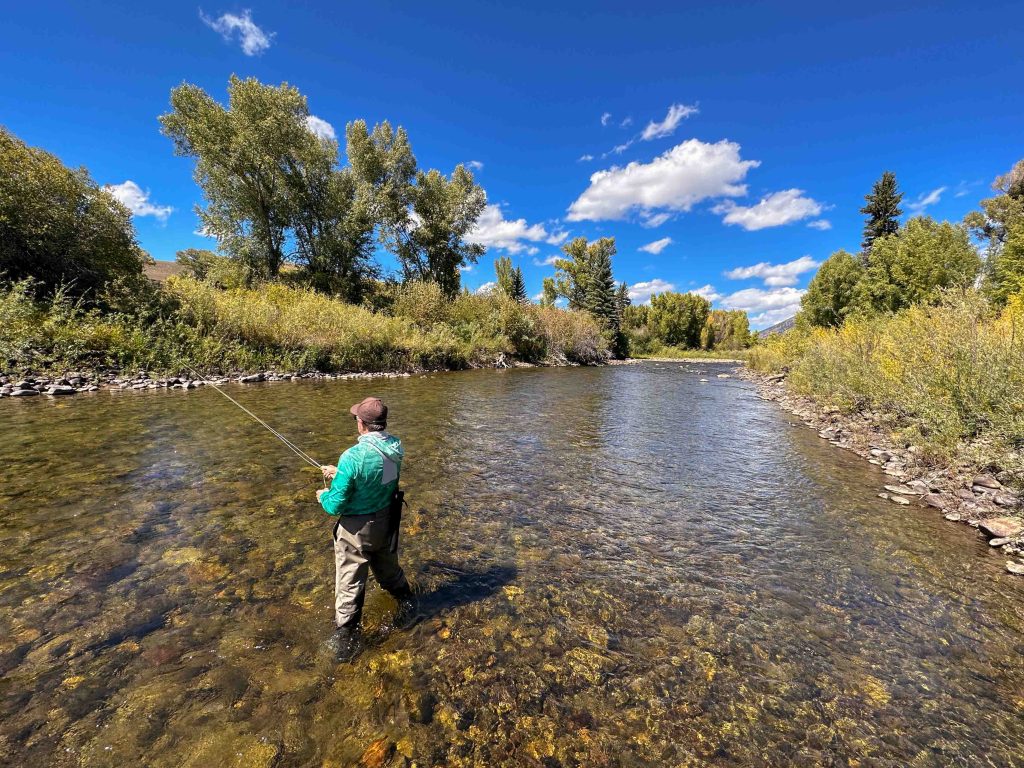
Some freestone rivers in Central Colorado include the East and Slate Rivers. The Gunnison River headwaters technically start in Almont, CO, where the Taylor and the East meet.
The confluence effectively makes the upper Gunnison River above Blue Mesa Reservoir have some freestone and tailwater characteristics.
Read the most recent Gunnison River fishing report here.
Colorado’s Best Freestone Rivers
While most rivers begin as freestones, many eventually run into a dam, effectively turning them into a tailwater. Here are some of the most famous, true freestone rivers in Colorado.
- Upper Colorado River in Rocky Mountain National Park – This is a freestone river until it meets Shadow Mountain Lake in Grand Lake, CO.
- Roaring Fork River – Flows north out of the Elk Mountains through Aspen, CO in the Roaring Fork Valley until it meets the Colorado River in Glenwood Springs, CO.
- Poudre River – Flows north out of Rocky Mountain National Park until it takes a hard turn to the east in the Poudre Canyon. The closest major town to the Poudre River is Fort Collins, CO.
- Yampa River – Flows north and then west past Steamboat, CO until it meets the Green River in the northwest corner of the state. The Yampa River is also famous for amazing multi-day rafting trips.
- Crystal River – The headwaters of the Crystal begin high in the Elk Mountains near Schofield Pass and flows north past Marble, CO until it meets the Roaring Fork River near Carbondale, CO.
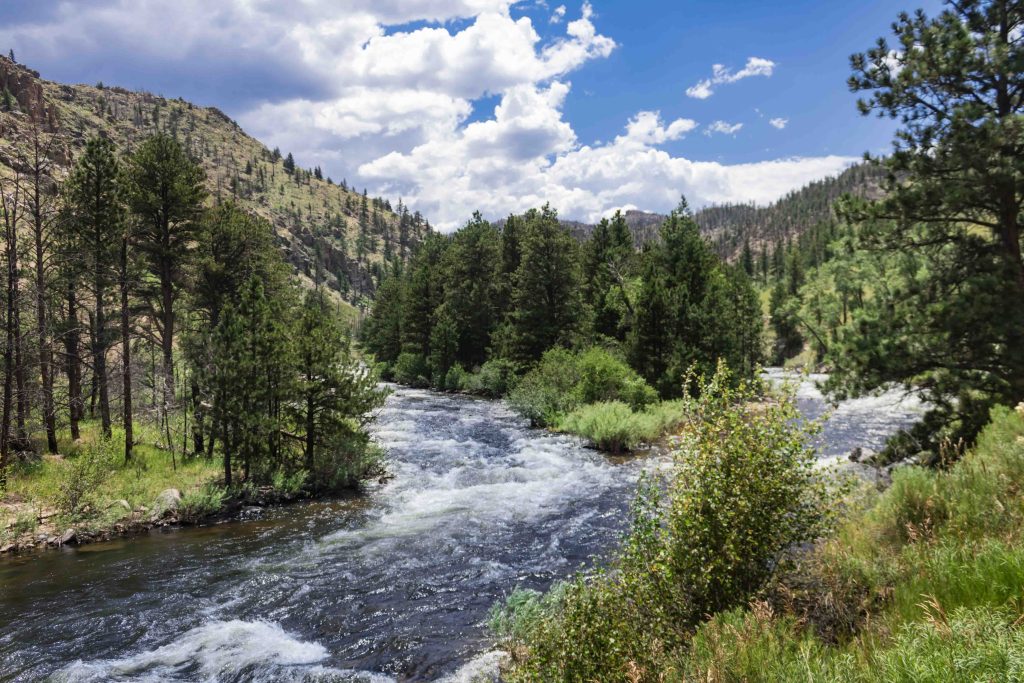
There is not one reliable, year-round fly pattern that is best for a freestone river. Streamer fishing, nymph fishing, and dry fly fishing can all be great ways to fly fish in a freestone river, depending on the time of year or the time of day.
As such, we do not have a list of year-round go-to fly patterns.
Instead, we advise anglers to study the hatch charts, pay attention to their surroundings, and nail their drifts for the best chances of catching a trout.
To productively fly fish on an unfamiliar freestone river, it’s best to get some beta from a local fly shop. Or feel free to reach out to us at info@slackwaterco.com for beta on fishing any Crested Butte/Gunnison trout streams.
Tailwaters vs Headwaters
Many people ask what the difference is between a headwater and a tailwater. A headwater is the source of a stream or river. The headwaters of a river will include small streams flowing from a basin that combine to form the river.
A river’s headwaters are always located at the furthest point from where the river empties or merges with another body of water.
Conversely, a tailwater is when water is released from the tail of a dam. Tailwaters do not begin as small streams but instead are derived from water being released from a dam.
Most headwaters in Colorado begin as trickling streams fed from snowmelt and natural runoff. In some cases, however, a headwater may be fed by a spring, which is an overflow from an underground aquifer.
Examples of Headwaters in Colorado
- Colorado River Headwaters in Rocky Mountain National Park
- East River Headwaters near Crested Butte
- Arkansas River Headwaters near Leadville.
Are Freestones or Tailwaters Better?
Many people get set in their ways and believe that tailwaters are better for trout fishing than freestones or vice versa. Well, neither one is better or worse—they just are different.
Factors that impact which river will produce more fish to the net include its location, water temperature, stream flows, and the amount of pressure the trout stream gets.
Popular tailwaters can be inherently more challenging from a fly fishing perspective because of the amount of pressure they receive. Conversely, because of more consistent flows, water temps, and insect life within a tailwater, they can be more reliable from day to day.
Freestone rivers invite anglers to explore them as nature intended: free-flowing rivers that depend on precipitation and snowmelt. For some, the characteristics of such a watershed make it more appealing, even if the fishing is less predictable.
We like to fish on freestones and tailwaters because they each provide a unique fly fishing experience. Because Colorado has several types of rivers, we enjoy understanding how they differ and how to best fish them.
Spring Creeks
Spring Creeks are another type of river or stream. However, they are less common than freestones and tailwaters.
Spring Creeks are bodies of water fed from underground water, generally from an aquifer. In Colorado, these types of trout streams are also typically fed by snowmelt and runoff, but they don’t exclusively rely on runoff like a freestone.
Because these creeks are fed by a steady flow of underground water, they tend to be clearer and colder than other watersheds.
When fly fishing in a spring creek, approach the water quietly and without sudden movements to avoid spooking the trout.
Conclusion
The main difference between a tailwater and a freestone trout stream is whether the water flows naturally or unnaturally from a dam. Although less common, spring creeks are another form of trout stream that is fed from underground water.
While tailwaters, freestones, and spring creeks all have their differences, they each can provide a great fly fishing experience.
Thanks for reading.